Report32 pages
Festive Season 2025: App Marketing Trends and Strategies for India
India’s festive season—from Onam in August through Diwali and Christmas in December—drives more than 30 % of the country’s annual digital advertising spend, making it a pivotal period for app marketers. In 2024, mobile games alone attracted over 3.2 billion downloads and generated $151 million in‑app purchase revenue, while non‑gaming verticals such as shopping, food delivery and OTT experienced sharp install spikes during key festivals. The data reveal a 53 % rise in mobile ad spend from Q1‑Q2 to Q3‑Q4, with installs up 36 % and re‑engagements soaring 69 % during the peak festive window, underscoring the season’s high‑value user acquisition and monetisation potential.
User‑acquisition efficiency improved markedly, with CPI falling by approximately 12 % while CPA remained stable. Video and playable ads delivered the highest ROAS—up to 4.2× in fintech and 3.8× in e‑commerce—and programmatic/OEM placements on Xiaomi and Samsung yielded significant conversion lifts, particularly in Tier‑2 and Tier‑3 cities. Creatives that refreshed weekly, incorporated localized language, and employed urgency cues such as countdowns outperformed static ads, highlighting the need for agile, culturally relevant creative and a diversified media mix that extends beyond Meta and Google into programmatic and OEM channels.
Marketers are increasingly leveraging data‑driven platforms—Singular, MobuppsX, Sensor Tower, Pathmatics and others—to optimise acquisition, retention and media spend. By integrating MAFO, iRTB, advanced fraud prevention and audience‑retention analytics, brands can reduce wasted spend, improve advertising ROI and accelerate growth across web, social and mobile channels. A unified data‑house approach enables faster campaign optimisation, measurable engagement gains and stronger competitive positioning during India’s lucrative festive period.
- India's festive season (August–December) accounts for over 30% of annual digital ad spend, driving a 36% increase in installs and a 69% surge in re-engagements during the peak window.
- Mobile gaming remains a primary growth driver, recording 3.2 billion downloads and $151 million in-app purchase revenue in 2024.
- Ad spend efficiency improved during the festive period, with a 53% increase in mobile ad investment accompanied by a 12% reduction in cost-per-install (CPI).
- Video and playable ads are the most effective formats, delivering up to 4.2× ROAS in fintech and 3.8× in e-commerce.
- Programmatic and OEM placements on devices like Xiaomi and Samsung are essential for capturing growth in Tier-2 and Tier-3 cities.
+3
InvestGameJan 2026

Report8 pages
India Player Behavior & Market Insights: August 2026
The Indian gaming landscape is undergoing a significant demographic and structural transformation as of August 2026. Female participation has reached near parity, climbing to 49% of the total player base, up from 43% in 2023. This shift is accompanied by a diversification in revenue streams, as non-battle royale mobile titles have successfully expanded their market share from 53.2% to 62.8% over the past three years. Younger demographics are increasingly gravitating toward user-generated content platforms like Roblox and Minecraft, driven by a preference for integrated social interaction and viral, minigame-based gameplay loops.
Payment behaviors in the region remain heavily localized, with the Unified Payments Interface serving as the primary transaction method for 84.6% of players. This reliance on digital infrastructure far outpaces traditional credit card usage, which sits at 31.5%. Furthermore, a notable segment of the market, totaling 31.5%, actively bypasses standard app stores in favor of web stores, third-party platforms, and top-up cards to acquire in-game content. These trends suggest a maturing ecosystem where players prioritize convenience and alternative payment channels over legacy distribution models.
Sentiment regarding generative artificial intelligence has shifted toward increased caution among both players and developers. This cooling of enthusiasm is largely attributed to economic anxieties surrounding the potential displacement of jobs within the industry. As the market continues to evolve, stakeholders must navigate these changing consumer attitudes toward technology while adapting to a gaming population that is increasingly diverse, socially connected, and technologically savvy. These insights reflect a broader trend of market stabilization and professionalization within the Indian digital entertainment sector.
- Female participation in the Indian gaming market has reached near parity, rising to 49% of the total player base as of August 2026, up from 43% in 2023.
- Non-battle royale mobile titles have successfully expanded their market share from 53.2% to 62.8% over the past three years.
- The Unified Payments Interface (UPI) is the dominant transaction method, utilized by 84.6% of players, significantly outpacing credit card usage at 31.5%.
- Approximately 31.5% of the market now bypasses standard app stores, opting instead for web stores, third-party platforms, and top-up cards.
- Younger demographics are increasingly shifting toward user-generated content platforms like Roblox and Minecraft, favoring integrated social interaction and minigame-based loops.
+3
Niko PartnersJan 2026
Report10 pages
Reconnecting with Gen Z Mobile Gamers: UK
Mobile gamers aged 18 to 24 represent a critical demographic for the UK gaming industry, characterized by high engagement levels but increasing volatility. While 79% of this cohort plays mobile games at least several times a week, their overall time investment is declining, dropping to an average of 4.4 hours per week. This shift is driven by intense competition from other digital entertainment channels, with 57% of Gen Z players reporting that social media, streaming, and short-form video content are actively displacing their mobile gaming time.
The research, based on an online survey of 1,605 UK residents, reveals that Gen Z exhibits significantly lower title loyalty than the general population. Approximately 57% of these players frequently rotate between games, constantly seeking new experiences. This churn is exacerbated by dissatisfaction with current industry practices; 71% of Gen Z players cite intrusive monetization and advertising as primary deterrents, while 62% feel there is a lack of fresh, appealing content in the current market.
To recapture this audience, developers must pivot toward discovery strategies rooted in social proof and authentic gameplay. Gen Z discovery is increasingly spontaneous, relying on creator content and peer recommendations rather than traditional marketing assets. Successful engagement strategies require front-loading immediate rewards, designing for shareable social moments, and implementing fair, non-intrusive monetization models. By prioritizing short-form satisfaction and consistent content updates, developers can better align with the fragmented attention spans and high expectations of this demographic, ultimately fostering more sustainable long-term retention.
- 71% of UK Gen Z mobile gamers cite intrusive monetization and advertising as the primary reason for abandoning games.
- Gen Z mobile gaming time is declining to an average of 4.4 hours per week as 57% of players shift their attention to social media, streaming, and short-form video.
- Title loyalty is low among this demographic, with 57% of players frequently rotating between games in search of new experiences.
- 62% of Gen Z players report a lack of fresh, appealing content in the current mobile gaming market.
- While 79% of 18- to 24-year-olds play mobile games at least several times a week, engagement is increasingly volatile and reliant on spontaneous discovery through creator content and peer recommendations.
+2
BryterJan 2026

Whitepaper16 pages
Beyond the App Store: A Guide to Direct Linkouts and Out-of-App Monetization
The mobile gaming industry is undergoing a structural shift as regulatory changes and legal precedents in the United States, Europe, Asia, and Latin America dismantle long-standing app store monopolies. This transition allows publishers to bypass traditional platform commissions of 15% to 30% by steering users toward direct, out-of-app payment channels. The primary thesis is that recovered margins should not be viewed merely as profit, but as a strategic reinvestment budget to enhance player value, improve live operations, and drive long-term audience growth.
Successful implementation requires a disciplined approach to user segmentation, value proposition, and interface design. Rather than inviting all players to use external payment methods, publishers should target high-propensity users—such as frequent spenders or those at higher game levels—to minimize friction for casual players. Because out-of-app flows inherently introduce more steps than native in-app purchases, publishers must provide a tangible incentive, such as bonus currency, exclusive items, or lower effective pricing, to ensure the external path remains attractive.
Operationalizing this strategy requires robust infrastructure to manage global payment routing, tax compliance, fraud protection, and reconciliation. Attempting to build these capabilities in-house often results in excessive overhead that negates the margin benefits. Data from large-scale deployments indicates that well-executed linkout programs can drive significant incremental growth, with some publishers seeing a 17% increase in webstore revenue and a 78% rise in first-time purchase rates. Ultimately, the transition to out-of-app monetization represents a move toward a more sustainable, publisher-controlled economic model that prioritizes lifetime value over single-transaction margins.
- Global regulatory shifts are dismantling app store monopolies, enabling publishers to bypass 15% to 30% platform commissions by utilizing direct, out-of-app payment channels.
- Well-executed webstore programs have demonstrated a 17% increase in total revenue and a 78% rise in first-time purchase rates for mobile game publishers.
- Publishers should treat recovered margins as strategic reinvestment capital for live operations and audience growth rather than immediate profit.
- To maintain conversion rates, publishers must offer tangible incentives such as bonus currency, exclusive items, or lower pricing to offset the increased friction of external payment flows.
- Targeting high-propensity users, such as frequent spenders or high-level players, is more effective than broad-based rollouts that risk alienating casual users.
+2
CodaJan 2026

Report39 pages
Gaming Deep Dive: Ad Monetization 2026
Mobile gaming has structurally reorganized to treat advertising as a foundational revenue model, generating $12 billion annually across 19 global markets. As of 2026, ad-supported titles account for 84% of all game downloads, underscoring the ubiquity of this monetization strategy. The landscape is characterized by significant market consolidation, with AppLovin and AdMob controlling 65% of total ad revenue. Within this ecosystem, the puzzle genre remains the primary driver of financial performance, capturing over half of all ad earnings.
The competitive environment has evolved to include a substantial presence from non-gaming sectors, as social platforms and e-commerce entities now account for 31% to 49% of ad impressions across major genres. While advertising provides a reliable revenue floor, data confirms that pure ad-only models are increasingly insufficient for maximizing profitability. Instead, top-tier publishers are shifting toward hybrid strategies that integrate in-app purchases with ad monetization. This approach allows developers to capture value from non-spending users while simultaneously protecting the experience of high-value segments.
Success in the current market requires navigating stark geographic disparities and the rise of emerging platforms like Roblox. Hybridcasual titles have emerged as a critical growth segment, leveraging deep engagement and precise audience segmentation to outperform traditional models. Ultimately, the industry is moving toward a sophisticated equilibrium where advertising serves as a strategic tool for user retention and monetization, rather than a standalone revenue stream. Publishers that fail to adopt these nuanced, hybrid monetization frameworks risk losing ground in an increasingly consolidated and competitive global landscape.
- Ad-supported titles now represent 84% of all mobile game downloads, establishing advertising as a foundational revenue model generating $12 billion annually across 19 global markets.
- The ad monetization market is highly consolidated, with AppLovin and AdMob controlling 65% of total industry ad revenue.
- Pure ad-only monetization models are increasingly insufficient, forcing top-tier publishers to shift toward hybrid strategies that integrate in-app purchases to maximize profitability.
- The puzzle genre is the primary financial driver of the sector, accounting for more than 50% of all ad earnings.
- Non-gaming sectors, specifically social platforms and e-commerce entities, now account for 31% to 49% of ad impressions across major game genres.
+2
Sensor TowerJan 2026

Report24 pages
China WeChat Mini Games Industry Report 2026
The WeChat Mini Games industry in China has emerged as a dominant, high-growth sector within the broader digital ecosystem. As of 2026, the market is characterized by a rapid shift from simple casual titles toward mid-to-hardcore genres, including strategy, RPG, and tower defense games. This evolution is underscored by a significant increase in paid user acquisition, with over 51,000 games actively running advertisements in 2025, a figure that substantially outpaces traditional mobile game growth.
Market data indicates that the Mini Games sector generated RMB 53.535 billion (approximately $7.65 billion) in 2025, representing a 34.39% year-over-year increase, with projections exceeding RMB 70 billion for 2026. Revenue is primarily driven by in-app purchases, which account for 68.11% of total earnings, while advertising monetization contributes the remaining 31.89%. WeChat maintains a leadership position among competing platforms, boasting a 51.5% penetration rate and an industry-wide monthly active user base of 571 million as of August 2025.
User engagement remains high, with the average daily playtime exceeding 60 minutes and a daily session frequency of approximately 5.1 times. The core demographic is aged 24–40, with a majority residing in tier-3 cities or below. Successful titles increasingly utilize hybrid gameplay mechanics, such as combining MMORPG elements with idle or strategy features, to maintain player retention.
For international developers, the market presents significant opportunities but requires navigating complex regulatory and technical barriers. Successful entry necessitates partnering with local Chinese publishers to manage ISBN licensing, payment integration, and platform-specific performance optimizations. Technical requirements are stringent, as games must typically load in under 10 seconds and adhere to strict package size limits, often requiring the use of specialized engines like Cocos or Laya to ensure compatibility within the WeChat environment.
- The WeChat Mini Games market reached RMB 53.535 billion in 2025, a 34.39% year-over-year increase, with projections exceeding RMB 70 billion for 2026.
- WeChat dominates the sector with a 51.5% platform penetration rate and 571 million monthly active users as of August 2025.
- Revenue is primarily driven by in-app purchases (68.11%), supplemented by advertising monetization (31.89%).
- The industry is shifting toward mid-to-hardcore genres like RPG and strategy, supported by over 51,000 games actively running paid advertisements in 2025.
- Core user engagement is high, averaging over 60 minutes of daily playtime across 5.1 daily sessions, primarily among users aged 24–40 in tier-3 cities or below.
+2
Meridian PlayJan 2026
Report231 pages
The State of Video Gaming: 2025
The global video game industry is currently undergoing a structural correction following a decade of rapid expansion that concluded in 2021. The primary thesis of this transition is that the industry’s previous growth engines—mobile expansion, live-service models, and pandemic-era engagement—have plateaued, leading to a 12% decline in real-term content spending. This downturn is characterized by widespread commercial underperformance, record-high layoffs, and a significant contraction in venture capital funding. As production budgets for AAA titles balloon toward $500 million, the market has become increasingly polarized, with player engagement and revenue heavily concentrated within a small cohort of long-standing, established franchises that effectively crowd out new releases.
Geographically and sectorally, the landscape is shifting as Chinese developers gain significant global market share, rising from 0.5% to 12.5% of non-domestic content spending over the last 13 years. While the mobile sector faces a 23% revenue drop due to privacy-related user acquisition costs and competition from social media, the industry is pivoting toward cross-platform accessibility and hardware-agnostic distribution. Platforms like Roblox and Steam continue to dominate engagement, though developers face increasing pressure from high platform commission fees and the necessity of navigating a saturated market where discovery is increasingly difficult.
Looking forward, the industry is attempting to mitigate these challenges through technological and business model innovation. Strategies include the integration of generative AI to enhance NPC behavior, the adoption of cloud-native simulations, and a strategic pivot toward programmatic advertising to supplement stagnant game pricing. Furthermore, regulatory pressures on app stores are expected to improve developer margins, while a resurgence in handheld hardware and cross-platform connectivity aims to unify fragmented ecosystems. Ultimately, the industry is moving toward a risk-averse, multiplatform approach, prioritizing long-term engagement and operational efficiency to survive an increasingly competitive and capital-intensive environment.
- The video game industry is undergoing a structural correction characterized by a 12% decline in real-term content spending following the post-2021 plateau of previous growth engines.
- Market polarization has intensified as AAA production budgets reach $500 million, causing revenue and engagement to concentrate within established franchises while crowding out new releases.
- Chinese developers have significantly expanded their global footprint, increasing their share of non-domestic content spending from 0.5% to 12.5% over the last 13 years.
- The mobile gaming sector has experienced a 23% revenue drop, driven by rising user acquisition costs linked to privacy regulations and increased competition from social media platforms.
- Industry players are shifting toward risk-averse, multiplatform strategies that leverage generative AI, cloud-native simulations, and programmatic advertising to counter stagnant game pricing and high production costs.
+4
EpyllionJan 2026

Whitepaper90 pages
2026 Global Mobile Apps Marketing Trends
The 2026 mobile marketing landscape is defined by a fundamental transition from media-centric targeting to creative-driven acquisition, necessitated by tightening privacy constraints and the saturation of traditional advertising channels. Competitive advantage now hinges on the speed of creative iteration and the ability to unify product development, monetization, and distribution. By leveraging early behavioral signals to predict long-term value, industry leaders are successfully aligning short-term performance metrics with sustainable user lifecycle growth. This evolution is supported by a strategic shift toward AI-powered personalization and behavior-driven gamification, as non-gaming applications increasingly adopt the engagement tactics traditionally reserved for the mobile gaming sector.
Data from 2025 reveals a period of significant market consolidation, marked by a 16.7% decline in active advertisers alongside a 73.3% surge in creative output per advertiser. Playable ads have emerged as the premier format, consistently yielding the highest attention duration, scroll-stop rates, and conversion metrics. While the AI app sector experienced a sharp 48% contraction in the number of advertisers, top-tier players have responded by aggressively scaling localized marketing efforts. Simultaneously, the finance and health sectors have maintained greater stability, focusing on service-centric, medical-grade solutions and persuasive, value-based messaging to capture mature markets in North America and Europe.
Global strategies for 2026 prioritize a balanced media mix, typically favoring video content, while emphasizing hyper-local operations in emerging regions like Southeast Asia and the Middle East. Success in these diverse markets requires intensive user education and culturally nuanced, scenario-based ad updates. As the industry moves toward subscription-based models and on-device AI integration, the focus has shifted from mere technological development to the large-scale monetization of AI-enhanced user experiences. Ultimately, the market is moving toward a future of highly segmented, interactive, and performance-driven advertising that prioritizes technical precision and regulatory compliance to foster long-term user trust.
- The mobile marketing landscape has shifted from media-centric targeting to creative-driven acquisition, evidenced by a 73.3% surge in creative output per advertiser alongside a 16.7% decline in the total number of active advertisers.
- Playable ads are currently the top-performing format, consistently delivering the highest conversion metrics, scroll-stop rates, and attention duration.
- The AI application sector underwent a significant contraction in 2025, with the number of active advertisers dropping by 48%.
- Industry leaders are prioritizing the use of early behavioral signals to predict long-term user value, effectively bridging the gap between short-term performance metrics and sustainable lifecycle growth.
- Non-gaming applications are increasingly adopting engagement tactics from the mobile gaming sector, specifically utilizing AI-powered personalization and behavior-driven gamification.
+4
SocialPetaJan 2026

Report231 pages
The State of Video Gaming in 2025
The analysis demonstrates that global video‑gaming spend has surged to roughly $200 B in 2025, a 150 % rise since 2011, yet real‑term growth has stalled and margins have slipped to single digits. Mobile remains the only rapidly expanding segment, yet its revenue fell 23 % in Q1 2024 and download volumes dropped sharply after privacy deprecations, concentrating spend among a handful of high‑margin titles. Console sales have plateaued for a decade; Nintendo’s Switch drives modest growth while PlayStation and Xbox see flat or declining sales outside Japan, and AR/VR shipments underperform forecasts. PC and cloud‑based platforms such as Steam continue to dominate full‑game purchases, yet user engagement per capita remains low despite a 250 % rise in users and a 300 % increase in releases.
Geographic analysis shows China as the largest single market ($50–65 B) and India emerging as a significant contributor, together accounting for roughly 30 % of projected $300 B spend. Western developers capture about two‑thirds of growth, but Chinese and emerging‑market titles increasingly dominate the AAA landscape. Venture capital funding has contracted sharply—only 1,500 deals worldwide with a steep decline in late‑stage investments—and studios face record layoffs and shrinking publisher share prices, underscoring heightened risk.
The sector’s future hinges on non‑core, social‑centric platforms such as Roblox and UGC ecosystems that generate billions of engagement hours and pay developers substantial sums, albeit with limited autonomy. Cloud gaming, AI‑driven content, and ad‑supported SVOD models are emerging growth levers, yet rising development costs (AAA titles now exceeding $600 M) and thin operating margins continue to pressure publishers. Overall, the industry is in a state of consolidation, with blockbuster titles and platform‑centric ecosystems capturing most revenue while new entrants struggle to sustain momentum.
- Global gaming spend has reached $200 billion in 2025, representing a 150% increase since 2011, yet real-term growth has stalled and profit margins have compressed to single digits.
- Development costs for AAA titles now exceed $600 million, contributing to a landscape of record layoffs, shrinking publisher share prices, and a sharp contraction in venture capital funding to only 1,500 global deals.
- Mobile gaming revenue fell 23% in Q1 2024 following privacy deprecations, leading to a market where spend is increasingly concentrated among a small number of high-margin titles.
- China and India are becoming central to the industry's future, collectively accounting for approximately 30% of the projected $300 billion total market spend.
- While PC and platforms like Steam dominate full-game purchases, user engagement per capita remains low despite a 250% increase in the user base and a 300% rise in total game releases.
+1
EpyllionJan 2026
Report41 pages
Mobile App Trends: 2026 Edition
The mobile app industry entered 2026 with significant momentum, characterized by a 10% year-over-year increase in global installs and a 7% rise in sessions throughout 2025. Consumer spending reached a record $167 billion, signaling a robust digital economy. This growth coincides with a fundamental technological shift where artificial intelligence has transitioned from an experimental feature to essential infrastructure for predictive segmentation and data analysis. Furthermore, the industry is moving away from a strictly mobile-first approach toward multi-platform strategies designed to capture fragmented consumer journeys across various devices. User privacy sentiment is also stabilizing, with App Tracking Transparency opt-in rates climbing to 38% by early 2026.
Sector-specific performance reveals a complex landscape of engagement and acquisition costs. While the global gaming population reached 3 billion in 2025, overall gaming installs remained flat as the cost per install rose 30% to $0.56. However, casual games outperformed the broader market with a 19% increase in installs and a 37% surge in sessions. In contrast, the e-commerce sector faced challenges as global installs fell by 10%, though Latin America emerged as a significant growth outlier with a 30% increase in user engagement. These trends suggest that while user acquisition is becoming more expensive in mature categories, specific genres and emerging markets continue to offer high-velocity growth opportunities.
The finance sector demonstrated unique resilience, with sessions increasing by 21% despite a slight decline in installs, reflecting the deep integration of digital wallets into daily consumer habits. Finance apps also led the shift toward paid acquisition, achieving a paid-to-organic ratio of 1.13 as costs per install decreased in most regions. As the industry moves through 2026, success is increasingly defined by retention-led growth and sophisticated cross-channel attribution. Future scalability will depend on the ability of developers to leverage AI-driven personalization and cross-device measurement to maintain engagement in an increasingly competitive and fragmented global market.
- The mobile app economy reached $167 billion in consumer spending in 2025, supported by a 10% year-over-year increase in global installs and a 7% rise in sessions.
- Gaming installs remained flat while costs per install surged 30% to $0.56, though casual games bucked the trend with a 19% increase in installs and a 37% rise in sessions.
- The industry is shifting from mobile-first to multi-platform strategies to address fragmented consumer journeys, supported by AI-driven predictive segmentation and cross-device measurement.
- Finance apps demonstrated high retention, with sessions increasing 21% and a paid-to-organic acquisition ratio of 1.13, even as overall installs for the sector declined.
- User privacy sentiment is stabilizing, with App Tracking Transparency opt-in rates rising to 38% by early 2026.
+2
AdjustJan 2026
Report4 pages
Nordic Game 2026: Participant Profiles and Platforms
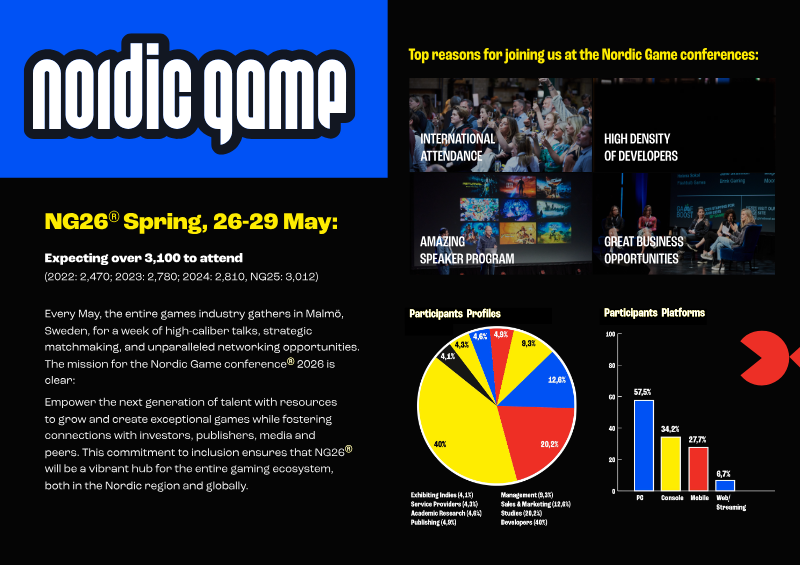
Nordic Game 2026 serves as a primary hub for the Northern European video game industry, emphasizing a high density of developers and international attendance. The event facilitates business development and networking through a comprehensive speaker program, an expansive expo floor, and the annual Nordic Game Awards, which honors excellence among regional studios. The gathering targets a diverse range of industry professionals, including game startups, established studios, and service providers, with a specific focus on fostering connections between growing companies and global partners.
The participant base is heavily weighted toward production and leadership, with developers and artists making up the largest segment at 40% of all attendees. This is followed by professionals in sales and marketing at 12.6%, management at 9.3%, and service providers at 4.3%. Smaller contingents include exhibiting indies and various support roles. In terms of platform focus, PC remains the dominant sector for participants at 57.5%, followed by console development at 34.2% and mobile gaming at 27.7%. Web and other emerging platforms represent a smaller portion of the ecosystem at 6.7%.
The event infrastructure is designed to maximize return on investment through scalable exhibition options, ranging from small four-square-meter booths to large custom pavilions. Private meeting facilities are a core component of the offering, providing flexible spaces for four to fifty people to accommodate different business needs, from formal lectures to casual networking. By integrating sponsored content opportunities and specialized events like the Discovery Contest, the conference aims to support the entire lifecycle of game development within the Nordic region and beyond.
- PC development is the primary focus for 57.5% of Nordic Game 2026 participants, significantly outpacing console development at 34.2% and mobile gaming at 27.7%.
- Developers and artists constitute the largest attendee segment at 40%, followed by sales and marketing professionals at 12.6% and management at 9.3%.
- The event prioritizes business development by providing private meeting facilities that accommodate groups ranging from 4 to 50 people.
- Service providers represent 4.3% of the total participant base, which also includes a mix of startups, established studios, and exhibiting indies.
- Emerging platforms, including web-based gaming, account for 6.7% of the total development focus among conference attendees.
+1
Nordic GameJan 2026

Report57 pages
How to Build an Effective Offer System in Your Game
A well‑designed in‑game offer system is presented as the most potent driver of lifetime value and average revenue per paying user. By integrating a limited set of synergistic offer types—login bonuses, triggered prompts, endless streams, “1 + X” bundles, battle‑passes, stamp‑cards, and curated bundles—and optimizing their frequency, timing, pricing, segmentation, and economic balance, developers can achieve conversion rates as high as ninety‑six percent on login offers and lift repeat‑purchase value by roughly twenty percent through endless offers.
Conversion is shown to be a function of repeated exposure rather than a single impression; players typically require about seven viewings before taking action. The most effective moments to surface offers are at login, during “out‑of‑currency” events, after level failures, or in high‑momentum gameplay phases. A dynamic, tiered pricing ladder that escalates after each purchase and regresses after periods of inactivity—exemplified by a seven‑tier structure ranging from under one dollar to ninety‑nine dollars—enables precise alignment with player spend propensity while avoiding both under‑monetization of high‑potential users and alienation of low‑spenders.
Segmentation must extend beyond basic recency and frequency metrics to incorporate geographic tier, acquisition source quality, and player progression. Lower‑tier regions demand adjusted price ladders and reduced offer frequency, whereas high‑quality acquisition channels justify more complex bundles. Early‑game players respond best to inexpensive, simple offers, while mid‑ and late‑game users can be presented with higher‑value packages. Anchoring the entire shop around a stable, low‑priced entry pack establishes a reference point that shapes perceived value across all offers.
Collectively, these principles apply to mobile and casual games operating globally, reflecting current industry practices and data from recent case studies. Implementing the outlined framework promises measurable improvements in monetization efficiency, player satisfaction, and overall revenue performance.
- A tiered pricing ladder ranging from under $1 to $99, which escalates after purchases and regresses during inactivity, allows for precise alignment with individual player spend propensity.
- Conversion is driven by repeated exposure, with players typically requiring seven viewings of an offer before completing a purchase.
- Strategic implementation of a limited set of offer types can drive conversion rates as high as 96% on login offers and increase repeat-purchase value by approximately 20% through endless offers.
- Effective offer surfacing relies on high-intent moments, specifically at login, during out-of-currency events, after level failures, or during high-momentum gameplay.
- Player segmentation must incorporate geographic tier, acquisition source quality, and progression stage to adjust price ladders and offer frequency for different user profiles.
+2
Sensor TowerJan 2026
Report66 pages
State of India Mobile App Market 2026 Report
India has solidified its position as the world’s largest mobile app market by volume, with annual downloads stabilizing at approximately 25 billion. The market is currently undergoing a structural transition from aggressive user acquisition toward habit-driven engagement and monetization. In-app purchase revenue surpassed $1 billion in 2025 and is projected to reach $1.25 billion by 2026. This financial growth is increasingly fueled by non-gaming sectors, specifically Utilities, Media, and Generative AI, alongside a notable rise in subscription-based models for premium digital services.
Geographically, the center of growth has shifted toward Tier-2 and Tier-3 cities, where localized services in beauty, apparel, and quick commerce are seeing outsized success. Quick commerce and food delivery have become dominant engines of daily habit, with engagement growing 55% year-over-year as platforms pivot toward retention-led strategies. In the mobility sector, the rise of affordable, localized options like bike taxis and autos reflects a broader consumer demand for cost-efficient digital solutions tailored to the Indian infrastructure.
The financial and entertainment landscapes are also evolving into mobile-first ecosystems. Fintech platforms now lead in engagement over traditional banks, with a strategic shift toward credit, lending, and investment services for younger demographics. In media, short-form video and "short drama" apps are outpacing traditional streaming platforms in both download growth and monetization efficiency. Ultimately, the Indian mobile economy is maturing into a value-led market where success is defined by high-frequency utility, social discovery, and the integration of AI tools into daily routines.
- India remains the world’s largest mobile app market by volume with 25 billion annual downloads, shifting focus from user acquisition to habit-driven engagement and monetization.
- In-app purchase revenue is projected to reach $1.25 billion by 2026, driven increasingly by non-gaming sectors like Utilities, Media, and Generative AI.
- Quick commerce and food delivery platforms have seen a 55% year-over-year increase in engagement as they transition toward retention-led strategies.
- Growth is shifting toward Tier-2 and Tier-3 cities, where localized services in beauty, apparel, and quick commerce are achieving outsized success.
- Fintech platforms are outpacing traditional banks in engagement by targeting younger demographics with credit, lending, and investment services.
+1
Sensor TowerJan 2026

Report28 pages
H1 2025 AIGC Mobile App Marketing Analysis
The analysis demonstrates that while the global pool of active AI‑advertisers has contracted by 35–45 % in H1 2025, the remaining players are compensating with a markedly higher creative output—an 84 % increase to an average of 416 monthly creatives per advertiser. Video advertising dominates the landscape, with 84 % of all ads and more than half of inventory in 15‑30 second formats. Geographic patterns reveal that Europe and North America maintain the largest advertiser volumes, yet exhibit lower creative density than Japan and South Korea, which show the fastest growth rates. Market saturation appears to be driving these firms toward intensified brand exposure through increased creative frequency, even as overall advertiser participation declines.
Meitu’s financial results corroborate the commercial potency of AI‑driven features. Revenue rose 12.3 % to RMB 1.8 billion, largely propelled by a 45.2 % jump in AI‑powered imaging and design subscriptions to RMB 1.35 billion, while advertising income grew modestly by 5 %. The company’s flagship AI applications—“AI Wardrobe,” “WHEE,” and “Wink”—secured top positions in App Store charts across more than twelve countries, underscoring the role of AI enhancements in global user acquisition and subscription monetization.
The broader ecosystem of AI‑powered mobile apps, including chatbots, development tools, and educational platforms, continues to enjoy strong monthly active user figures and high stickiness. However, product overlap creates fierce competition, making clear positioning and precise subscription pricing essential for successful global expansion. Rapid overseas success is achievable when apps tailor local marketing strategies to regional preferences. These conclusions are drawn from SocialPeta’s extensive dataset of 1.6 billion advertising data points, sampled across 80+ channels and regions from January 2024 to June 2025.
- The number of active AI-advertisers in the mobile market contracted by 35–45% in H1 2025, while the remaining players increased their creative output by 84% to an average of 416 monthly creatives per advertiser.
- Meitu’s revenue grew 12.3% to RMB 1.8 billion in H1 2025, driven primarily by a 45.2% surge in AI-powered imaging and design subscriptions, which reached RMB 1.35 billion.
- Video advertising currently dominates the AI mobile landscape, accounting for 84% of all ads, with over half of inventory utilizing 15–30 second formats.
- Japan and South Korea are experiencing the fastest growth in creative density for AI-advertisers, outpacing the larger but less dense markets of Europe and North America.
- Meitu’s flagship AI applications—AI Wardrobe, WHEE, and Wink—achieved top-tier App Store rankings in over twelve countries, demonstrating the effectiveness of AI features in global user acquisition.
+4
SocialPetaDec 2025

Report18 pages
Leveling Up for the New Reality: The Gaming Report
The report examines the global gaming market’s evolution from 2017 to 2028, highlighting a post‑pandemic correction that has shifted growth expectations from double‑digit rates to modest expansion. Global revenue by type rose 1 % CAGR (2017–2023), with mobile, PC, and console segments contributing $1.2 trillion in 2023; cloud/VR sales remain niche but are projected to grow at 5 % CAGR (2023–2028). Emerging platforms such as cloud AR/VR and user‑generated content show market sizes of $939 million (2024) to $1.75 billion (2028), yet infrastructure constraints limit mass adoption.
Development economics reveal a widening gap: AAA development budgets increased 360 % (2012–2023 average) while sales and marketing costs rose 220 %, yet the number of AAA titles released fell by 73 %. Mobile publishers mirror this trend, with development costs up 54–92 % and releases declining. Console revenues are projected to outpace AAA budgets, with a 5 % CAGR in development spending versus 8 % in console revenue growth (2017–2028). Survey data indicate that most publishers expect to maintain or modestly increase budgets, with only 5–10 % planning reductions.
Monetization shifts are pronounced in consoles: subscription services and premium digital sales will dominate, while mobile revenue increasingly relies on in‑app advertising (up to 31 % of mobile share). Consumer willingness to accept ads varies by platform, with over half of core PC/console gamers open to advertising in premium titles. Geographic analysis shows Chinese players exhibit the highest willingness to pay, and emerging‑economy gamers spend more time playing than their developed‑economy counterparts. Age segmentation reveals younger cohorts favor action/adventure, whereas older players gravitate toward puzzles and casual games. The report concludes that technological advances, particularly generative AI, may enable cost efficiencies but will likely be leveraged to fund larger, higher‑quality titles rather than reduce overall budgets.
- AAA development budgets surged 360% between 2012 and 2023, while the volume of AAA title releases dropped by 73%, signaling a shift toward fewer, more expensive productions.
- Global gaming revenue grew at a 1% CAGR from 2017 to 2023, reflecting a post-pandemic correction that has moved the industry from double-digit growth to modest expansion.
- Mobile revenue is increasingly driven by in-app advertising, which now accounts for up to 31% of the segment's total share.
- While cloud and VR remain niche, they are projected to grow at a 5% CAGR through 2028, with emerging platforms like cloud AR/VR and user-generated content expected to reach $1.75 billion in market size by 2028.
- Console revenue is projected to grow at an 8% CAGR through 2028, outpacing the 5% CAGR in development spending for the same period.
+2
InvestGameDec 2025
Report26 pages
Predictions for the Digital Economy in 2026
The analysis projects a rapid expansion of the digital economy through 2026, driven primarily by generative AI applications and vertical video formats. Generative‑AI apps are expected to generate more than $10 billion in in‑app purchase revenue by 2026, with downloads projected to reach 4 billion and user engagement exceeding 43 billion hours. The genre will climb into the top five mobile categories across downloads, revenue, and time spent, surpassing established sectors such as shopping and movies. Short‑drama vertical video is forecast to overtake traditional OTT streaming in global downloads, narrowing the revenue gap and capturing 40 % of time spent by 2026.
Digital advertising spending is shifting back toward image‑based creatives, with a 35 % year‑over‑year increase in image ad spend and a projected acceleration of this trend by 2026, especially within social channels where Reels and similar formats dominate. Meanwhile, generative AI traffic to the top 1,000 U.S. websites is projected to rise by more than 130 % YoY, reaching a point where half of these sites receive higher traffic from AI than paid sources by the end of 2026.
Mobile game acquisition costs remain high, and the market is trending toward smaller, ad‑native titles that can monetize efficiently. Steam releases are accelerating, with 2025 already breaking records for new titles, indicating a shift toward faster, lower‑budget development cycles. Overall, the report underscores a digital landscape increasingly shaped by AI‑driven content and streamlined monetization models across mobile, web, and gaming sectors.
- Generative AI applications are projected to reach $10 billion in in-app purchase revenue, 4 billion downloads, and 43 billion hours of user engagement by 2026, becoming a top-five mobile category.
- Short-drama vertical video is forecast to surpass traditional OTT streaming in global downloads and capture 40% of total user time spent by 2026.
- By the end of 2026, half of the top 1,000 U.S. websites are expected to receive more traffic from generative AI than from paid sources, with AI-related traffic rising over 130% year-over-year.
- Digital advertising is shifting back toward image-based creatives, evidenced by a 35% year-over-year increase in image ad spend that is expected to accelerate through 2026.
- The gaming market is trending toward smaller, ad-native mobile titles to combat high acquisition costs, while Steam is seeing record-breaking release volumes driven by faster, lower-budget development cycles.
+3
Sensor TowerDec 2025

Report35 pages
Video Game Market Update: Q3 2025
The global video game industry experienced a notable resurgence in growth during the third quarter of 2025, driven by a rebound in mobile in-app purchases and robust performance across PC and console platforms. The launch of the Nintendo Switch 2 served as a primary catalyst for console sector strength, reinforcing the enduring value of established intellectual property. While the broader capital markets faced significant headwinds, characterized by multi-year lows in public fundraising and subdued early-stage venture activity, the industry’s transaction landscape was defined by high-value consolidation. The $55 billion public takeover of Electronic Arts stands as the definitive event of the period, signaling a strategic shift toward large-scale mergers and acquisitions as the primary mechanism for growth.
Market dynamics currently favor established entities, with diversified publishers and PC and console developers commanding significant valuation premiums due to their proven profitability and market stability. This environment has concentrated investment power among a select group of firms. BITKRAFT emerged as the most active participant in the early-stage ecosystem over the past twelve months, leading the sector with 16 deals totaling $113 million. Alongside other prominent investors like Bessemer Venture Partners and Menlo Ventures, these firms continue to deploy capital despite the broader contraction in private investment.
Ultimately, the industry is transitioning into a phase of maturity where scale and intellectual property ownership are paramount. While early-stage funding remains constrained, the surge in total transaction value through megadeals indicates that institutional confidence remains high for proven assets. The current landscape suggests a bifurcated market where high-growth, established publishers attract significant capital, while smaller, early-stage ventures face a more challenging environment for securing liquidity and growth funding.
- The $55 billion public takeover of Electronic Arts highlights a strategic shift toward large-scale consolidation as the primary driver of industry growth in Q3 2025.
- The launch of the Nintendo Switch 2 acted as a major catalyst for console sector strength, reinforcing the market value of established intellectual property.
- The global video game industry saw a Q3 2025 resurgence fueled by a rebound in mobile in-app purchases and strong performance across PC and console platforms.
- BITKRAFT led the early-stage investment ecosystem over the past twelve months with 16 deals totaling $113 million, despite a broader contraction in private venture activity.
- The market is currently bifurcated, with diversified publishers and established developers commanding valuation premiums while smaller, early-stage ventures face significant liquidity and funding challenges.
+2
Aream & CoSept 2025
Report67 pages
2025 Global Games Market Report
The global games market is entering a period of moderate maturation, with total revenue projected to reach $188.8 billion in 2025, a 3.4% increase over the previous year. The industry now serves 3.6 billion players, reflecting a 4.4% year-over-year expansion. While mobile gaming maintains its dominance, accounting for $103.0 billion or 55% of total revenue, console gaming is poised for the strongest growth at 5.5%, reaching $45.9 billion. PC gaming remains a stable pillar with $39.9 billion in revenue. Despite the growth in player counts, average spend per payer is experiencing a slight decline, signaling a strategic pivot toward maximizing engagement and retention within saturated markets rather than relying solely on aggressive monetization.
Strategic success in this environment increasingly depends on long-tail engagement and the effective management of post-launch content. Data indicates that releasing single-player titles during the second quarter yields 34% higher engagement compared to the saturated holiday season. Furthermore, simultaneous multi-platform launches significantly outperform staggered releases, and titles exiting Early Access after a six-month window demonstrate superior acquisition results. Developers are also increasingly leveraging remakes and remasters to mitigate rising development costs, while user-generated content platforms like Roblox continue to expand as foundational ecosystems for daily active users.
Geographically, the market continues to diversify, with Latin America emerging as a notable growth region projected to reach $8.3 billion, driven primarily by mobile adoption. The industry’s analytical framework, which focuses on consumer spending on software and services, highlights that player attrition typically stabilizes after 12 weeks. Consequently, long-term commercial viability is now inextricably linked to aligning content updates and discounting strategies with this post-launch retention curve, ensuring that community support remains as critical as initial sales performance.
- The global games market is projected to reach $188.8 billion in 2025, a 3.4% year-over-year increase, driven by a player base that has expanded to 3.6 billion people.
- Mobile gaming remains the industry leader with $103.0 billion in revenue (55% of the total), while console gaming is expected to see the highest growth rate at 5.5%, reaching $45.9 billion.
- Average spend per player is declining, forcing a strategic shift toward long-tail engagement and retention rather than aggressive monetization in saturated markets.
- Releasing single-player titles in the second quarter yields 34% higher engagement than holiday-season launches, and simultaneous multi-platform releases consistently outperform staggered strategies.
- Developers are increasingly utilizing remakes and remasters to offset rising production costs, while platforms like Roblox are becoming essential ecosystems for maintaining daily active users.
+4
NewzooSept 2025

Report46 pages
Digital Market Index: Q2 2025
The global digital landscape reached a significant milestone in the second quarter of 2025, as in-app purchase revenue hit a record $40 billion. This period marked a historic structural shift in the mobile economy, with non-gaming applications accounting for 52% of total consumer spending, surpassing mobile games for the first time. While total downloads stabilized at 37 billion, the market displayed clear signs of maturation; gaming downloads contracted by 6.8% year-over-year, while AI-driven productivity tools and short-drama streaming platforms emerged as the primary engines of growth. The United States maintained its position as the premier revenue market at $15 billion, though emerging regions such as Brazil and various African nations are increasingly vital for download volume and monetization expansion.
Within the gaming sector, Strategy titles overtook RPGs as the highest-grossing category, achieving a 23% year-over-year increase. However, the most significant individual performance came from ChatGPT, which became the fastest application to reach one billion downloads and secured a position among the top five global revenue earners. This surge in AI utility was mirrored in the advertising sector, where U.S. digital ad spend rose 12% to $34 billion. Major technology firms including Microsoft, Google, and Adobe significantly increased their marketing budgets to promote AI integrations like Copilot, contributing to a landscape where social media maintains a 72.5% share of total ad spend.
Retail media has solidified its role as a critical advertising channel, with U.S. impressions rising 29% to 65 billion across various retailers. Despite this broad growth, Amazon remains the undisputed leader in the space, generating nearly 80 billion impressions and outperforming all other tracked retailers combined. These findings are supported by expanded tracking capabilities across key Asian markets and diverse digital channels, though the data specifically excludes certain year-over-year Amazon metrics due to recent tracking implementation. Overall, the quarter reflects a pivot toward high-utility AI applications and a diversifying advertising ecosystem dominated by social and retail platforms.
- In Q2 2025, non-gaming applications surpassed mobile games for the first time, accounting for 52% of the record $40 billion in total in-app purchase revenue.
- Global mobile gaming downloads contracted by 6.8% year-over-year, while Strategy titles replaced RPGs as the highest-grossing gaming category with a 23% increase.
- ChatGPT became the fastest application to reach one billion downloads and secured a top-five position in global revenue, signaling a major shift toward AI-driven utility.
- U.S. digital ad spend rose 12% to $34 billion, driven by increased marketing budgets from firms like Microsoft, Google, and Adobe to promote AI integrations.
- Retail media continues to expand, with U.S. impressions rising 29% to 65 billion, though Amazon remains the dominant leader with nearly 80 billion impressions.
+1
Sensor TowerAug 2025

Report133 pages
Vorhaus Digital Strategy Study: All Findings 2025
The digital landscape in the United States has reached a pivotal turning point as smartphones and connected televisions officially surpass traditional broadcast media as the primary vehicles for entertainment. With smart TV penetration reaching 63% and subscription services now more prevalent than cable or satellite, the American household is firmly rooted in a digital-first ecosystem. This transition is fueled by a surge in spending among younger consumers aged 18–34, who have increased their annual digital media expenditure by $235 over the past year. While the average household maintains 3.5 subscription video services, a growing trend of "subscription cycling" suggests consumers are becoming more price-sensitive and strategic with their digital commitments.
Gaming has emerged as a near-universal activity, with 80% of the population engaging across various platforms and over half of the country playing mobile games daily. The industry is seeing a significant rise in social and cloud gaming, alongside a burgeoning interest in user-generated content and non-programmer creation tools. Although traditional game discovery channels are losing influence, total annual in-game spending has risen dramatically. Notably, 70% of computer gamers now spend $30 or more annually, and there is a growing consumer appetite for the ability to trade virtual goods between different titles, potentially facilitated by blockchain technology.
Emerging technologies reveal a stark generational divide in adoption and sentiment. While the 18–34 demographic shows double-digit increases in familiarity and interest regarding the Metaverse and Virtual Reality, interest in Augmented Reality has declined sharply across all age groups. Cryptocurrency remains a niche expertise, yet a significant portion of younger investors plan to commit substantial capital to the sector in the coming year. Despite these advancements, privacy remains a critical barrier; over 60% of Americans express deep concerns regarding information security and the use of personal data for advertising. This tension between high digital engagement and data anxiety defines the current state of the American digital consumer.
- Digital-first entertainment has become the US standard, with smart TV penetration at 63% and connected devices officially surpassing traditional broadcast media.
- Gaming is now a near-universal activity with 80% of the population participating, driven by daily mobile play and a significant rise in total annual in-game spending.
- Consumers are adopting 'subscription cycling' to manage costs, despite the average household maintaining 3.5 video services and younger consumers (18–34) increasing annual digital media spending by $235.
- Privacy concerns are a major market friction, with over 60% of Americans expressing deep anxiety regarding information security and the use of personal data for advertising.
- 70% of computer gamers now spend at least $30 annually, with a growing consumer demand for cross-title virtual goods trading potentially enabled by blockchain.
+1
Vorhaus AdvisorsAug 2025