
Report41 pages
Mobile App Trends: 2026 Edition
The mobile app industry entered 2026 with significant momentum, characterized by a 10% year-over-year increase in global installs and a 7% rise in sessions throughout 2025. Consumer spending reached a record $167 billion, signaling a robust digital economy. This growth coincides with a fundamental technological shift where artificial intelligence has transitioned from an experimental feature to essential infrastructure for predictive segmentation and data analysis. Furthermore, the industry is moving away from a strictly mobile-first approach toward multi-platform strategies designed to capture fragmented consumer journeys across various devices. User privacy sentiment is also stabilizing, with App Tracking Transparency opt-in rates climbing to 38% by early 2026.
Sector-specific performance reveals a complex landscape of engagement and acquisition costs. While the global gaming population reached 3 billion in 2025, overall gaming installs remained flat as the cost per install rose 30% to $0.56. However, casual games outperformed the broader market with a 19% increase in installs and a 37% surge in sessions. In contrast, the e-commerce sector faced challenges as global installs fell by 10%, though Latin America emerged as a significant growth outlier with a 30% increase in user engagement. These trends suggest that while user acquisition is becoming more expensive in mature categories, specific genres and emerging markets continue to offer high-velocity growth opportunities.
The finance sector demonstrated unique resilience, with sessions increasing by 21% despite a slight decline in installs, reflecting the deep integration of digital wallets into daily consumer habits. Finance apps also led the shift toward paid acquisition, achieving a paid-to-organic ratio of 1.13 as costs per install decreased in most regions. As the industry moves through 2026, success is increasingly defined by retention-led growth and sophisticated cross-channel attribution. Future scalability will depend on the ability of developers to leverage AI-driven personalization and cross-device measurement to maintain engagement in an increasingly competitive and fragmented global market.
- The mobile app economy reached $167 billion in consumer spending in 2025, supported by a 10% year-over-year increase in global installs and a 7% rise in sessions.
- Gaming installs remained flat while costs per install surged 30% to $0.56, though casual games bucked the trend with a 19% increase in installs and a 37% rise in sessions.
- The industry is shifting from mobile-first to multi-platform strategies to address fragmented consumer journeys, supported by AI-driven predictive segmentation and cross-device measurement.
- Finance apps demonstrated high retention, with sessions increasing 21% and a paid-to-organic acquisition ratio of 1.13, even as overall installs for the sector declined.
- User privacy sentiment is stabilizing, with App Tracking Transparency opt-in rates rising to 38% by early 2026.
+2
AdjustJan 2026
Report26 pages
2026 Predictions: Trends in Gen AI, Gaming & Digital Ad Spend
The forecast outlines how generative‑AI, short‑form video and evolving ad formats will reshape the digital economy by 2026. It argues that AI‑driven applications will move from a niche category to a core revenue engine, rivaling traditional paid‑media traffic and reshaping user‑acquisition dynamics across mobile, web and gaming. The analysis draws on Sensor Tower’s app‑store, advertising and web‑traffic datasets, applying its App IQ and Game IQ taxonomies to the top publishers, the 1,000 most‑visited U.S. sites and the leading Steam releases, with historical data through December 2025 and forward projections to 2026.
Generative‑AI apps are projected to generate more than $10 billion in worldwide in‑app‑purchase revenue, achieve 7.2 billion downloads and capture 43 billion hours of usage in 2026—an 82 % year‑over‑year increase that will place the genre among the top five for downloads, revenue and engagement. Short‑drama vertical video is forecast to overtake traditional OTT streaming in download volume, securing roughly 80 % of downloads and closing the IAP gap to 20 % of OTT’s share, driven by rapid adoption in markets such as India, Indonesia and Brazil. Meanwhile, U.S. digital ad spend will total $20 billion, with image‑based creatives outpacing video growth (35 % versus 15 % YoY) as social platforms, especially Meta’s Reels, shift budgets toward static formats.
On the web, generative‑AI traffic will surpass paid sources on more than half of the top 1,000 U.S. sites by the end of 2026, up from 37 % in late 2025,
- Generative AI apps will become a top-five category by 2026, generating over $10 billion in IAP revenue, 7.2 billion downloads, and 43 billion hours of usage, representing an 82% year-over-year growth.
- By the end of 2026, generative AI traffic will surpass paid sources on more than 50% of the top 1,000 U.S. websites, up from 37% in late 2025.
- Short-drama vertical video is projected to overtake traditional OTT streaming in download volume, capturing roughly 80% of total downloads with rapid adoption in India, Indonesia, and Brazil.
- U.S. digital ad spend will reach $20 billion in 2026, with image-based creatives growing at 35% year-over-year, significantly outpacing the 15% growth rate of video formats.
- Social platforms, specifically Meta’s Reels, are shifting advertising budgets away from video toward static, image-based formats.
+1
Sensor TowerJan 2026

Report28 pages
H1 2025 AIGC Mobile App Marketing Analysis
The analysis demonstrates that while the global pool of active AI‑advertisers has contracted by 35–45 % in H1 2025, the remaining players are compensating with a markedly higher creative output—an 84 % increase to an average of 416 monthly creatives per advertiser. Video advertising dominates the landscape, with 84 % of all ads and more than half of inventory in 15‑30 second formats. Geographic patterns reveal that Europe and North America maintain the largest advertiser volumes, yet exhibit lower creative density than Japan and South Korea, which show the fastest growth rates. Market saturation appears to be driving these firms toward intensified brand exposure through increased creative frequency, even as overall advertiser participation declines.
Meitu’s financial results corroborate the commercial potency of AI‑driven features. Revenue rose 12.3 % to RMB 1.8 billion, largely propelled by a 45.2 % jump in AI‑powered imaging and design subscriptions to RMB 1.35 billion, while advertising income grew modestly by 5 %. The company’s flagship AI applications—“AI Wardrobe,” “WHEE,” and “Wink”—secured top positions in App Store charts across more than twelve countries, underscoring the role of AI enhancements in global user acquisition and subscription monetization.
The broader ecosystem of AI‑powered mobile apps, including chatbots, development tools, and educational platforms, continues to enjoy strong monthly active user figures and high stickiness. However, product overlap creates fierce competition, making clear positioning and precise subscription pricing essential for successful global expansion. Rapid overseas success is achievable when apps tailor local marketing strategies to regional preferences. These conclusions are drawn from SocialPeta’s extensive dataset of 1.6 billion advertising data points, sampled across 80+ channels and regions from January 2024 to June 2025.
- The number of active AI-advertisers in the mobile market contracted by 35–45% in H1 2025, while the remaining players increased their creative output by 84% to an average of 416 monthly creatives per advertiser.
- Meitu’s revenue grew 12.3% to RMB 1.8 billion in H1 2025, driven primarily by a 45.2% surge in AI-powered imaging and design subscriptions, which reached RMB 1.35 billion.
- Video advertising currently dominates the AI mobile landscape, accounting for 84% of all ads, with over half of inventory utilizing 15–30 second formats.
- Japan and South Korea are experiencing the fastest growth in creative density for AI-advertisers, outpacing the larger but less dense markets of Europe and North America.
- Meitu’s flagship AI applications—AI Wardrobe, WHEE, and Wink—achieved top-tier App Store rankings in over twelve countries, demonstrating the effectiveness of AI features in global user acquisition.
+4
SocialPetaDec 2025

Report4 pages
CESA Game Industry Report 2025
The 2025 CESA Game Industry Report presents a comprehensive assessment of the current state of the video‑game sector, emphasizing three strategic themes: the impact of artificial‑intelligence technologies on development, the latest dynamics of the global market, and emerging regulatory issues. By expanding data coverage to include China, Australia, major Western economies, India and the MENA region, the analysis offers a multidimensional view of both domestic and international trends.
Global game‑content revenue reached 31.042 trillion yen in 2024, marking a 5.0 % year‑on‑year increase. Mobile games accounted for 18.433 trillion yen, roughly 60 % of total sales, and grew 6.0 % versus the prior year. PC titles posted the strongest platform growth over the past four years, expanding 59.7 % and overtaking console share, while console revenue showed modest contraction. In Japan, the total gaming population stood at 5.475 million in 2024, a slight decline from 5.553 million; mobile users fell 1.8 %, PC users rose 0.5 %, and console users decreased 0.7 %, with expectations of a rebound following the anticipated Switch 2 launch.
Employment estimates indicate approximately 200 000 individuals work across the Japanese gaming ecosystem. Core developers, publishers and hardware manufacturers employ between 58 000 and 83 000 people, while ancillary sectors—such as visual production, middleware, peripherals, retail and media—constitute the remainder of the workforce.
The findings derive from CESA’s own surveys, expert interviews and user studies conducted in China and Australia, supplemented by industry‑wide data sources and event reports (Tokyo Game Show, Japan Game Awards, CEDEC). The methodology blends desk research with primary fieldwork to deliver a layered, data‑rich portrait of the industry’s structure, growth drivers and regulatory landscape.
- Global game content revenue reached 31.042 trillion yen in 2024, representing a 5.0% year-on-year increase.
- Mobile gaming remains the dominant sector, generating 18.433 trillion yen—roughly 60% of total global sales—with a 6.0% annual growth rate.
- PC gaming has experienced significant momentum, expanding 59.7% over the last four years to overtake console market share.
- Console revenue saw a modest contraction in 2024, though the Japanese market anticipates a rebound following the expected launch of the Switch 2.
- The Japanese gaming population experienced a slight decline to 5.475 million users in 2024, driven by a 1.8% drop in mobile users and a 0.7% decrease in console users.
+1
CESA – Computer Entertainment Supplier's AssociationDec 2025

Report46 pages
2025 Media & Entertainment Industry Predictions Report
The analysis projects that artificial intelligence will be the primary catalyst for change across the media and entertainment landscape in 2025, enhancing human talent rather than replacing it. Streaming services continue to dominate revenue streams, with global SVOD and AVOD income projected to surpass $165 billion despite a fragmented market of over 200 platforms. Consumer churn and escalating content costs drive consolidation, leading to bundled or aggregated subscription models that are expected to account for 60–70 % of purchases in mature markets. Traditional multichannel pay‑TV providers are forecast to lose half their U.S. subscriber base, falling below 50 million users, prompting a shift toward “stream‑hub” offerings that combine broadband with multiple streaming services at competitive prices. Video multichannel distributors such as YouTube TV are projected to peak and then decline due to rising costs, live‑sports migration to direct‑to‑consumer services, and intensified OTT competition.
Cloud gaming is set for a 44 % CAGR through 2030, driven by faster broadband, AI‑enhanced virtualization, and new commercial models. Console and PC sales are expected to wane as consumers redirect spending toward streaming devices, with subscription‑based monetization replacing one‑time purchases. The sector’s growth hinges on resolving commercial model constraints, particularly the need for more attractive storefront incentives to unlock mass adoption and realize a $64 billion market by 2030.
In creative media, firms will increasingly deploy proprietary large‑language models while navigating intellectual property risks and regulatory frameworks such as the EU AI Act. Eight core governance building blocks—risk management, training oversight, compliance, testing, and incident response—are identified as essential for mitigating AI‑related challenges. Retail media and search are undergoing rapid transformation, with retailers partnering with streaming and social platforms to manage fragmented ecosystems, privacy rules, and AI‑driven formats. Generative AI is eroding Google’s dominance by enabling conversational, multimodal search experiences from competitors like OpenAI, Perplexity, Amazon, and TikTok. Consequently, Google’s share of search advertising is projected to decline modestly worldwide (from 57 % to 55 %) and in the U.S. (51 % to 48 %), as shoppable content, live shopping, and AI query volume shift revenue toward alternative platforms. Marketers will adapt by optimizing for AI‑generated summaries, voice, and visual search to align with evolving consumer behavior.
- Global SVOD and AVOD revenue is projected to exceed $165 billion in 2025, with 60–70% of subscriptions in mature markets expected to shift toward bundled or aggregated models to combat churn.
- Traditional U.S. pay-TV providers are forecast to lose half their subscriber base, dropping below 50 million users as the industry pivots to 'stream-hub' models that bundle broadband with multiple streaming services.
- Cloud gaming is projected to grow at a 44% CAGR through 2030, reaching a $64 billion market as subscription-based monetization increasingly replaces traditional one-time hardware purchases.
- Google’s global search advertising market share is expected to decline from 57% to 55% by 2025, as conversational AI competitors like OpenAI, Perplexity, and TikTok capture revenue through multimodal and shoppable search formats.
- Artificial intelligence will serve as a primary industry catalyst in 2025, with firms required to implement eight core governance building blocks—including risk management and compliance—to navigate IP and regulatory challenges like the EU AI Act.
+1
AlixPartnersDec 2025
Report26 pages
Predictions for the Digital Economy in 2026
The analysis projects a rapid expansion of the digital economy through 2026, driven primarily by generative AI applications and vertical video formats. Generative‑AI apps are expected to generate more than $10 billion in in‑app purchase revenue by 2026, with downloads projected to reach 4 billion and user engagement exceeding 43 billion hours. The genre will climb into the top five mobile categories across downloads, revenue, and time spent, surpassing established sectors such as shopping and movies. Short‑drama vertical video is forecast to overtake traditional OTT streaming in global downloads, narrowing the revenue gap and capturing 40 % of time spent by 2026.
Digital advertising spending is shifting back toward image‑based creatives, with a 35 % year‑over‑year increase in image ad spend and a projected acceleration of this trend by 2026, especially within social channels where Reels and similar formats dominate. Meanwhile, generative AI traffic to the top 1,000 U.S. websites is projected to rise by more than 130 % YoY, reaching a point where half of these sites receive higher traffic from AI than paid sources by the end of 2026.
Mobile game acquisition costs remain high, and the market is trending toward smaller, ad‑native titles that can monetize efficiently. Steam releases are accelerating, with 2025 already breaking records for new titles, indicating a shift toward faster, lower‑budget development cycles. Overall, the report underscores a digital landscape increasingly shaped by AI‑driven content and streamlined monetization models across mobile, web, and gaming sectors.
- Generative AI applications are projected to reach $10 billion in in-app purchase revenue, 4 billion downloads, and 43 billion hours of user engagement by 2026, becoming a top-five mobile category.
- Short-drama vertical video is forecast to surpass traditional OTT streaming in global downloads and capture 40% of total user time spent by 2026.
- By the end of 2026, half of the top 1,000 U.S. websites are expected to receive more traffic from generative AI than from paid sources, with AI-related traffic rising over 130% year-over-year.
- Digital advertising is shifting back toward image-based creatives, evidenced by a 35% year-over-year increase in image ad spend that is expected to accelerate through 2026.
- The gaming market is trending toward smaller, ad-native mobile titles to combat high acquisition costs, while Steam is seeing record-breaking release volumes driven by faster, lower-budget development cycles.
+3
Sensor TowerDec 2025

Report48 pages
Digital Market Index: Q3 2025
Global mobile app consumer spending reached a record $43.2 billion in the third quarter of 2025, representing an 11.3% year-over-year increase. This growth was primarily fueled by a 20% surge in non-game revenue, particularly from Generative AI tools which generated $1.5 billion during the period. While total global downloads remained stable at 37.6 billion, a clear divergence emerged between sectors; non-game downloads grew by 5.5%, while gaming installs continued a post-pandemic decline. Geographically, the United States maintained its market leadership with $15 billion in revenue, though Brazil emerged as the fastest-growing major market with a 29% revenue increase. India simultaneously reached a two-year high in downloads, surpassing 6.5 billion.
The digital advertising landscape saw significant expansion, with U.S. spend rising 12% to $35.9 billion. Social media remains the dominant channel, capturing 72% of the market, but mobile app advertising is the fastest-growing segment at 42% year-over-year. Within specific industries, the gaming sector entered the top five spending categories for the first time following a 28% increase in investment. Strategic shifts were also evident in the insurance and consumer goods sectors, where companies like Geico and Procter & Gamble executed massive quarterly spending spikes to capitalize on premium fluctuations and seasonal demand.
Retail media has become a critical pillar of the digital economy, dominated heavily by Amazon. Generating over 80 billion impressions, Amazon’s reach surpassed the combined total of the next thirty major retailers. Outside of Amazon's ecosystem, retail media impressions grew 7% year-over-year, though performance was inconsistent across platforms; Target and Best Buy saw double-digit growth while Walmart experienced a decline. Personal care remains the most competitive retail category, driven by high-volume co-branded partnerships between major manufacturers and established retail platforms.
- Global mobile app consumer spending reached a record $43.2 billion in Q3 2025, an 11.3% year-over-year increase driven by a 20% surge in non-game revenue.
- Generative AI tools emerged as a significant revenue driver, contributing $1.5 billion to the mobile app market during the third quarter.
- U.S. digital advertising spend rose 12% to $35.9 billion, with mobile app advertising identified as the fastest-growing segment at 42% year-over-year.
- Gaming sector investment in digital advertising grew by 28%, securing its position as a top-five spending category for the first time.
- Amazon dominates the retail media landscape with over 80 billion impressions, exceeding the combined total of the next thirty major retailers.
+1
Sensor TowerNov 2025
Report104 pages
Integrated Report: Value Creation Story
DeNA entered a transformative "Second Founding" phase in FY2024, marked by a significant financial recovery and a strategic pivot toward company-wide AI integration. Revenue reached 164.0 billion yen with a Non-GAAP operating profit of 32.9 billion yen, driven primarily by the global success of Pokémon Trading Card Game Pocket. While the Game Business remains the core profit engine, the organization is diversifying its portfolio across Live Streaming, Healthcare, and a record-performing Sports segment to mitigate the volatility of hit-driven cycles. The company has established a FY2026 Non-GAAP operating profit target of 15.0 billion yen, emphasizing sustainable, structural growth over short-term gains.
Central to this evolution is the "AI-ALL-IN" strategy, which aims to double productivity and launch approximately 10 AI-native products. This transition is supported by a robust human capital framework, including the DeNA AI Readiness Score (DARS) to track employee literacy and a shift toward market-linked, performance-based compensation. To manage development risks, the Game Business has adopted a "soft launch strategy" focused on iterative testing. Meanwhile, the Sports segment achieved 40 billion yen in revenue, and the Healthcare division is pivoting toward medical digital transformation despite facing recent impairment losses.
Governance and sustainability are integrated into this value creation story through a board composed of 50% independent directors and a rigorous risk management framework. DeNA maintains high standards for data security and has committed to a 58.8% reduction in Scope 1 and 2 emissions by FY2033. By balancing aggressive AI adoption with disciplined capital allocation—including strategic share sales and increased dividends—the organization seeks to harmonize social value with long-term profitability across its diverse digital and physical business ecosystems.
- DeNA achieved 164.0 billion yen in revenue and 32.9 billion yen in Non-GAAP operating profit in FY2024, largely fueled by the global performance of Pokémon Trading Card Game Pocket.
- The company is executing an 'AI-ALL-IN' strategy targeting a 100% increase in productivity and the launch of approximately 10 AI-native products.
- The Sports segment has become a major revenue pillar, generating 40 billion yen in the last fiscal year, helping to diversify the company away from hit-driven game cycles.
- Management has set a conservative FY2026 Non-GAAP operating profit target of 15.0 billion yen, prioritizing structural, sustainable growth over short-term volatility.
- To improve operational efficiency, the company implemented the DeNA AI Readiness Score (DARS) to track employee literacy and transitioned to a market-linked, performance-based compensation model.
+1
DeNA Co.Oct 2025

Report56 pages
Digital Marketing Index Report: Q4 2025
The analysis evaluates global digital‑marketing dynamics for the final quarter of 2025, emphasizing shifts in channel performance, the rise of generative‑AI as a discovery source, and the concentration of retail‑media reach among dominant platforms. Growth patterns reveal a stark regional divide: India stands alone among the five largest markets as the only one posting positive overall change, while other leading economies recorded declines or stagnation.
In the United States, retail‑media impressions expanded 13 percent quarter‑over‑quarter to reach 123 billion, with Amazon accounting for the entire volume and delivering more than six times the impressions generated by Walmart. This concentration underscores Amazon’s expanding role as the primary conduit for retail‑media exposure in North America. Across the same period, generative‑AI referrals, although still representing less than one percent of total traffic, surged dramatically—up 133 percent year‑over‑year in the United States, United Kingdom and France, and 126 percent in Canada. The rapid acceleration signals that chat‑based assistants such as ChatGPT, Claude and Gemini are emerging as significant discovery engines despite their modest share of overall visits.
Conversely, traditional organic search experienced the only decline among major acquisition channels, falling four percent year‑over‑year. Paid advertising, email marketing and other performance‑driven tactics continued to post gains, reinforcing a broader transition toward paid and AI‑augmented pathways for user acquisition. The findings collectively illustrate a digital‑marketing ecosystem increasingly dominated by platform‑centric retail media and AI‑driven referral mechanisms, while legacy search channels lose ground in mature markets.
- India was the only major global market to record positive overall digital marketing growth in Q4 2025, while other leading economies experienced stagnation or decline.
- Generative AI referrals surged by 133% year-over-year in the US, UK, and France, signaling their emergence as significant discovery engines despite currently accounting for less than 1% of total traffic.
- US retail-media impressions grew 13% quarter-over-quarter to 123 billion, with Amazon capturing the entire volume and delivering six times the impressions of Walmart.
- Traditional organic search was the only major acquisition channel to decline in Q4 2025, falling 4% year-over-year.
- Digital marketing strategies are shifting toward paid advertising and AI-augmented pathways as legacy search channels lose market share in mature economies.
+2
Sensor TowerOct 2025

Report37 pages
2025 GDC Trends Report: Connecting the World Through Games
The global game industry in 2025 is defined by a strategic pivot toward practical generative AI implementation and sustainable monetization models in response to market saturation and rising development costs. Approximately one-third of developers now utilize AI tools to streamline prototyping and NPC creation, focusing on "human-in-the-loop" workflows to enhance personalization. However, this technological shift is met with significant friction regarding ethical sourcing, copyright concerns, and the potential displacement of narrative designers. To combat AAA stagnation, studios are increasingly adopting "niche" live service models and "hybrid-casual" mobile strategies, leveraging telemetry for personalized monetization and prioritizing player re-acquisition over expensive new user acquisition.
Financial sustainability has become a primary concern, with 56% of studios now relying on personal funding as the publishing landscape becomes more selective. This has led to a surge in self-publishing and the adoption of HTML5 and WebGPU technologies for more efficient cross-platform distribution. The mobile sector reflects this shift, with narrative-driven advertising propelling the in-game ad market to $100 billion in 2024, officially surpassing in-app purchase revenue. Simultaneously, the industry is embracing social responsibility through the Accessible Games Initiative, which introduces standardized storefront tags to assist the 16% of the global population living with disabilities.
The labor market is undergoing a historic transformation, marked by a 17% layoff rate that has catalyzed the formation of the United Videogame Workers union. Despite these workforce challenges, technical innovation continues across hardware and software, evidenced by the rise of affordable mixed-reality devices and the debut of high-performance handheld platforms like the Snapdragon G3 Gen 3. Creative excellence remains a central pillar of the industry, as demonstrated by the indie title Balatro winning Game of the Year at the 2025 Game Developers Choice Awards, signaling that innovative, community-focused projects can still achieve massive success in a highly competitive global market.
- The mobile in-game advertising market reached $100 billion in 2024, officially surpassing revenue generated from in-app purchases.
- Financial instability has forced 56% of studios to rely on personal funding as the publishing landscape becomes increasingly selective.
- The industry is experiencing a 17% layoff rate, which has served as a primary catalyst for the formation of the United Videogame Workers union.
- Approximately one-third of developers are now integrating generative AI into workflows for prototyping and NPC creation, despite ongoing ethical and copyright concerns.
- Studios are shifting focus from expensive new user acquisition to player re-acquisition, utilizing telemetry to drive personalized monetization in niche live service and hybrid-casual models.
+1
Game Developers ConferenceMay 2025

Report42 pages
Mobile App Trends: 2025 Edition
The mobile app economy is entering a significant scaling phase, with global consumer spending projected to reach $626 billion by 2030. This growth is underpinned by a 2024 surge in app installs and a notable rise in App Tracking Transparency opt-in rates to 35%, suggesting that privacy-centric measurement is successfully rebuilding user trust. As the industry moves into 2025, the integration of artificial intelligence and machine learning has transitioned from a conceptual trend to an operational necessity, particularly for predictive analytics and campaign optimization across diverse platforms like Connected TV and in-app advertising.
Mobile commerce currently serves as the primary driver of the digital landscape, accounting for 73% of global e-commerce sales with anticipated 2025 revenues of $2.5 trillion. While e-commerce app installs grew by 17% in 2024, the sector must navigate rising acquisition costs, which have reached an average of $3.44 per install. This financial pressure is particularly acute in emerging markets such as MENA and LATAM, where reliance on paid media is increasing. Simultaneously, the mobile gaming sector remains the most popular category, expected to reach $126.1 billion in 2025. Although gaming faces retention challenges in North America and Europe, strategy games have seen an 83% growth in installs, and global session lengths have extended to over 30 minutes.
The financial services vertical is also experiencing a period of robust expansion, especially within the APAC and LATAM regions. Global session lengths for finance apps have risen to 6.66 minutes, while average revenue per monthly active user has climbed significantly to $4.10. Across all sectors, the 2025 outlook emphasizes a shift toward omnichannel strategies and a rebound in mobile-first holiday shopping. Success in this evolving market requires developers to balance aggressive growth in high-potential regions with sophisticated, privacy-compliant data strategies to maintain long-term user engagement.
- Global mobile consumer spending is projected to reach $626 billion by 2030, supported by a 2024 surge in app installs and a 35% App Tracking Transparency opt-in rate.
- Mobile commerce accounts for 73% of global e-commerce sales, with 2025 revenues expected to hit $2.5 trillion despite rising acquisition costs averaging $3.44 per install.
- The mobile gaming sector is projected to reach $126.1 billion in 2025, with strategy games experiencing an 83% growth in installs and global session lengths exceeding 30 minutes.
- Financial services apps are seeing robust expansion in APAC and LATAM, with average revenue per monthly active user reaching $4.10 and session lengths increasing to 6.66 minutes.
- Artificial intelligence and machine learning have become operational necessities for predictive analytics and campaign optimization across Connected TV and in-app advertising.
+1
AdjustMar 2025
Report95 pages
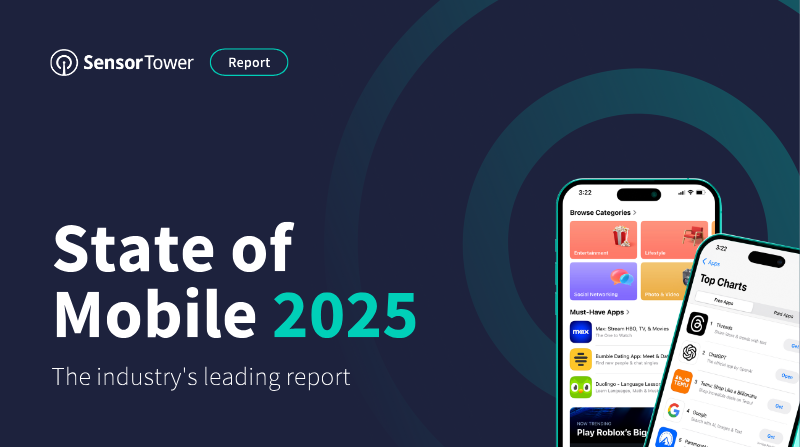
State of Mobile 2025
The global mobile economy reached a significant milestone in 2024, with consumer spend hitting $150 billion. This growth was primarily propelled by a 25% surge in non-gaming app revenue, particularly within the entertainment, productivity, and generative AI sectors. While total app downloads declined for the fourth consecutive year, indicating a maturing market, user engagement reached a record 4.2 trillion hours. The rise of generative AI served as a primary catalyst for this engagement, with AI chatbot downloads increasing by 635 million and the subgenre generating nearly $1.3 billion in revenue.
The mobile gaming sector demonstrated a robust recovery in 2024, reaching $80.9 billion in internal purchase revenue. Although total game downloads fell by 6%, the market shifted toward high-quality, core genres. Strategy and RPG titles dominated monetization, while the "hybrid-casual" model—combining simple mechanics with midcore progression—emerged as a vital growth driver. Established franchises continue to exert dominance, with titles older than two years accounting for over 80% of revenue. Notably, the industry saw a record eleven games surpass $1 billion in annual revenue, signaling a concentration of wealth among top-tier performers.
Beyond gaming, the landscape was defined by the continued dominance of social media, which accounted for 2.4 trillion hours of global usage. TikTok became the first non-game app to reach $15 billion in lifetime spend, reflecting a broader trend of social platforms diversifying revenue through in-app purchases and subscriptions. In the retail sector, Chinese e-tailers like Temu and SHEIN expanded their global footprint, while the finance sector saw a resurgence driven by cryptocurrency and digital wallets. Despite signs of "digital fatigue" in traditional streaming, the mobile ecosystem remains resilient, characterized by strategic shifts toward ad-supported tiers, meaningful AI integration, and incentivized health and fitness platforms.
- The global mobile economy reached $150 billion in consumer spend in 2024, driven by a 25% surge in non-gaming revenue despite a four-year decline in total app downloads.
- Mobile gaming revenue recovered to $80.9 billion, with 80% of earnings generated by titles older than two years and a record eleven games surpassing $1 billion in annual revenue.
- Generative AI became a primary engagement catalyst, with chatbot downloads increasing by 635 million and generating nearly $1.3 billion in revenue.
- Total mobile user engagement hit a record 4.2 trillion hours, with social media platforms accounting for 2.4 trillion of those hours.
- The 'hybrid-casual' gaming model has emerged as a critical growth driver, while strategy and RPG titles continue to dominate monetization.
+1
Sensor TowerJan 2025
Report52 pages
The Gaming and Interactive Media Opportunity in India
India’s gaming and interactive media sector is undergoing a rapid transformation, evolving from a $2.4 billion market into a projected $7.8 billion industry by fiscal year 2030. This growth is underpinned by a young, digitally native population, widespread smartphone penetration, and a robust digital payment infrastructure. While the industry is pivoting away from online money games due to regulatory shifts, the broader ecosystem is finding resilience through a transition toward core and mid-core digital gaming, esports, and emerging interactive media platforms.
The market is increasingly defined by a mobile-first approach that prioritizes culturally relevant, vernacular content to capture audiences in Tier 2 and Tier 3 cities. Domestic studios are scaling their capabilities to serve both local and global markets, leveraging generative AI and gamification to enhance user engagement. Monetization strategies are maturing alongside this expansion, moving toward in-app purchases, subscriptions, and nanotransactions facilitated by seamless payment systems like UPI AutoPay. These financial models are proving essential for the sustainability of diverse segments, including social discovery, audio streaming, and micro-dramas.
Niche sectors such as devotional tech and AI-driven companionship are also emerging as significant growth engines. By integrating localized storytelling and personalized digital services, these platforms address specific cultural needs and the rising demand for community-driven experiences. Although the industry faces ongoing challenges related to regulatory scrutiny, content authenticity, and the necessity of optimizing customer acquisition costs, the overall trajectory remains positive. The convergence of technological innovation and a deepening consumer appetite for interactive, short-form content positions India as a critical player in the global digital media landscape through the end of the decade.
- India’s gaming and interactive media market is projected to grow from $2.4 billion to $7.8 billion by fiscal year 2030.
- The industry is shifting its focus away from online money games toward core and mid-core digital gaming, esports, and interactive media platforms due to regulatory changes.
- Market expansion is driven by a mobile-first strategy that targets Tier 2 and Tier 3 cities through culturally relevant, vernacular content.
- Monetization is evolving toward sustainable models including in-app purchases, subscriptions, and nanotransactions, supported by digital infrastructure like UPI AutoPay.
- Domestic studios are increasingly utilizing generative AI and gamification to scale production and enhance user engagement for both local and global audiences.
+2
BITKRAFT VenturesJan 2025

Report22 pages
Mobile App Trends: Türkiye 2025
The mobile app economy in Türkiye is experiencing a high-growth phase, characterized by a young, tech-savvy population and robust digital infrastructure. With 80.7 million active mobile connections and internet penetration reaching 87%, the market is maturing into a global competitor. The sector is supported by government incentives and a thriving startup ecosystem, with total revenue projected to reach $1.65 billion by 2029. This analysis, covering the period from January 2023 through July 2025, utilizes data from a mix of 5,000 top-performing apps and the broader dataset tracked by Adjust to benchmark performance across gaming, finance, and e-commerce verticals.
The gaming sector remains a primary driver of growth, with Türkiye’s studios achieving significant international success. In the first half of 2025, gaming installs in Türkiye grew 4% year-over-year, while sessions increased by 12%, significantly outpacing global and regional benchmarks. Average session lengths reached 32.8 minutes, reflecting high user engagement. While day-1 retention in Türkiye stands at 19%, the market shows shorter user lifecycles compared to global averages, suggesting a need for refined engagement strategies.
Finance and e-commerce apps are also evolving rapidly. Finance app installs surged 30% in the first half of 2025 compared to the same period in 2024, despite a slight decline in session lengths, which may indicate improved efficiency in user transaction flows. E-commerce apps demonstrated resilience, with a 4% increase in sessions during the first half of 2025, outperforming both global and MENAT regional trends. Retention rates in both sectors remain competitive, with Türkiye consistently exceeding regional and global medians.
A notable trend is the rapid expansion of AI-powered applications, which saw a 142.5% year-over-year increase in downloads in 2024. This growth is fueled by a shift of talent from hypercasual gaming to AI-first development and the creation of proprietary Turkish-language large language models. As the market matures, the integration of AI-driven personalization and streamlined, friction-free user experiences remains critical for developers aiming to capture and retain high-value audiences in this increasingly competitive landscape.
- The Turkish mobile app market is projected to reach $1.65 billion in revenue by 2029, supported by 80.7 million active mobile connections and 87% internet penetration.
- AI-powered applications experienced a 142.5% year-over-year increase in downloads in 2024, driven by a talent shift from hypercasual gaming to AI-first development.
- Finance app installs surged by 30% in the first half of 2025 compared to the same period in 2024, despite a slight decline in session lengths indicating more efficient transaction flows.
- Gaming sessions in Türkiye increased by 12% in the first half of 2025 with average session lengths of 32.8 minutes, significantly outpacing global and regional benchmarks.
- While gaming session engagement is high, day-1 retention stands at 19% with shorter user lifecycles than global averages, highlighting a need for improved engagement strategies.
+3
AdjustJan 2025

Report26 pages
Video Gaming Report 2025: How Platforms Are Colliding and Why This Will Spark the Next Era of Growth
The global video game industry is currently emerging from a three-year period of stagnation, transitioning toward a future defined by platform convergence and hardware-agnostic ecosystems. The traditional era of console-centric competition is being replaced by a multiplatform landscape where success is increasingly dictated by community engagement, user-generated content, and discoverability. This structural shift is underpinned by the integration of generative AI, the expansion of cloud gaming, and the diversification of distribution channels, which collectively aim to move the industry beyond the limitations of legacy hardware.
Cloud gaming is projected to reach $18.3 billion in revenue by 2030, serving as a primary catalyst for this growth. However, this transition introduces significant challenges, most notably the risk of market saturation caused by an influx of low-quality, AI-generated content. To maintain profitability and relevance, developers are pivoting toward direct-to-consumer monetization strategies, including tiered pricing models, windowing, and the integration of in-game advertising. These tactics are designed to capture value from a increasingly price-conscious global player base while navigating a shifting regulatory environment.
The dominance of incumbent app stores is simultaneously being challenged by the rise of developer-owned webstores and alternative distribution platforms. While these new channels offer the potential for improved margins and deeper player relationships, their long-term viability depends on the industry’s ability to address consumer concerns regarding security and platform convenience. Ultimately, the next era of growth will be defined by the ability of stakeholders to balance technological innovation with the necessity of fostering sustainable creator economies, ensuring that discoverability remains the central pillar of the modern gaming experience.
- Cloud gaming is projected to reach $18.3 billion in revenue by 2030, acting as a primary driver for industry growth as the market moves toward hardware-agnostic ecosystems.
- The industry is shifting from console-centric competition to a multiplatform model where success depends on user-generated content, community engagement, and discoverability.
- Developers are adopting direct-to-consumer monetization strategies—including tiered pricing, windowing, and in-game advertising—to address a price-conscious global player base.
- The rise of developer-owned webstores and alternative distribution platforms is challenging the dominance of incumbent app stores to improve margins and deepen player relationships.
- Market saturation caused by an influx of low-quality, AI-generated content poses a significant risk to profitability and requires a focus on sustainable creator economies.
+3
Boston Consulting GroupJan 2025

Report37 pages
2025 GDC Trends Report
The global video game industry is undergoing a strategic pivot toward operational sustainability and niche market penetration as of 2025. Developers are increasingly moving away from high-risk, large-scale AAA live service projects in favor of smaller, cost-effective titles that prioritize player retention over aggressive acquisition. This shift is mirrored in the mobile sector, where hybrid-casual models and data-driven advertising are gaining prominence, alongside a notable resurgence in HTML5 gaming as a platform for broader accessibility.
Technological integration remains a primary driver of industry evolution, particularly regarding generative AI and extended reality. While AI tools are being rapidly adopted to accelerate prototyping and enhance non-player character complexity, their implementation is tempered by significant concerns surrounding copyright, ethics, and long-term job security. Simultaneously, the VR, AR, and MR sectors are transitioning toward mass-market accessibility, with a focus on affordable hardware and the development of immersive multiplayer experiences. These trends are underscored by the success of titles like Balatro, which exemplify the growing market appetite for innovative, independent-minded gameplay.
The industry is also experiencing a fundamental change in its social and structural foundations. The formalization of labor organization, exemplified by the debut of the United Videogame Workers, reflects a growing commitment to addressing developer burnout and workplace equity. Furthermore, the industry is standardizing accessibility through initiatives like the ESA’s Accessible Games program, recognizing that inclusive design is essential for long-term growth. As funding becomes more selective, developers are increasingly relying on robust community building as a primary mechanism to secure investment and ensure the viability of their projects in a competitive global landscape.
- Developers are shifting away from high-risk AAA live service projects to prioritize smaller, cost-effective titles that focus on long-term player retention.
- Generative AI is being widely adopted to accelerate prototyping and increase NPC complexity, though its use remains constrained by ongoing ethical, copyright, and job security concerns.
- The mobile gaming sector is pivoting toward hybrid-casual models and data-driven advertising, while HTML5 gaming is seeing a resurgence as a tool for broader accessibility.
- The VR, AR, and MR sectors are moving toward mass-market adoption by prioritizing affordable hardware and immersive multiplayer experiences.
- Labor organization is becoming formalized, with groups like the United Videogame Workers emerging to address industry-wide issues of developer burnout and workplace equity.
+1
Game Developers ConferenceJan 2025

Report40 pages
The Gaming App Insights Report 2025: Unlocking Growth Opportunities for Mobile Marketers
The mobile gaming industry is entering a period of strategic recalibration, projected to reach $126.1 billion in revenue by 2025. This growth is underpinned by a transition toward hybrid monetization models and the integration of AI-powered personalization to combat persistent retention challenges. While global install volume grew by 4% in 2024, the market exhibits a distinct geographic divide; North American and European markets face stagnation, whereas Latin America and the Middle East and North Africa regions demonstrate robust expansion. Success in this evolving landscape requires developers to move beyond traditional acquisition, favoring diversified channels such as Connected TV and localized, player-centric engagement strategies.
Data from early 2025 indicates that user tracking remains a pivotal operational hurdle, with global App Tracking Transparency opt-in rates hovering at 37.9%. Although arcade games have seen notable improvements in opt-in performance, the United States remains relatively static at 32%, underscoring the necessity for refined messaging strategies to maintain visibility. Concurrently, the industry is grappling with a complex financial environment characterized by rising costs per install and declining average revenue metrics. These headwinds are forcing a shift in marketing tactics, as developers increasingly rely on a broader array of acquisition partners and data-informed creative experimentation to sustain growth.
Ultimately, the path to profitability in 2025 lies in prioritizing long-term player value over short-term acquisition metrics. By leveraging AI-driven optimization and fostering community-building initiatives, developers can mitigate the impact of declining revenue per user. The industry is clearly moving toward a more sophisticated, data-reliant ecosystem where the ability to measure performance across fragmented channels—including mobile and Connected TV—is essential for maintaining a competitive advantage in a maturing global market.
- The mobile gaming market is projected to reach $126.1 billion in revenue by 2025, driven by a shift toward hybrid monetization and AI-powered personalization.
- Global install volume grew by 4% in 2024, but growth is geographically polarized with stagnation in North America and Europe contrasted by expansion in Latin America and the MENA region.
- Global App Tracking Transparency (ATT) opt-in rates remain low at 37.9%, with the United States market stagnant at a 32% opt-in rate.
- Developers face a challenging financial environment defined by rising costs per install and declining average revenue metrics, necessitating a shift toward long-term player value over short-term acquisition.
- To sustain growth, developers must diversify acquisition channels beyond traditional mobile ads, specifically integrating Connected TV and data-informed creative experimentation.
+5
GamingReportJan 2025

Report39 pages
State of the Game Industry
The survey of more than 3,000 global developers in 2025 reveals a gaming industry grappling with persistent instability while making modest progress on diversity. Layoffs have risen, with one‑tenth of respondents reporting job losses in the past year and 58 % worried about future cuts. Women and non‑binary developers now account for 32 % of the workforce, up from 29 % in 2024, and LGBTQ+ representation reached 24 %, yet white males still dominate at 66 %. Revenue pressures and market shifts continue to drive restructuring, underscoring the sector’s vulnerability.
Generative AI has transitioned from a niche experiment to an integral part of many studios, with 36 % of developers using it personally and 52 % reporting company‑wide adoption. However, enthusiasm has cooled: only nine percent of companies plan to expand AI use, and negative perceptions have climbed to 30 % from 21 %. Ethical concerns, intellectual‑property risks, and fears of job displacement now affect more than half of respondents. Internal AI policies have expanded to 64 % of studios, and optional use has become more common, though a small minority mandate AI tools.
Live‑service development remains polarised. While 42 % of studios already produce live titles, only 13 % intend to launch one next year. AAA developers are more inclined (33 %) due to potential financial upside and sustained player engagement, yet worries about market saturation, creative fatigue, predatory monetization, and burnout persist. Media adaptations interest 36 % of AAA studios, whereas internal pitch activity has fallen. Self‑funding remains the dominant financing method (56 %), though success rates vary across funding models.
Work‑hour patterns signal growing strain: the share of developers working over 50 hours a week has risen from 8 % to 13 %, and half of respondents now view excess hours as problematic. Union support remains robust at 69 %, with 58 % advocating industry unionisation, yet only 22 % have discussed it in the past year. These findings illustrate a sector negotiating between rapid technological change, creative ambition, and labour‑market pressures across diverse geographic regions and studio sizes.
- Job instability is widespread, with 10% of developers experiencing layoffs in the past year and 58% expressing concern over future job security.
- Generative AI adoption is high, with 52% of studios using it company-wide, yet negative sentiment has risen to 30% due to ethical, IP, and displacement concerns.
- Work-life balance is deteriorating, as the proportion of developers working over 50 hours per week increased from 8% to 13%, with half of the workforce viewing these hours as problematic.
- Live-service development is cooling, with only 13% of studios planning to launch a new live title next year despite 42% currently maintaining existing ones.
- Workforce diversity is showing modest gains, with women and non-binary developers rising to 32% of the industry and LGBTQ+ representation reaching 24%.
+1
GDCJan 2025

Report66 pages
How UGC, AI, & Cloud Are Transforming Gaming Report
The report argues that user‑generated content (UGC), artificial intelligence (AI) and cloud gaming are reshaping the industry by lowering entry barriers, democratizing creation and expanding cross‑platform reach. Data show that Gen Alpha and Gen Z spend a majority of their daily gaming time, with UGC platforms such as Roblox attracting 85 million active users and cloud‑gaming subscribers rising from 62.5 million to nearly 396 million in four years. AI‑driven tools are projected to generate $4.2 B by 2029, while cloud‑gaming revenue grew from $1.1 B in 2020 to $6.9 B in 2024 and is expected to reach $18.7 B by 2027.
Indie developers benefit from cloud infrastructure that allows anyone to play AAA titles and AI engines such as Unity Muse or Unreal Engine that reduce development costs. Indie releases on Steam generated $4 B in 2024, matching AAA revenue streams, and UGC has extended the life of titles like Fortnite and Roblox, boosting retention by up to 10 % in some cases. However, quality control, cross‑platform compatibility and monetization remain challenges; dedicated mod QA teams, “mod hub” interfaces and transparent pricing are recommended to sustain high‑quality ecosystems.
Player surveys reveal mixed feelings about AI, with 54 % seeing more benefits than drawbacks but 52 % feeling nervous. Creators view AI as a productivity aid, with 83 % adopting it and reporting improved content quality (66 %) and asset variation speed (70 %). Cloud gaming is praised for cost savings (47 %) and accessibility (44 %), yet latency (76 %) and bandwidth (68 %) issues persist, underscoring the need for edge computing, AI‑based compression and better economic models.
The analysis projects cloud gaming as the dominant play model within a decade, initially targeting B2B use cases before expanding to consumers. Advances in 5G and internet infrastructure are expected to unlock low‑latency streaming, enabling cross‑platform play and the convergence of AI, UGC and live‑service models into socially connected gaming ecosystems. The report concludes that while continuous evolution and community engagement will drive growth, depth in specific genres may ultimately define the next wave of innovation.
- Cloud gaming revenue grew from $1.1 billion in 2020 to $6.9 billion in 2024, with projections reaching $18.7 billion by 2027 and a trajectory to become the dominant play model within a decade.
- Cloud gaming subscribers have surged from 62.5 million to nearly 396 million over the last four years, while AI-driven development tools are projected to generate $4.2 billion by 2029.
- Indie developers are increasingly competitive, with indie releases on Steam generating $4 billion in 2024, a figure that now matches AAA revenue streams.
- UGC platforms like Roblox have reached 85 million active users, with UGC integration in titles like Fortnite and Roblox boosting player retention by up to 10%.
- While 83% of creators have adopted AI to improve asset variation speed (70%) and content quality (66%), player sentiment remains divided, with 52% expressing nervousness regarding the technology.
+1
Room 8 GroupJan 2025
Report33 pages
The Future Of NPCs: What Gamers Demand From Next-Gen Characters
The evolution of non-playable characters (NPCs) has failed to keep pace with the rapid advancements in game graphics and narrative complexity, leading to a significant gap in player immersion. While modern titles feature sophisticated world-building, NPC technology remains largely stagnant, relying on repetitive dialogue trees and rigid scripts. Research conducted among 1,002 U.S.-based gamers aged 16 to 50 reveals that while 84% of players consider NPCs vital to the gaming experience, over half are frustrated by repetitive dialogue and an inability for characters to adapt to in-game changes.
The transition toward advanced AI NPCs—characters powered by machine learning, natural language processing, and emotional perception—represents a transformative shift for the industry. Survey data indicates an overwhelming appetite for this technology: 99% of gamers believe advanced NPCs would positively impact gameplay, and 88% believe they would significantly improve immersion. Players specifically desire NPCs with situational awareness, the ability to remember previous interactions, and the capacity for free-flowing conversation. This demand is highest among fans of RPG and sandbox genres, where interaction with the world is a core mechanic.
Beyond enhancing the player experience, the integration of advanced AI presents a substantial commercial opportunity for developers. The findings show that 81% of gamers are willing to pay more for titles featuring intelligent NPCs, and 79% are more likely to purchase a game if it includes this technology. Furthermore, 78% of respondents indicated they would spend more time playing games with advanced NPCs, suggesting a direct correlation between AI sophistication and player retention.
The methodology utilized a 20-minute online survey where participants interacted with demos of advanced AI technology. The sample included a diverse range of players across PC, console, mobile, and VR platforms, spending an average of five to eight hours per week gaming. Ultimately, the data suggests that moving away from scripted dialogue toward dynamic, autonomous characters is essential for studios looking to remain competitive and meet the rising expectations of modern audiences.
- 99% of gamers believe that integrating advanced AI into NPCs would positively impact gameplay, while 88% expect it to significantly improve overall immersion.
- 81% of players are willing to pay a premium for games featuring intelligent NPCs, and 79% report a higher likelihood of purchasing titles that utilize this technology.
- 78% of gamers indicate they would increase their playtime in titles featuring advanced, autonomous NPCs, suggesting a direct link between AI sophistication and player retention.
- While 84% of the 1,002 surveyed gamers consider NPCs vital to the gaming experience, over 50% express frustration with current limitations like repetitive dialogue and rigid, non-adaptive scripts.
- Players specifically demand NPCs capable of situational awareness, memory of past interactions, and free-flowing, natural language conversation, with the highest demand coming from RPG and sandbox genre fans.
+1
Inworld AIJan 2025