Watch Dogs 2
4 documents in the library are about Watch Dogs 2, from writers such as Game Developers Conference, the newest from 2019. Each has a summary and key insights with the page they come from.
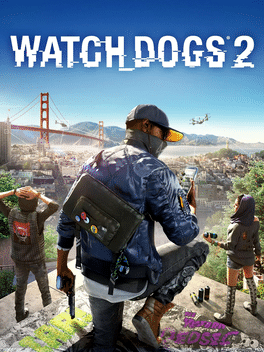
Explore a massive and dynamic open world offering an incredible variety of gameplay possibilities. Hack your way through traffic while you engage in dangerous car chases through the winding streets of San Francisco, traverse the rooftops of the colorful and vibrant neighborhoods of Oakland, and infiltrate the cutting-edge offices of Silicon Valley companies. There are many secrets to uncover in the birthplace of the tech revolution.
- Released
- Nov 15, 2016
- Developer
- Ubisoft Montreal
- Publisher
- Ubisoft Entertainment
- Genres
- Shooter, Adventure
- Platforms
- Google Stadia, PlayStation 4, PC (Microsoft Windows), Xbox One
- Links
- Wikipedia
Game data from IGDB.com
Documents about Watch Dogs 2
Replicating Chaos: Vehicle Replication in Watch Dogs 2
Achieving seamless vehicle replication in a peer-to-peer multiplayer environment requires a sophisticated balance between network latency management and physics fidelity.
- Watch Dogs 2 utilized a peer-to-peer architecture for its four-player bounty mode, which necessitated distributed authority over entities and created significant challenges for synchronizing high-speed vehicle collisions.
- Vehicle replication relies on projective velocity blending for dead reckoning, which interpolates between local velocity and predicted master snapshots to minimize the spatial gap caused by network latency.
- To mitigate collision discrepancies in a peer-to-peer environment, the team implemented a hybrid approach that allows local physics to simulate impacts for a short duration before blending back into the dead-reckoned trajectory.
Hacking into the Combat AI of Watch Dogs 2
The combat artificial intelligence in Watch Dogs 2 relies on a multi-layered cover-selection system designed to balance tactical realism with computational efficiency.
- Watch Dogs 2 AI agents evaluate cover selection based on three primary criteria: distance to the target (optimized for weapon range), line of sight (ensuring a valid field of fire), and proximity to other agents (to avoid clumping and vulnerability to area-of-effect damage).
- To mitigate the player's ability to 'cheese' combat using unreachable vantage points like scissor lifts, developers implemented a special 'unreachable' AI mode where agents prioritize survivability and lateral movement toward cover rather than pathing directly toward the player.
- The AI uses three distinct cover-seeking behaviors: 'first cover' for immediate protection, 'neighboring cover' for repositioning during combat, and 'second cover' for tactical flanking or optimizing weapon range.
Helping It All Emerge: Managing Crowd AI in Watch Dogs 2
The creation of a living, reactive urban environment in Watch Dogs 2 centers on the implementation of an Anecdote Factory, a system designed to generate unscripted, emergent narrative moments.
- Ubisoft managed civilian behavior in Watch Dogs 2 using a logic-based system containing approximately 700 rules that, through combinatorial complexity, generated billions of potential behavioral outcomes.
- The AI decision-making process utilizes a multi-factor evaluation where agents weigh personal relationships, emotional states, and environmental context to determine whether to ignore, observe, flee, or fight during an incident.
- To maintain performance and prevent chaotic feedback loops, the team implemented 'limiters' on loud, high-impact behaviors to ensure that emergent interactions between NPCs remained within manageable, finite limits.

Breaking Marginalized Character Narrative Molds to Write Better, Richer Characters
The prevailing reliance on the cisgender, able-bodied white male as the default protagonist in video games frequently results in generic, imperialist archetypes that lack genuine relatability.
- Developers must move beyond the default cisgender, able-bodied white male protagonist to avoid generic, imperialist archetypes and foster deeper character relatability.
- Authentic representation requires grounding protagonists in specific, deliberate cultural and personal histories, as demonstrated in the narrative approach of Treachery in Beatdown City.
- Writers should avoid reducing marginalized characters to one-dimensional stereotypes or trauma-based plot devices, a failure observed in titles like Mafia III and Watch Dogs 2.