Octodad
Game
2 documents in the library are about Octodad, from writers such as DiGRA and Extra Credits. Each has a summary and key insights with the page they come from.
Connections
Each row is a game or company named alongside Octodad, each column a document, oldest first. A mark means that document names it. Select a row to see those documents.
Documents about Octodad
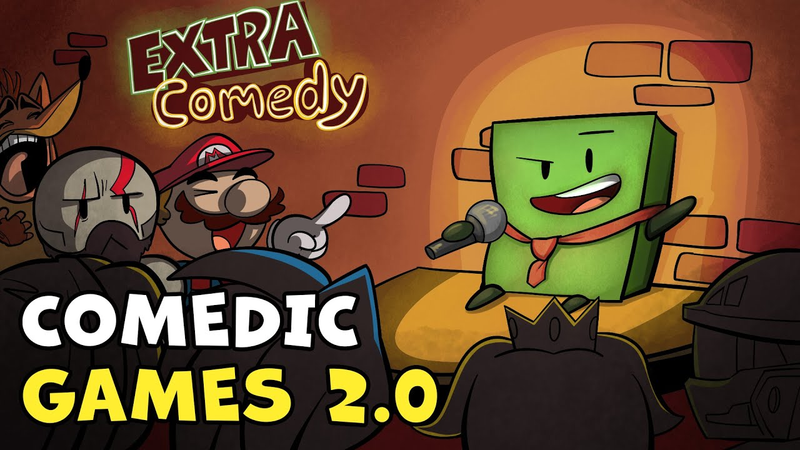
Extra Credits16 min
How the Joke has Changed | Comedy in Games 2026 | Extra Credits Gaming
Comedy in video games has evolved significantly over the last decade, shifting from a reliance on scripted writing and voice acting to a model where gameplay mechanics and player interaction serve as the primary drivers of humor.
- Comedy in games relies on the structural manipulation of player expectations, where developers create tension through established rules and resolve it through surprising or subverted outcomes.
- Effective game comedy often involves a strategic balance of player agency, where designers must decide when to grant control and when to remove it to ensure the player's input enhances rather than disrupts the intended humor.
- Modern comedy games have shifted from relying solely on written dialogue to utilizing gameplay-driven mechanics, such as physics-based simulations in titles like Octodad and Surgeon Simulator that intentionally defy real-world gravity and logic.
Extra CreditsFeb 2026
Whitepaper16 pages
A Character in Your Hand: Puppetry to Inform Game Controls
Puppetry offers a useful framework for designing character controls in virtual reality, argues this study from Georgia Tech researchers Nitsche and McBride.
- Puppetry offers a practical design model for VR character controls because puppets and game characters both sit between imagined and factual worlds, inviting players to project themselves into them.
- VR controllers excel at tracking position and orientation but lack the finger-level precision that detailed puppet manipulation demands, which drove the authors to develop tailored control schemes.
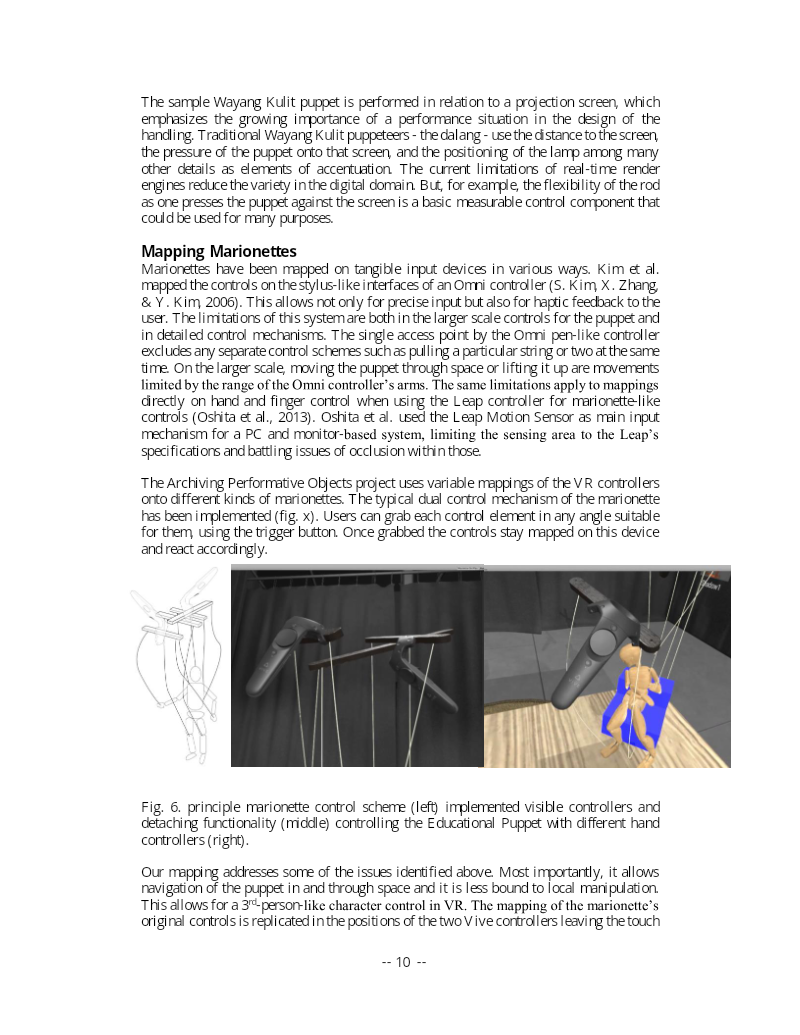
- The authors mapped traditional rod, marionette, and hand puppet control mechanisms, drawn from the Center for Puppetry Arts archive, onto HTC Vive controllers using Kaplin's distance model as their design logic.
DiGRAJan 2018