Machinarium
Game
2 documents in the library are about Machinarium, from writers such as DiGRA and PocketGamer.biz. Each has a summary and key insights with the page they come from.
Connections
Each row is a game or company named alongside Machinarium, each column a document, oldest first. A mark means that document names it. Select a row to see those documents.
Documents about Machinarium
Whitepaper14 pages
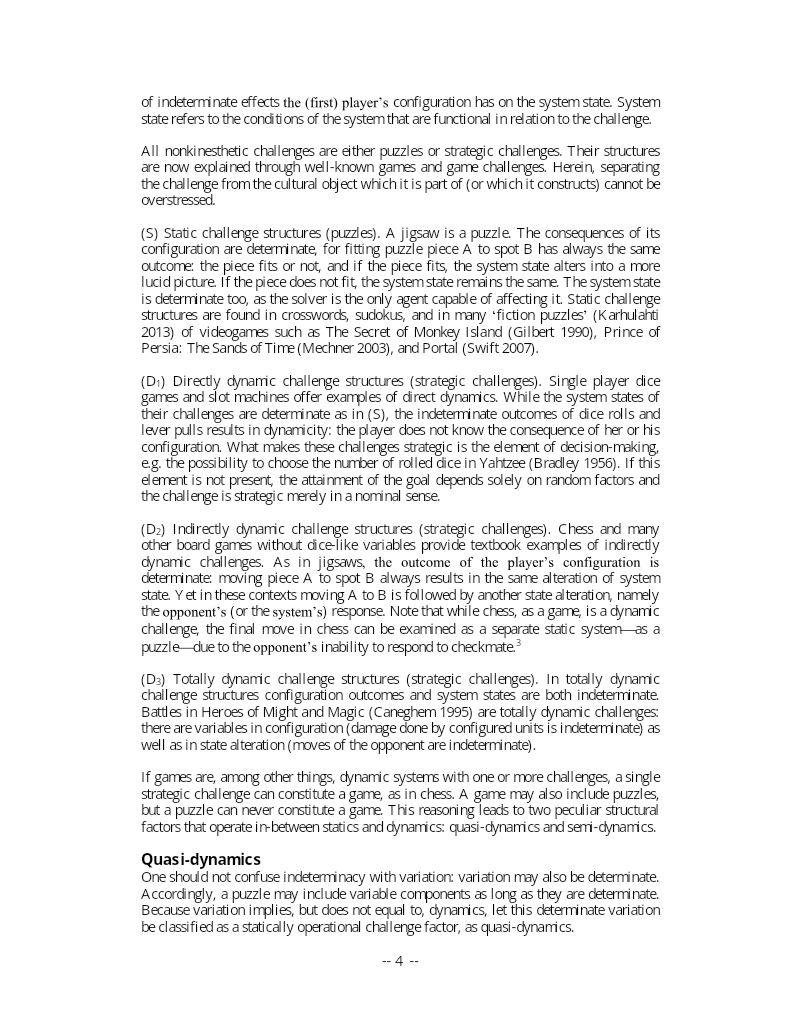
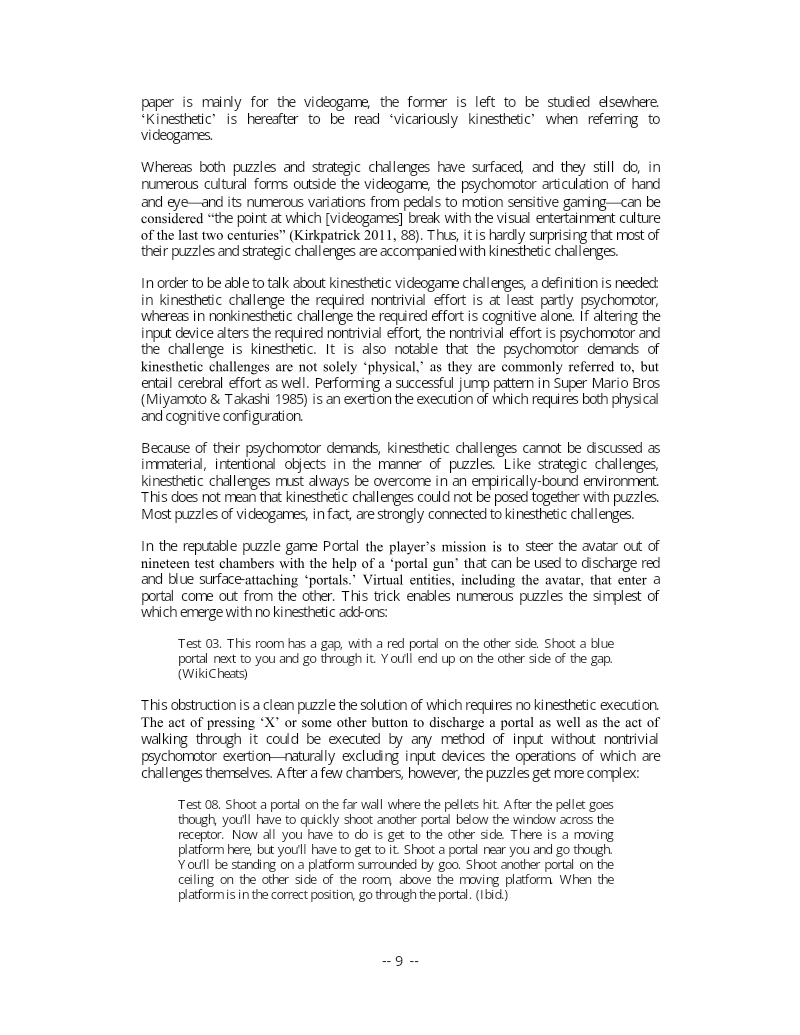
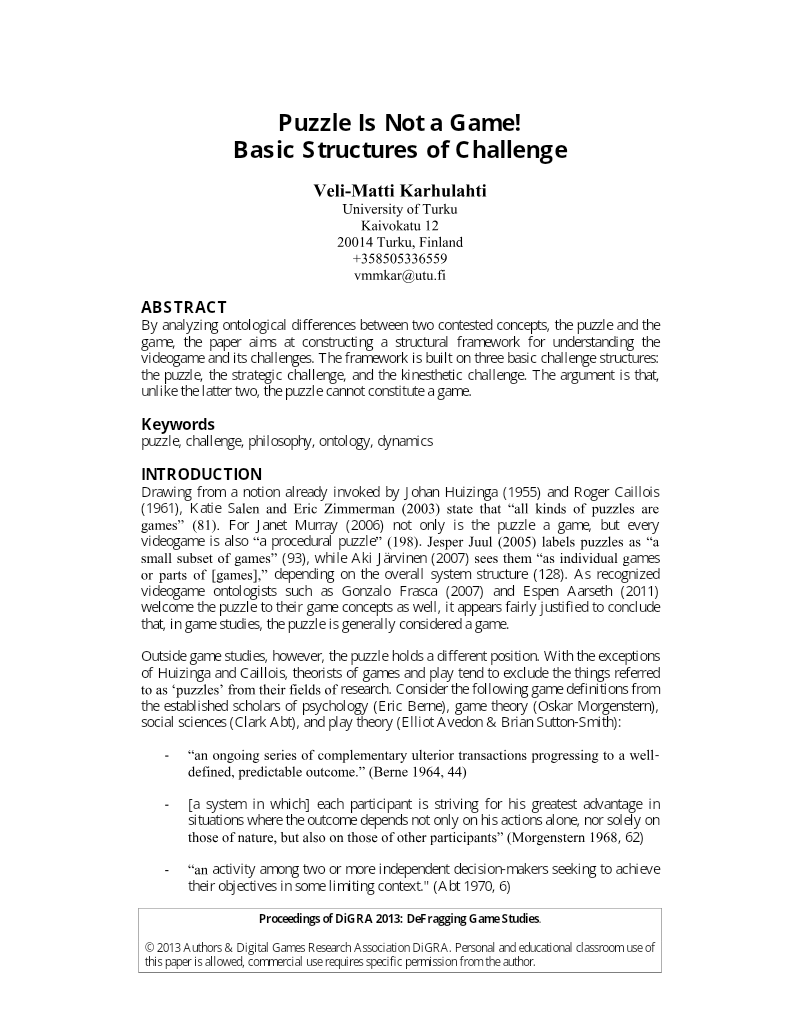
Puzzle Is Not a Game! Basic Structures of Challenge
Karhulahti's paper argues that puzzles, unlike strategic and kinesthetic challenges, cannot constitute games in the full sense, because they lack the dynamic, opponent-driven structure that prominent definitions of play and games treat as essential.
- Karhulahti argues that puzzles, unlike strategic and kinesthetic challenges, cannot constitute games in the full sense because they lack the dynamic, opponent-driven structure that prominent definitions of play treat as essential.
- The paper proposes a tripartite framework of challenge structures: puzzles (static, determinate), strategic challenges (dynamic, indeterminate), and kinesthetic challenges (bound to bodily execution), presented as the basic building blocks of videogame challenge.
- The static/dynamic divide is framed as a structural property of the challenge itself rather than a matter of player perception, directly countering claims made by some critics.
DiGRAJan 2014

PocketGamer.biz6 min
Lunavark Studio artist Daniel Robinson explains why Cosmic Couch is a very personal auto runner
Cosmic Couch is an indie auto-runner game developed by Lunavark Studio, a small team consisting of four artists and one programmer.
- Lunavark Studio is differentiating its auto-runner, Cosmic Couch, by blending traditional endless runner mechanics with a linear, narrative-driven structure.
- The studio is rejecting the freemium model in favor of a premium, upfront pricing strategy that excludes in-game purchases.
- The development team consists of four artists and one programmer, necessitating a collaborative workflow to manage the high artist-to-programmer ratio.
PocketGamer.bizAug 2013