Justice Online
Game
Documents about Justice Online
Whitepaper5 pages
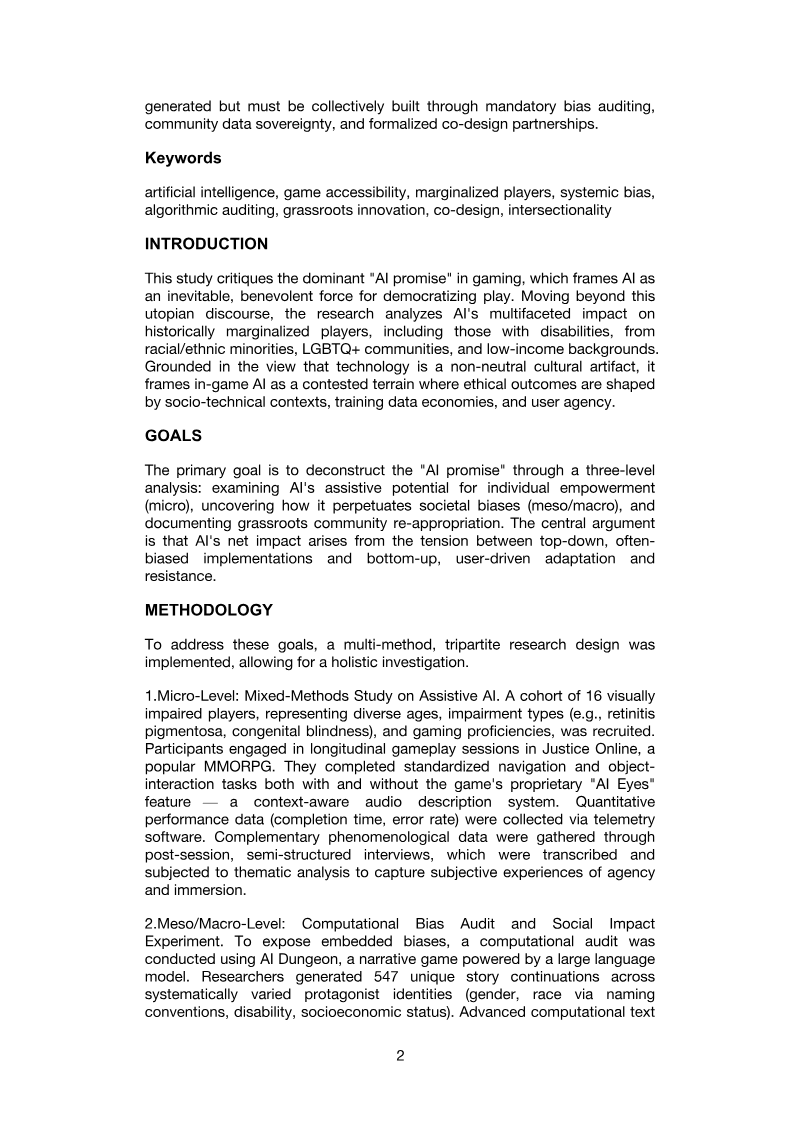
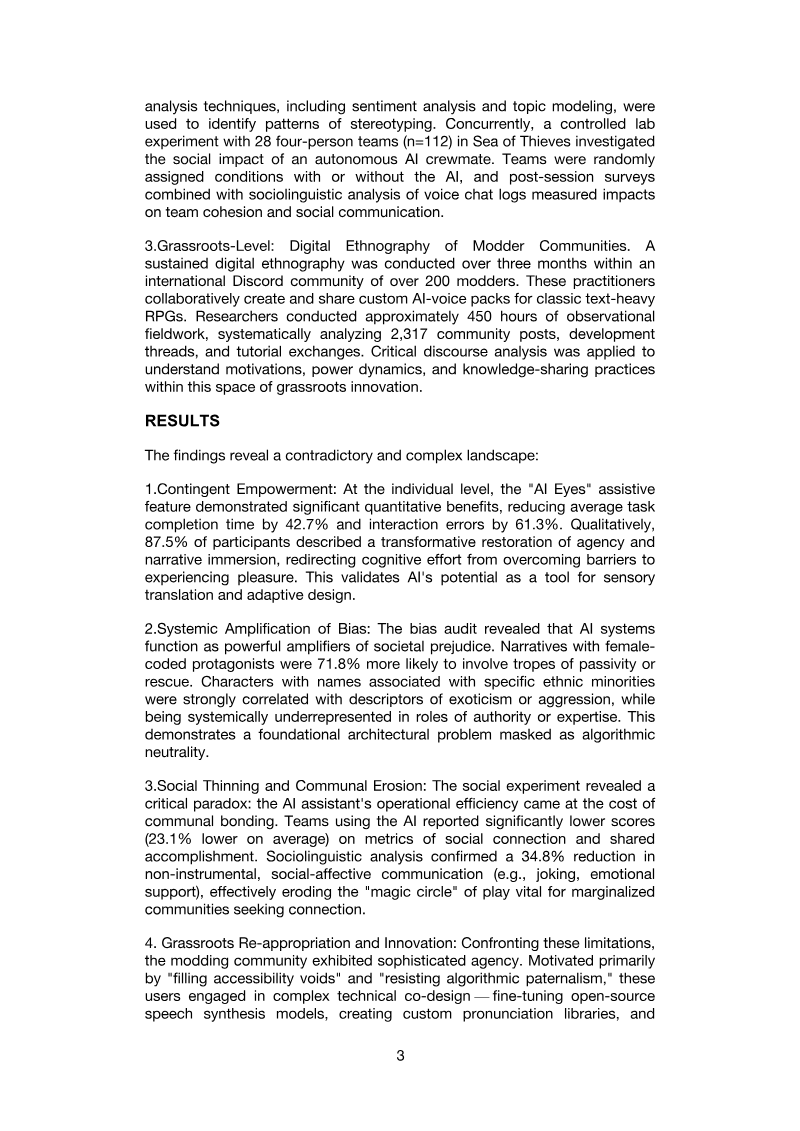
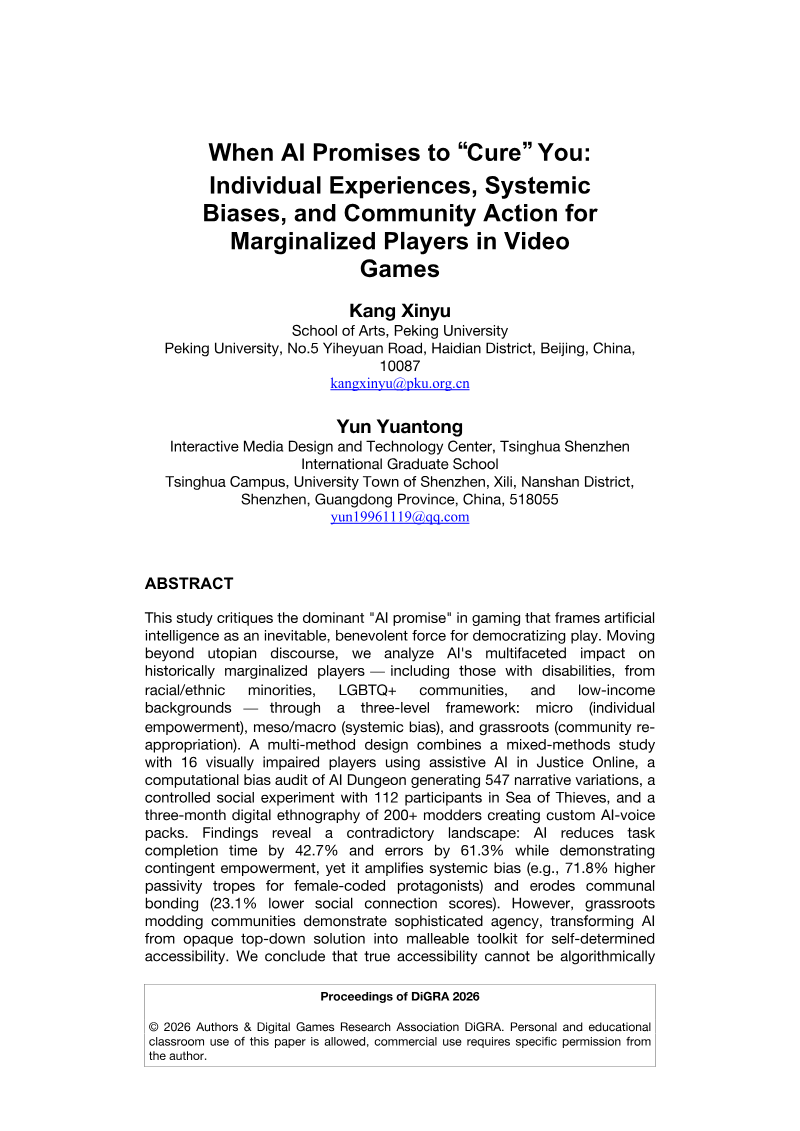
When AI Promises to "Cure" You: Individual Experiences, Systemic Biases, and Community Action for Marginalized Players in Video Games
This study critiques the prevailing narrative in gaming that positions artificial intelligence as an inevitable and benevolent force for democratizing play, arguing instead that AI's effects on marginalized players are contested and shaped by socio-technical context.
- AI assistive features can deliver large gains for players: the 'AI Eyes' feature for visually impaired players in Justice Online cut task completion time by 42.7% and interaction errors by 61.3%, with 87.5% of participants reporting restored agency and immersion.
- AI systems in games carry measurable representational bias: a computational audit of 547 AI Dungeon narrative variations found female-coded protagonists were 71.8% more likely to appear in passive or rescue-oriented roles, while ethnically associated names were linked to exoticism or aggression and underrepresented in authority roles.
- Efficiency gains from AI can erode social bonds: in a controlled Sea of Thieves experiment with 112 participants, AI teammates correlated with 23.1% lower social connection scores and a 34.8% reduction in non-instrumental, socially affective communication.
DiGRAJun 2026
Companies behind it

As the documents state it.