Just Cause 3
3 documents in the library are about Just Cause 3, from writers such as Game Developers Conference, the newest from 2019. Each has a summary and key insights with the page they come from.

Just Cause 3 is a third-person, open-world action-adventure game set on the fictional Mediterranean island nation of Medici. Players explore a large open environment spanning several biomes, using a grappling hook, parachute, and wingsuit to move quickly across land, sea, and air. Gameplay centers on physics-driven destruction and player freedom, with a wide range of weapons, vehicles, and explosives used to dismantle enemy installations and liberate towns and bases. It is the third entry in the Just Cause series and was followed by Just Cause 4.
- Released
- Nov 30, 2015
- Developer
- Avalanche Studios
- Publisher
- Square Enix
- Genres
- Adventure
- Platforms
- PlayStation 4, PC (Microsoft Windows), Xbox One
- Links
- Official site, Wikipedia
Game data from IGDB.com
Documents about Just Cause 3

Tree's Company: Systemic AI Design in Just Cause 3
The systemic design of artificial intelligence in Just Cause 3 relies on a modular architecture that balances emergent, open-world behavior with the precise requirements of scripted mission content.
- Avalanche Studios utilized a hybrid AI architecture for Just Cause 3 that combined behavior trees for high-level logic with utility functions to rank and select optimal positions or targets based on environmental variables.
- Content designers were empowered to customize AI behavior by filling out exposed parameters in the engine, which were then dynamically read and utilized by the behavior trees at runtime.
- The team implemented modular 'micro-behaviors' as external tree objects, allowing designers to inject specific tasks—such as flying a helicopter to a point—into the main AI logic without requiring custom programming for every scenario.
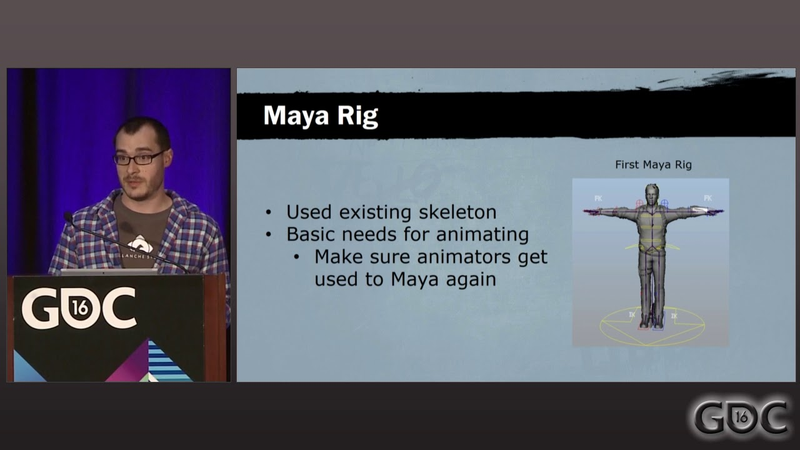
Honey, Where is My Wingsuit? - Building the Just Cause 3 Animation and Rigging Pipeline
The development of the Just Cause 3 animation and rigging pipeline centered on transitioning from a MotionBuilder-centric workflow to a Maya-based environment to better accommodate the game’s unique hand-keyed mechanics, such as the wingsuit.
- Avalanche Studios implemented a dual-software pipeline for Just Cause 3, transitioning animation workflows between Maya for rigging and MotionBuilder for animation editing using a shared HumanIK (HIK) skeleton system.
- The team utilized a modular rigging architecture where all character types—including humans, animals like cows, and specialized gear like wingsuits—shared a standardized initialization and finalization process to ensure consistency.
- To manage 13,000 lines of English dialogue, the studio used MotionBuilder’s built-in voice device to automate lip-syncing, driving face poses via float data (0 to 1) that the game engine blended at runtime.

Realizing Responsive High Fidelity Character Movement in Just Cause 3
Achieving high-fidelity character movement in Just Cause 3 requires a sophisticated hybrid architecture that prioritizes player responsiveness without sacrificing the visual integrity of authored animations.
- Avalanche Studios achieved responsive character movement in Just Cause 3 by decoupling animation-driven motion from player input, allowing for real-time adjustments to rotation and speed without relying solely on pre-authored animation data.
- To maintain responsiveness during start animations, the team extracted rotation data from the animation and applied a fixed adjustment to the character's facing direction to match the player's target input in real-time.
- The developers used authored angular acceleration curves to smooth character orientation changes, ensuring consistent movement responsiveness across different gameplay scenarios like transitioning from a parachute landing to a run.