Forza Horizon 4
Game
2 documents in the library are about Forza Horizon 4, from writers such as AI and Games and Eludamos: Journal for Computer Game Culture. Each has a summary and key insights with the page they come from.
Connections
Each row is a game or company named alongside Forza Horizon 4, each column a document, oldest first. A mark means that document names it. Select a row to see those documents.
Documents about Forza Horizon 4
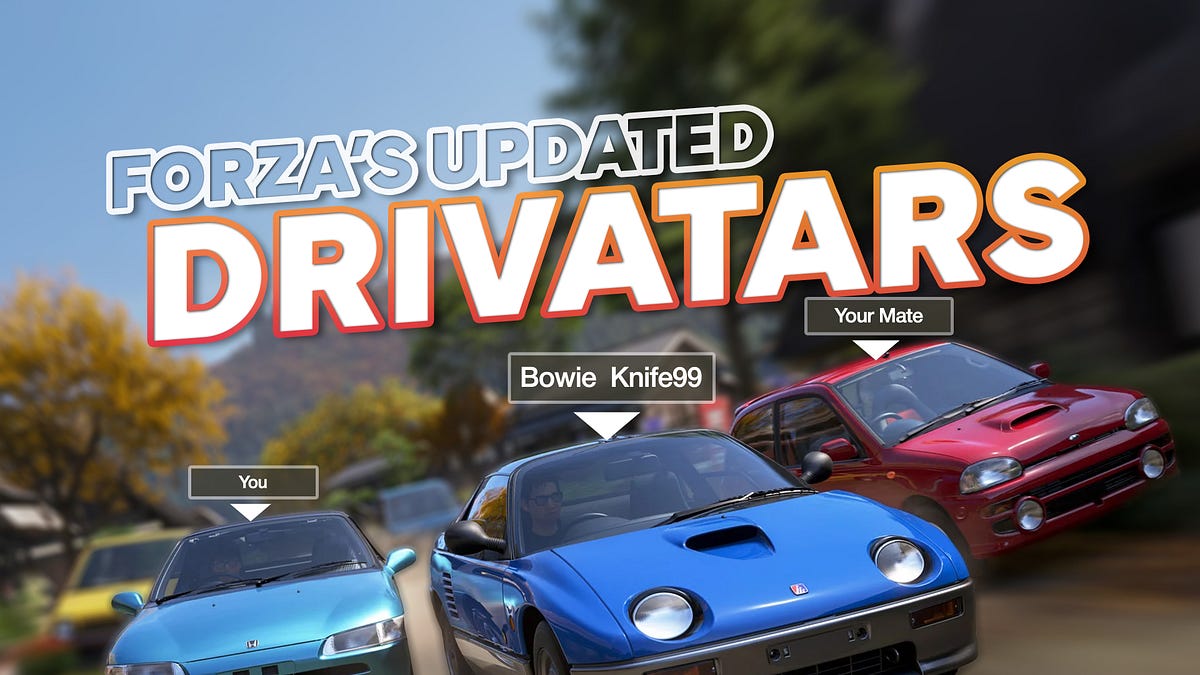
How Forza Rebuilt Their Drivatar AI System
Tommy Thompson's AI and Games analysis argues that the viral "Bowie Knife99" Drivatar in Forza Horizon 6, released May 19, 2026, is a byproduct of a fundamental rebuild of Forza's AI driver system rather than a quirk of human-derived data.
- Forza Horizon 6, released in May 2026, features a highly aggressive Drivatar AI named 'Bowie Knife99' that has gained viral attention for its chaotic and rule-breaking driving behavior, including smashing into traffic and cutting corners.
- The aggressive Drivatar behavior in Forza Horizon 6 stems from fundamental changes made to the Drivatar AI system, which now breaks established rules about how Drivatars historically operated in Forza games.
- Starting with 2023's Forza Motorsport (Motorsport 8), the Drivatar AI system was completely rebuilt to be AI-based and no longer inspired by human player data, unlike the original system from 2005 which used Bayesian Neural Networks to replicate player driving styles.
A Feel for the Game: AI, Computer Games and Perceiving Perception
Ouellette and Conway's "A Feel for the Game: AI, Computer Games and Perceiving Perception" argues that current game artificial intelligence, built on symbolic manipulation and binary logic, cannot perceive or care about the significance of play, and that this shortcoming explains why human-level game AI remains largely…
- The authors argue that current game AI, built on symbolic manipulation and binary logic, cannot perceive or care about the significance of play, which they see as the core reason human-level game AI remains largely unrealized despite early optimism from researchers such as van Lent and Laird.
- The paper identifies 'affective intentionality' (the 'as-if' commitment that gives play its meaning) as neglected in both game AI models and game design, which have prioritized behavioral responses over the perception and emotional engagement players actually experience.
- The authors propose that game AI should perceive players' affective responses, not merely their actions, citing Forza Horizon 4's adaptive drivetar difficulty as an early practical instance of this approach.
Companies behind it

As the documents state it.