Command & Conquer: Red Alert
Game
2 documents in the library are about Command & Conquer: Red Alert, from writers such as AI and Games and DiGRA. Each has a summary and key insights with the page they come from.
Connections
Each row is a game or company named alongside Command & Conquer: Red Alert, each column a document, oldest first. A mark means that document names it. Select a row to see those documents.
Documents about Command & Conquer: Red Alert
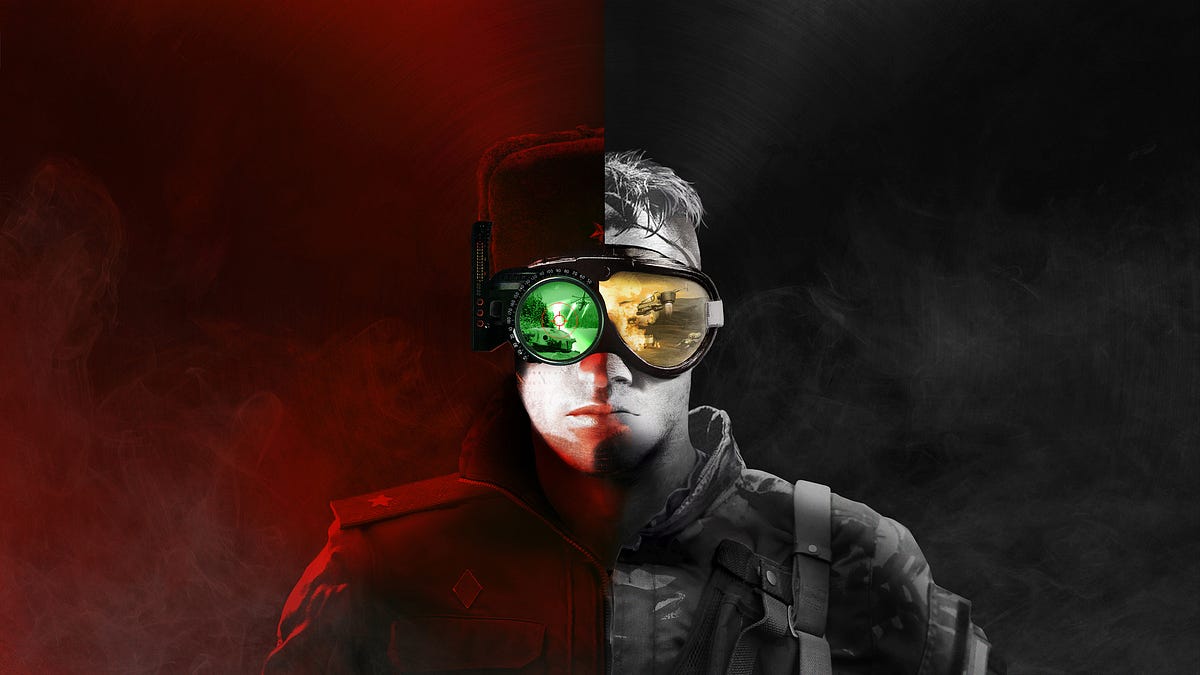
Exploring the AI of Command & Conquer
This analysis examines the artificial intelligence architecture of the original Command & Conquer (Tiberian Dawn) and Red Alert by reviewing the source code released alongside the 2020 Command & Conquer Remastered Collection.
- The original Command & Conquer and Red Alert source code, released alongside the 2020 Remastered Collection, reveals that both titles utilize a shared C++ architecture where unit behaviors and game logic are managed by a centralized AI() function.
- Unit movement relies on a lightweight 'Crash and Turn' algorithm rather than complex pathfinding, which calculates a straight-line path and only recalculates when an impassable obstacle is encountered to save CPU and memory.
- AI decision-making is heavily state-driven, utilizing Finite State Machines where units, buildings, and players are categorized into 'Houses' to determine available actions and rules.
Imaginary Russia: The Orientalisation of USSR in Command & Conquer: Red Alert Series
This extended abstract, presented at DiGRA 2018 and authored by Szymon Piotr Kukulak of Jagiellonian University, argues that the Soviet Union as portrayed in the Command & Conquer: Red Alert series is constructed along the lines of Edward Said's concept of Orientalism rather than as a modern European superpower.
- Kukulak (Jagiellonian University, DiGRA 2018) argues that the Soviet Union in the Command & Conquer: Red Alert series is built on Edward Said's concept of Orientalism rather than depicted as a realistic modern European superpower.
- The author contends the franchise, especially from its second installment onward, shifted from a relatively realistic alternate-history Cold War toward a campier style that polarizes the factions, casting the Soviets as a malevolent 'Eastern' empire.
- Allied campaigns frame the player as defender against Soviet aggression, and Orthodox church domes on Soviet tank factories are cited as cultural markers that contradict real Communism.
Companies behind it

As the documents state it.