1 free read left. Create a free account for unlimited reading + AI research.
Create free accountArticle DiGRA
1 free read left. Create a free account for unlimited reading + AI research.
Create free accountArticleDiGRA
The paper contends the Soviet Union in the Red Alert series is constructed along Edward Said's concept of Orientalism rather than depicted as a modern European superpower.
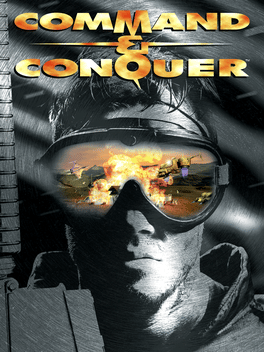
This extended abstract, presented at DiGRA 2018 and authored by Szymon Piotr Kukulak of Jagiellonian University, argues that the Soviet Union as portrayed in the Command & Conquer: Red Alert series is constructed along the lines of Edward Said's concept of Orientalism rather than as a modern European superpower. The author contends that the franchise, particularly from its second installment onward, shifted from a relatively realistic alternate-history Cold War toward a campier style that deliberately polarizes the two factions, casting the Soviets as a malevolent "Eastern" empire. The paper applies a postcolonial reading informed by Espen Aarseth's three-dimensional game model, as adapted by Elliott and Kapell for historical games, examining the strategic narrative, tactical mission design, and available arsenals across the Allied and Soviet campaigns.
The analysis identifies several recurring devices. On the strategic level, Allied campaigns cast the player as defender against Soviet aggression, framing the conflict as another iteration of historical "Asian" invasions; the inclusion of Orthodox church domes on Soviet tank factories is cited as an example of cultural markers that contradict real Communism. On the tactical level, many Soviet missions, though referencing events such as the Cuban missile crisis or the attack on Pearl Harbor, emphasize killings of civilians, kidnappings, and assassinations, which the author links to Western stereotypes of Eastern deceit and cruelty. The arsenal analysis highlights how real NATO and Warsaw Pact vehicles are mixed across eras, leaving Soviet forces portrayed as grotesquely outdated, and how cheap conscript infantry enabling "human wave" tactics evoke Korea and Vietnam.
The paper's methodology is primarily qualitative and textual, based on close reading of the games' campaigns, units, and mechanics rather than player surveys or large datasets. Its scope is confined to the Red Alert subseries, with comparative references to other Command & Conquer settings (Tiberium, Generals) and to postcolonial analyses of other games such as Tropico and military shooters. The author concludes that the Soviet portrayal reproduces "Orient" characteristics and that postcolonial criticism is a legitimate framework for analyzing the representation of non-Western or formerly Western-perceived cultures in strategy games.
DiGRA · 2022
GameMakers · 2025