BioShock Infinite
8 documents in the library are about BioShock Infinite, from writers such as Game Developers Conference, Extra Credits and Game Dev Unchained, the newest from 2024. Each has a summary and key insights with the page they come from.

BioShock Infinite is the third game in the BioShock series. It is not a direct sequel/prequel to any of the previous BioShock games but takes place in an entirely different setting, although it shares similar features, gameplay and concepts with the previous games. BioShock Infinite features a range of environments that force the player to adapt, with different weapons and strategies for each situation. Interior spaces feature close combat with enemies, but unlike previous games set in Rapture, the setting of Infinite contains open spaces with emphasis on sniping and ranged combat against as many as fifteen enemies at once.
- Released
- Mar 25, 2013
- Developer
- Irrational Games
- Publisher
- 2K Games
- Genres
- Shooter, Adventure
- Platforms
- PlayStation 3, PlayStation 4, Linux, PC (Microsoft Windows), Mac, Xbox 360, Xbox One
- Links
- Wikipedia
Game data from IGDB.com
Documents about BioShock Infinite

2024 GDC Main Stage: A Developer's Concert (feat. Austin Wintory and Troy Baker)
The 2024 GDC Main Stage performance serves as a testament to the artistic maturation of video game music, positioning it as a vital pillar of interactive storytelling.
- Yoko Shimamura became the first composer to receive the GDC Lifetime Achievement Award, signaling a formal industry shift toward recognizing the foundational legacy of game audio professionals.
- Modern game music has evolved from simple background accompaniment into a sophisticated tool that directly influences player agency, narrative depth, and emotional resonance.
- The 2024 GDC Main Stage performance highlighted the artistic maturation of the medium by featuring scores from titles including Hades, Celeste, God of War, and Baldur’s Gate 3.
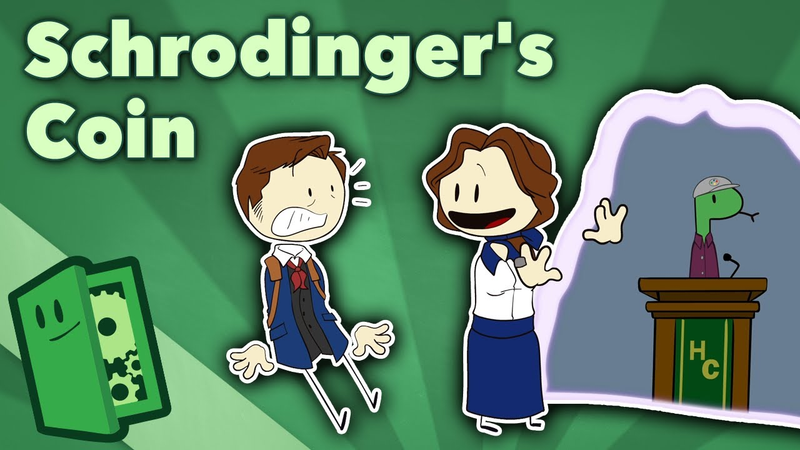
Schrodinger's Coin - Quantum Multiverse Theory in Bioshock Infinite - Extra Credits
BioShock Infinite utilizes the quantum multiverse theory to construct its narrative, grounding its complex plot in real-world scientific concepts while ultimately diverging from established physical laws.
- BioShock Infinite uses the quantum multiverse theory to frame the narrative, where pivotal binary choices like Booker DeWitt’s baptism create distinct, parallel realities.
- The game utilizes the concept of quantum superposition to depict Booker DeWitt and Comstock as the same individual existing in different states simultaneously.
- Elizabeth’s ability to traverse realities is grounded in her physical connection to two universes, placing her in a state of permanent quantum suspension.
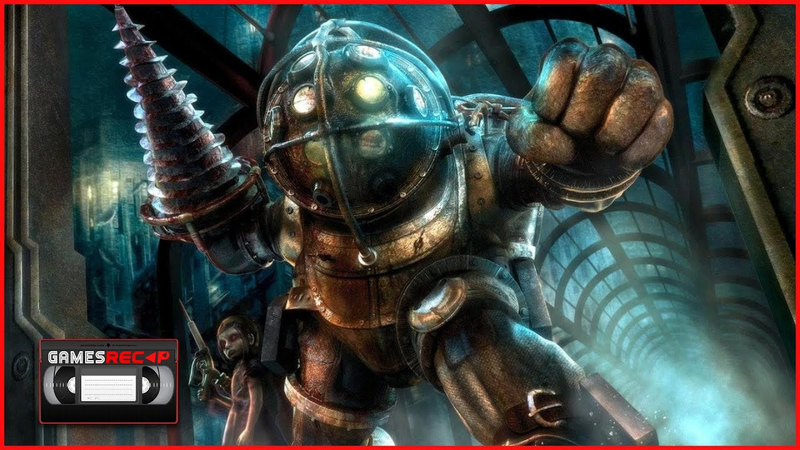
New Bioshock Game by Cloud Chamber | Games ReCAP
The announcement of a new entry in the Bioshock franchise marks a significant strategic move for 2K Games as they continue to leverage one of their most successful intellectual properties.
- 2K Games is developing a new BioShock title through Cloud Chamber, a newly established studio operating across dual locations in Novato, California, and Montreal.
- Industry analysis estimates a realistic development timeline for a high-quality, next-generation BioShock release to be eight to ten years, significantly longer than the five-year window typically associated with such projects.
- The project faces significant logistical risks due to the dual challenges of building a new studio from the ground up while managing a complex, multi-site co-development structure.
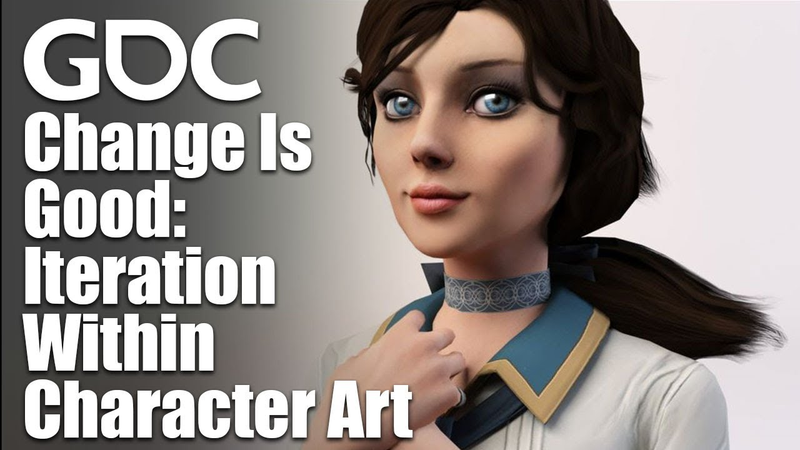
Change Is Good: The Importance of Iteration Within a Character Art Pipeline
The development of BioShock Infinite serves as a primary case study for the necessity of iterative design in character art pipelines.
- Transitioning from bespoke, labor-intensive asset creation to a standardized, modular system—utilizing shared topology, rigs, and UV layouts—is essential for reducing technical overhead and enabling rapid iteration.
- Implementing an override system using proxy boxes allows for efficient asset swapping and tiered customization, which effectively mitigates memory limitations while streamlining combat design.
- The development of BioShock Infinite demonstrates that character art must evolve alongside narrative shifts, as seen in the transformation of Elizabeth from a generic companion to a complex protagonist requiring custom shaders and unique rigging.
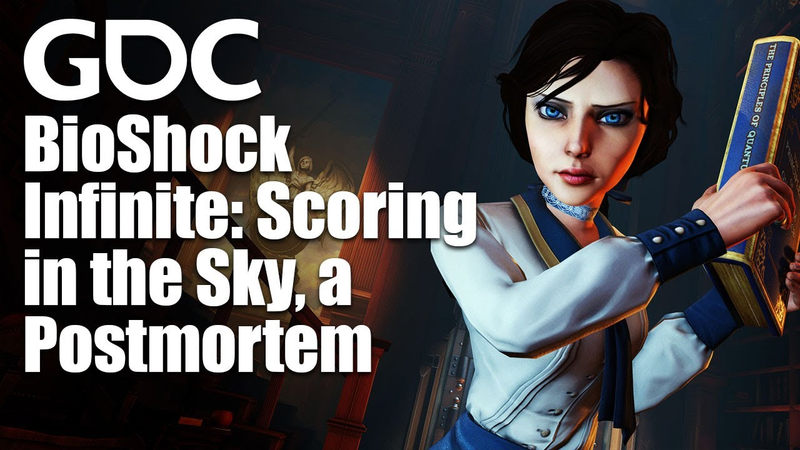
BioShock Infinite: Scoring in the Sky, a Postmortem
The musical direction for BioShock Infinite represents a deliberate departure from the grand, large-scale orchestral scores characteristic of the series' predecessors.
- The score moved away from traditional large-scale orchestral arrangements in favor of a minimalist ten-piece string ensemble to emphasize emotional intimacy and character-driven narrative.
- The composition utilized aleatoric writing and unquantized performances to create organic, visceral textures that reflect the game's 1912 setting and its underlying dystopian themes.
- A recurring open-fifth motif was implemented as a foundational anchor to symbolically represent the core narrative themes of infinity and time.
Using Level Design Tools Expressively
Level design in narrative-driven, first-person games relies heavily on the expressive use of fundamental scripting tools to create immersive, human-like interactions.
- Level designers can create immersive, human-like character behavior by repurposing standard scripting tools like triggers, delays, and counters rather than building complex, over-engineered systems.
- Simulating naturalistic character behavior is achieved by using delays to mimic human cognitive pauses, effectively bridging the gap between rigid machine logic and organic interaction.
- Implementing hysteresis—triggering events based on thresholds rather than binary switches—prevents mechanical dithering and technical bugs during erratic player movement or AI spawning.
Mechanics and Tone - How Does Gameplay Relate to Story? - Extra Credits
The synthesis of gameplay mechanics and narrative is a fundamental pillar of effective game design.
- Gameplay mechanics must be developed as a foundational element of the narrative rather than an afterthought to ensure cohesive, immersive player experiences.
- Disjointed mechanics and narrative cause player disengagement, as users begin to perceive the story as an interruption to the gameplay loop.
- Effective mechanical design functions like literary style or artistic color palettes, grounding the player in the game’s emotional stakes and intended tone.

In Service to the Brand - Why Bioshock Infinite Failed - Extra Credits
The central thesis of this analysis is that BioShock Infinite suffers from narrative and mechanical dissonance caused by the forced inclusion of legacy elements from its predecessors.
- BioShock Infinite suffers from narrative and mechanical dissonance because developers prioritized brand consistency over world-appropriate design.
- The inclusion of 'Vigors' fails because they lack the logical integration into Columbia’s social fabric that Plasmids had in the original BioShock.
- The pervasive looting mechanic, while natural in the decaying ruins of Rapture, feels incongruous and out of place within the functional society of Columbia.