
Bejeweled
GameBy PopCap Games · Released May 30, 2001
Bejeweled is a tile-matching puzzle video game by PopCap Games, first developed for browsers in 2001. Three follow-ups to this game have been released. More than 75 million copies of Bejeweled have been sold, and the game has been downloaded more than 150 million times.
Connections
Each row is a game or company named alongside Bejeweled, each column a document, oldest first. A mark means that document names it. Select a row to see those documents.
About the game
- Released
- May 30, 2001
- Developer
- PopCap Games
- Publisher
- Electronic Arts
- Genres
- Puzzle, Strategy, Arcade
- Platforms
- Windows Mobile, Palm OS, BlackBerry OS, Xbox, PC (Microsoft Windows), iOS, Mac
- Links
- Wikipedia
Game data from IGDB.com
Documents about Bejeweled
Number Go Up Featuring Orb of Creation 1.0 | Design Club
Incremental games, often categorized as idlers or clickers, are defined by a core design loop centered on the optimization of systems to achieve exponentially increasing values.
- Incremental games shift the player's role from a passive clicker to a manager of complex, interdependent systems by prioritizing the optimization of exponentially increasing values.
- Orb of Creation distinguishes itself within the genre by requiring active, strategic input across multi-layered systems like alchemy, gardening, and combat rituals rather than relying on passive idling.
- Long-term engagement in incremental games depends on balancing accessible early-game loops with high-complexity thresholds that prevent optimization traps and time-based penalties.
Liveops Lessons from Temple Run & Bejeweled Blitz ft. Eve Chang
The mobile gaming industry requires a strategic shift from aggressive monetization toward player-centric design to ensure long-term success.
- Prioritize player experience over purely data-driven decisions, as demonstrated by a 7% lift in retention for Temple Run after implementing visual cues that reduced player anxiety, despite initial internal skepticism.
- Successful LiveOps requires balancing quantitative data with qualitative player feedback, such as utilizing a dedicated 'Super Fan Club' of 80–100 NDA-bound players to validate features before a full rollout.
- Monetization should be naturally integrated into game design rather than forced; players are more likely to spend repeatedly when they feel they are receiving value rather than being 'squeezed' for revenue.
Unlocking Player Engagement: LiveOps Lessons Learned from Temple Run & Bejeweled Blitz
Effective LiveOps strategies are essential for the long-term success and sustainability of mobile games.
- LiveOps success requires aligning game objectives with player engagement to ensure new content consistently drives user retention.
- Effective LiveOps strategy relies on identifying market gaps and deeply understanding player desires to deliver uniquely compelling experiences.
- Data-driven testing is critical for validating the performance of new features and content before full-scale implementation.
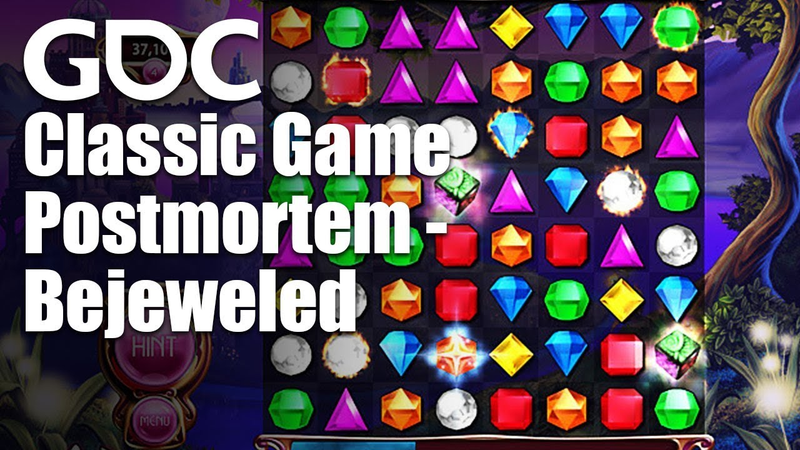
Classic Game Postmortem - Bejeweled
Bejeweled stands as a foundational pillar of the casual gaming industry, having evolved from a modest web-based experiment into a global phenomenon with over 500 million players and 7 billion hours of engagement.
- The original Bejeweled, initially titled Diamond Mine, was developed in under a month and was one of the last games small enough (1.4 MB) to be distributed on floppy disks.
- The game's most iconic feature, the untimed mode, was an accidental discovery; developers added a timer to make it a 'real' arcade game but included an untimed tutorial level that players preferred and played exclusively.
- PopCap initially failed to sell the game to publishers for a flat fee, eventually leasing it to Microsoft for $1,500 per month, which led to the name change from Diamond Mine to Bejeweled.
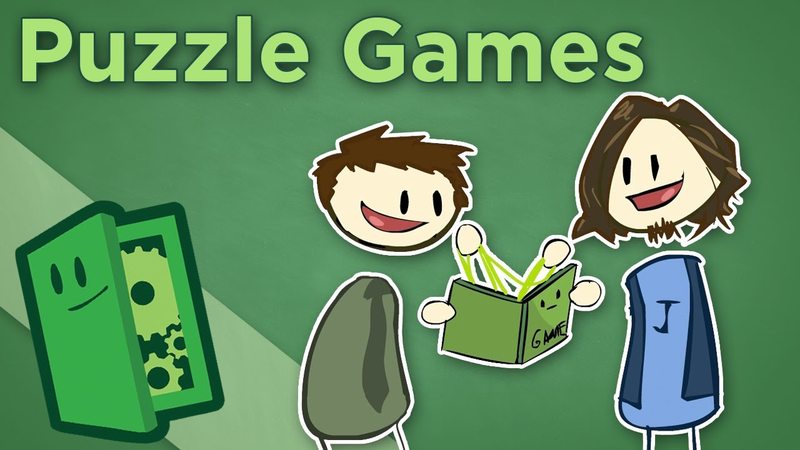
Puzzle Games - Analyzing the Design of Bejeweled - Extra Credits
The design of puzzle games requires a rigorous, scientific approach to mechanics, as demonstrated by an analysis of the progression and scoring systems in Bejeweled 2.
- Successful puzzle games rely on invisible mathematical structures that balance player engagement and difficulty through rigorous, iterative design.
- Designers can quantify stage difficulty by calculating the ratio between the exponential point threshold required for level progression and the linear base score awarded for gem matches.
- The core difficulty curve is maintained by balancing the point-to-match ratio against the game's primary lose condition: running out of available moves.