1 free read left. Create a free account for unlimited reading + AI research.
Create free accountArticle DiGRA
1 free read left. Create a free account for unlimited reading + AI research.
Create free accountArticleDiGRA
Taylor argues that the identities, communities, and economic value of virtual worlds are produced largely through players' collective labor.
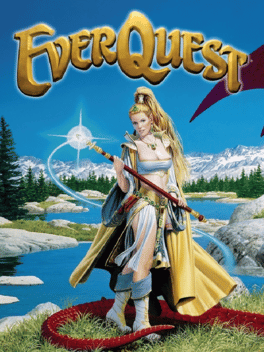
T.L. Taylor's essay examines who legitimately holds a stake in massively multiplayer online games, using EverQuest as its central case and drawing on a two-year ethnographic study of that world. Its core argument is that corporate claims of ownership over virtual worlds are an incomplete account of authorship, because the identities, communities, and economic value of these spaces are produced largely through players' collective labor. The analysis centers on the 2000 ban on selling accounts and items through auction sites such as eBay and Yahoo!, which Sony framed as a matter of intellectual property but which also protected subscription revenue and the integrity of the game's cooperative economies. Taylor treats this episode as a revealing example of how property rhetoric can serve commercial interests while obscuring the social contributions of users.
The essay's broader scope encompasses EverQuest and Dark Age of Camelot and examines how corporate owners assert control through end-user license agreements, account bans, and claims over fan fiction and other derivative works. Taylor finds users poorly positioned to contest these claims in court, with the legal status of corporate authority over reputation and derivative creations still contested. She also points to an inconsistency in corporate authorship claims: these games draw freely on shared fantasy traditions, including Tolkien-derived elements and DIKU MUD conventions, yet deny similar latitude to their players. The author anticipates that litigation such as BSI v. Mythic will likely favor corporations, while the wider question of user-generated cultural ownership remains open.
Taylor's concluding argument situates current property regimes as historically contingent rather than fixed, drawing on scholars such as Tushnet, Boyle, and Lessig to emphasize that copyright's purpose is to promote culture and public benefit. She contends that corporate owners claim substantial authorship privileges while accepting little accountability to users, and she cites the EverQuest "You're in our world now" tagline as emblematic of a management stance that devalued player input. The essay ultimately calls on designers and companies to balance user participation and accountability against commercial interests.
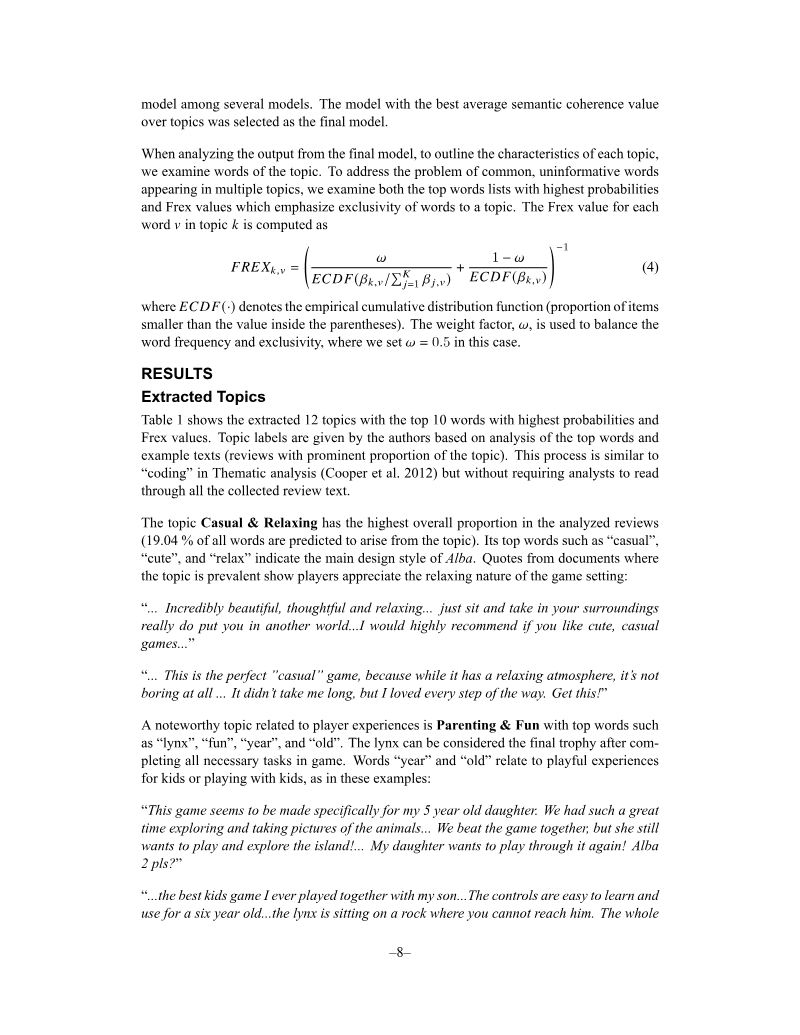
Each row is a game or company this document names, each column a document, oldest first. A mark means that document names it. Select a row to see those documents.
DiGRA · 2023
DiGRA · 2023
DiGRA · 2023
DiGRA · 2023
DiGRA · 2023
DiGRA · 2023
DiGRA · 2023
DiGRA · 2023
DiGRA · 2023
DiGRA · 2023
DiGRA · 2023
DiGRA · 2023