1 free read left. Create a free account for unlimited reading + AI research.
Create free account
What market trends and developments in the app stores mean for indies
Key insights
6 takeaways- 01The mobile gaming market is highly concentrated, with the top 100 companies capturing 75% of all downloads and 60% of total revenue.
- 02Recent platform updates from Google Play and the Apple App Store, including search advertising and subscription adjustments, are designed to favor established, large-scale publishers rather than independent studios.
- 03Independent developers face a severe discoverability trap where 90% of new games entering the top 200 charts exit within one week, and only 4% remain for more than two weeks.
- 04Success in the current mobile landscape is no longer driven by product quality or viral potential alone, but by engineering growth through rigorous data analysis and strategic marketing.
- 05To ensure long-term viability, independent developers must transition into product companies that use market intelligence to identify niches and embed social mechanics to lower user acquisition costs.
- 06Companies that integrate internal analytical capabilities from the project's inception grow three times faster than those without dedicated growth expertise.
Ask AI about this video
Transcript
so my I'm gonna have I'm gonna try to see if I can have like one message come across in my presentation and I'm gonna build the argument using using a lot of data and the app stores talking a little bit about some of the current trends in the app economy and I'm going to try to relate that to some of them may be like smaller developers so we're not just talking to the to the creators of clash of clans etcetera just briefly on me I was part of the founding team in priori and I've been heading up our sales team ever since our developed by a team and yeah pretty pretty excited to be here so agenda stated the app Union talking you through some trends and data and the app stores and relating at cindy's I'll just kick off so I don't really need to do that anyway we're based in Berlin 22 people from 16 different countries we
have one person who's Big Finish so that's exciting and we have a lot of partners from Finland so they suspect like what are you may already be familiar with a priori so thank you for for being familiar with us that's nice we are we're sort of a provider of download and read new data so for any app I think we have 3.6 million apps across Google Play and Apple App Store we have a debut download a daily revenue estimate for that app across 57 countries which means that we are competing against a penny the world's largest discount provider of App Store intelligence they raised 63 million recently which means that they're now at 163 million total we raised three so I can relate to the whole idea of being in D and sort of fighting against all odds in the app stores anyway state of the audience so I mean I think the good news is that you're in a really good and in the right industry like if you are a
person who have developed skills within mobile and specifically mobile gaming chances are you'll have a pretty good career I can unless you stock obviously nobody assuming you don't do that like it tends like you have a pretty good career in it it's for particularly the Phenom interesting to look at mobile and how casual games is really sort of like fueling a new economy within within the games industry news which is one of our partners estimates that 37 billion dollars will be the total size of the market and it's growing significantly significantly faster than any of the other platforms which shouldn't be news flash to you it's just nice to start off like on a positive note because now I'm gonna start talking about how difficult it is and how many people fail I think another aspect to this is that that we were talking about something that's relatively new if you think about the app economy it was sort of coined and started in 2008 with the launch of the of the Apple App Store 500 apps and today we're looking at a market with like when within the next year's will have five billion active smartphones
across the world and I think I think it's pretty safe to assume that a lot of these people will also be playing games and their smartphones it's not like people are all of a sudden only going to do excel on smartphones the games is going to sort of be I think one of the key usage of a smartphone so in this in the last year's like if you see that is how it's exploded how the economy has changed and the adoption of smartphones that really sort of taken off the question is what about the app stores also like the the key to all of this in 2008 when they launched it launched with the press release and the top charts that was pretty much it um that's the information that's available in the App Store's need you fast forward to today or 2 jun 13 more specifically eight years later there's a press release and top charts that's pretty much it like the app stores have not changed fundamentally ever since they were launched and there's a pretty good reason why they've done that I mean there's obviously a lot more money and a lot more apps and everything but fundamentally in regards to how they
gotten and govern firm ation it is pretty much the same now that doesn't mean that nothing has absolutely changed I want to talk through like three major changes that is actually coming now they were announced early on in 2016 but they're only being rolled out slowly now so if you think about one of the one I think is really cool that can actually really truly change the dynamics of at least for the Android stores is the Google Apps streaming so essentially the ability for a consumer to try a nap without downloading it for 10 minutes or something like that I think that's the maximum limit so you can go to the Google Play Store is about to be launched now Google do google play store click something for a game for instance that you be able to actually sort of be in a game for 10 minutes testing it out before you decide whether you want to download it before you decide whether they want to buy it so a pretty cool feature that is coming to go plan as with everything when it comes to google play it also come to apple app store at some point um yeah i'll talk about like
the extent to which it'll be rolled out in a second because that's probably going to be slightly limited the other one is him the other evolution that's coming is the sort of like the cut in terms of subscriptions model so right now Apple announced it and if after one year your game is still very successful in the subscriptions they will cut their share from 30 to fifteen percent I think it's pretty important to to consider why they did that in the concept that if you think about like Spotify we worked a bit with Spotify and I know they weren't particularly happy about giving thirty percent of the revenue to their direct competitor through the App Store the same thing would go for a lot of other music services Netflix etc I think there's a lot of lobby work that went into this but the question is whether or not it can be beneficial to you and I'll return to that just a little bit later google also followed up in this and are actually offering it immediately instead of after a year so a better deal but it is a change and is it is a change in terms of a potential distribution of
revenue are obviously shared revenue third saw third changes as Apple App Store's search results which is not exactly groundbreaking that was sort of like the the poor like the Google build their entire business on Google AdWords were a lot in the place or recently now also coming to to the apple app store in the US and Italy only and that also shouldn't be a surprise Google Play has been performing fairly well if you know if out of Europe is anyone in advertising on Google Play Store search ads no one oh crap sure enough anyway one awesome are you do you have a lot of money then no fair enough no but the thing is that as is the case with the apple app store ads the the play store ads are primarily for like higher ranking publishers with a budget to spend and and this is why it's like if you if you some of these changes and you ask yourself the question whether they're indie friendly or not and the answer is almost like a
rhetorical question because in fact when you're in doubt about anything in this world you should follow the money and if you follow the money in the app stores you'll see the following so this is analysis that we did the 100 companies in the world command 75% of store downloads and sixty percent of store revenue that's that's a lot considering that in the apple app store alone you have five hundred thousand companies competing for downloads revenues and I mean there's no doubt when you look at google and apple developer programs that they really want to also cater to the needs of indies but i think if like we're being honest they probably don't care that much and if you look at the changes that are rolling out they are primarily targeted larger companies and they're also initially targeted us-based companies both Apple and Google are very us-based and us focused companies I know
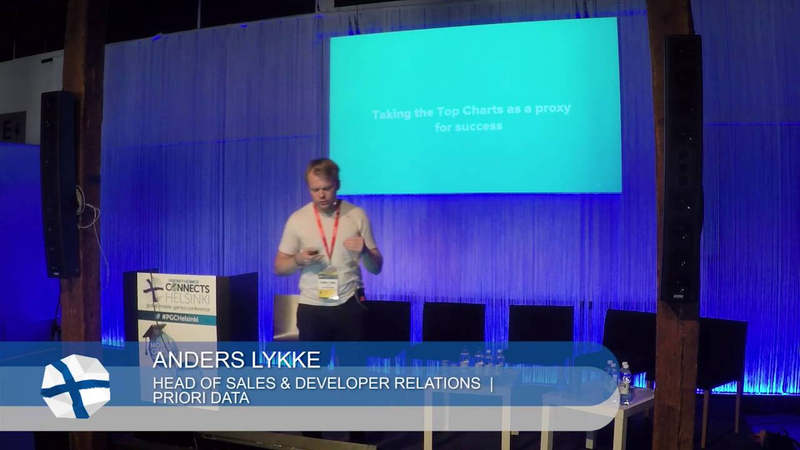
I worked at Google for 43 years and and in Europe even like internally you are the late latest like the last people to receive notification the last people to receive any kind of bed at changes etc so all the changes we talked about will roll out in the US initially and they will not really be reachable for for most developers before being perfectly honest about it now I want to sort of talk you through the top charts because they explain why this is the top charts can help us explain why the economy the app stores are structured the way they are and I still think it's reasonable to take the app stores at a good proxy for scale and when whether you're successful as a developer it is also the default view that people go to when they're sort of exploring the app economy it is within the context of ranks in the store and if you look at it from this perspective and and your and the context is like trying to figure out why developer indie developers do not succeed to the extent that I think we all wish and it's not because that they
don't get ranked in the stores so if you look at it like there's a hundred new games they reach the top 200 position daily in each country right so you have plenty of new games entering the stores and making it into the top charts which also particularly for iOS is because in the first week you actually ranked higher on the keywords that you have chosen so Apple does give you sort of a competitive advantage immediately after immediately after launch however the problem is the average length of stay in the Strand charts so fifty percent of new apps are in and out of the charts within one day and ninety percent are out within one week only four percent of new apps last more than two weeks in this chart and and I think you probably know better than the night that they get developing a game takes quite a lot of time it's a lot of effort and hardly any game is ever worth only ranking for one week in any chart anywhere and that is I
think that is the problem like you spend thousands of hours and a lot of talent actually the sad thing is like the the great games that are out there that are being developed by a particularly India smaller studios are never being played that's the that's the issue that I have with it is not even like a purely a financial thing but they're never being played which means there's a lot of wasted talent which I find a little sad and and I think it also bears the question is whether people or whether you want to build great games or whether you want to build a great business I've I great business I also mean that your games are actually being played by people and then you can evolve and that you can get the feedback that allows you to improve your improve your game improve your IP and and this is where sort of i come to the mine one message we worked with around a thousand companies AB the publisher apps a lot of them again come to 600 game publishers and when you look at like the difference between those who succeed and those who fail it's it is
actually fairly simple because there's very little luck there's very little locket associated with this at this point I recently had a talk with a guy who called be obvious like can I get like a demonstration of your platform I'd love to know how we can use it for analyzing the market I was like sure yeah I'll do that so I talked to him and he was they made a new company new a game publishing company and and their company was they're going to publish games he said 12 games in 12 months I thought that was cool that's catchy like 12 games 12 months 12 games 12 million maybe he didn't say that not work million and then I asked him okay what's the structure of your team he said where we are for developers who have all successfully launched a mobile games between two thousand eight and 2010 and then he said it used to be a lot easier like way easier as i get that makes sense because between 2008 in 2010 if you had a good game and you launched in the app store chances were that could go a viral are you actually without doing anything by just having a great product your your your app could go viral that
happens to one in a million probably literally today there's no non the case and he was really not happy with the the current state of affairs and how difficult he had gone but again this was a company that was structured around four founders there were all for developers that just doesn't work and and this is like a very typical pattern it's probably even also typical pattern here helsinki although you're like far more talented than the rest of the world in reality if you if you look at your understanding and appreciation of games and development but if you think about mobile games as an industry it is it is a creative industry it always been a creative industry which is great because that's why it's fun to go to conferences it's not because of people like me where's like the service providers and it's certainly not because of the ad networks no offense but I mean it's not it is because of the games and because it's it's awesome and it's also because like I said before that the creative genius was initially enough for success like if you build a great game people would probably download it you can make
a million you know whatever flappy birds was a great example of that but it was a great game just anyway and then if you look at like the more sort of like dry like business planning goal-setting benchmarking it's always been sort of like secondary and it's certainly second there's a lot of the companies that I talked to in the constants games because because the focus is on building a great game which totally makes sense it's just not a feasible and it wouldn't work in any other industry either so and this actually just goes were like some of the larger place we had like a huge German partner of ours um like I've actually that's like millions in their app development and then I asked who was responsible for their analytics and then he said oh you mean analytics and marketing and business development and said ok there's like an intern it was name was clutch he was like felt a little light smart guy not as fat guy but he left after six months I don't know what they're doing now anyway all right so in the context of this like because i needed a sort of a sociate of
a smarter people than myself to bid to appear credible great doesn't everyone should do that now so um I think they're like three people in the mobile games industry and from a from a from an advertising marketing growth perspective that are that I at least have a lot respect for like Christian Kaldur on he's repented ketchup you have Eric soy ferd who was also here yesterday and you have Michael belkis which is a very very talented mobile games advisor as well he's going to freelancing so if you are offered you can you can contact him but I had a conversation with him on skype recently right ok what is what is this problem like he said one of the problems of using this scar city of talent in terms of marketing in terms of growth in mobile and mobile games that's that's one problem and he said like the thing is also like today without organic installs if you're just relying on user acquisition you have absolutely no chance I mean you will definitely fail in the app stores you cannot stay about water the only reason a mobile game player will invite his friends in turnout today is if he needs his friend to join the gaming experience in order to continue playing and evolving so like
he's in sort of generating a social element that needs to be present in that game I'm not here to talk about social elements but I'm here to talk about like that wife what facilitates that you can actually learn that and actually build your game around that and so what is what he's basically saying Michael and I think this is I think this is a really good point he says that you have to think of your company and this goes for all of you if you're like starting to build game so if you're already in the process of it like trying to thank you for your game as a product company not a games company or an app company but a product company and also sort of embracing and the fact that you totally do rely on the app stores and you've totally also totally rely on the google play store in the apple app store because everyone else at this point or i mean the other source are quite business irrelevant anyway but your growth a product company in any industry actually you need like you hire full circle and you see and you seeing you and you treat marketing is a very crucial part and specifically in games
that product person is also marketing guru and this is also respecting the fact that most of you wouldn't have the ability to hire two different people so obviously you need to sort of embody that into one talented dude now the most important thing is that that product person is not hired once you develop your game the product person is hired from the get-go and he's made like ideally in my world of this ideally you make that product person part of the founder team which we easily get a stake in the company and they get ownership and they assume ownership and they have the resources to actually take part in shaping your game and making sure that it has that potential to explode and to grow once you launch it so you don't end up wasting too much money so what would this person do specifically so learning from the stores like this is effectively and I via the previous talk also highlighted is really well you have to look at what's actually going on in the stores I mean you have to look at if not
let what genres are exploding at least try to look at what other games are doing you have to set benchmark on it and then you have to figure out why they do that and the only way you can do that and that's not by buying analytics that's by playing the games and having someone with the right mindset play the games over and over and over again so they gradually understand and learn what it is that they need to adapt into your particular environment into your particular game to make sure it has some of the same capabilities and and really that's the core you should have one person on your team dedicated to doing this understanding the market understanding the competition understanding why this works and then also being able to sort of guide the direction of your game and your development so that in your game when it launches it has a not social island but it has an element that will help it grow without you having to buy every single user along the way this is like quite
simply no reason there's no chance you can actually afford that I think if you if you sum it up like that the amazing thing is the potential is incredible and and even if you're game developers and you games are not really being downloaded you're still probably super talented you can go work for a larger company and it'll be good I mean you're probably good you're safe be great good future boats Ferraris everything but if you think about the app stores it's important to recognize that the app stores are made to make the rich richer like there's not a lot of Google Play sorry Robin Hood and Google Play and Apple App Store at the federal no it's not it's not how they work now although 2016 was a years of evolution for the app stores they will these evolutions will we mean like very little to you and I think there will mean very little to anyone because I seem to be delayed on every single parameter in 2016 but it doesn't change the fact that it's an example of more opportunities opening up there's so much you can do with data and
there's so much data available from providers from the stores but you can only leverage that and benefit from that if you've actually also made sure that you have someone on your team that can own that and it shouldn't be you if you're developing you should be focused on developing you should absolutely do that build the most amazing games you should just also complement your own skill set with someone who can do that because it is a true fundamental key to success I believe we did this analysis like this is like a basic statistic but like the companies who have someone internally who takes care of analytics in a broader sense are growing three times faster than any other company well that's that is actually a fact across the 16,000 apps that we looked at all right I think there's a problem in terms of like the scarcity of talent industries you might have to you might have to create these geniuses that's not I don't think that's a problem is just find someone the mind said invest in that person help that person grow and help that person become like a winner in
this in this market and you'll have an amazing asset for a company as well I'm going to do some shameless self-promotion just towards the end but I'm also going to promote finish games and zombies so one of the things that we've done and focused on was re building niche level analysis so this is an example of like show me all iOS and Android apps that map to the keywords zombies and hunt and how did the seven most download the games in the world 30 from Finland that's pretty awesome again like you said four we basically said parameter you can use whatever keywords it's used for identifying a niche which which games are competing in the bicycle paperboy niche field and then we obviously try to con fate the quantify the performance around that with downloads and revenues for any countries including Finland this is an example of what it looks like in the platform Walking Dead no man's land had a good July with seven hundred and seventy six thousand dollars at least that's what we
think they made on iOS they say we're pretty accurate for their data so that would pretty well done I would say and finally I will take these are some of the questions we partner with actually we partner with marble is that was mentioned in the previous presentation in pretty cool japanese company and now i'm happy to take any questions or if you want you can sign up for a free trial of our product at priya datacom any questions no great i'm also here after catching a flight home to berlin tomorrow we can hang out go to saunas whatever you do that's what you're here right ok thank you very much
Summary
The mobile gaming industry remains a high-growth sector, with the market projected to reach $37 billion. Despite this expansion, the app economy is characterized by extreme concentration, where the top 100 companies command 75% of all downloads and 60% of total revenue. For independent developers, the primary challenge is the "discoverability trap": while many new games enter the top 200 charts, 90% of them exit within one week, and only 4% remain for more than two weeks. This volatility results in significant wasted talent, as high-quality games often fail to gain the traction necessary to sustain a business.
Recent platform updates, such as Google Play’s app streaming, subscription model adjustments, and the introduction of search advertising in the Apple App Store, are designed primarily to benefit larger, US-based publishers. These changes offer little immediate relief for smaller studios. Because the app stores function to favor established players, success for indies is no longer driven by viral potential or product quality alone. Instead, the industry has shifted toward a model where growth must be engineered through rigorous data analysis and strategic marketing.
To succeed, independent developers must transition from viewing themselves solely as game creators to operating as product companies. This requires integrating a dedicated analytics and growth expert into the founding team from the project's inception. Data indicates that companies with internal analytical capabilities grow three times faster than those without. By leveraging market intelligence to identify niches, benchmark performance, and embed social mechanics that drive organic growth, developers can mitigate the risks of high user acquisition costs. Ultimately, the ability to combine creative development with disciplined, data-driven business strategy is the defining factor for long-term viability in the current mobile landscape.
















Comments