1 free read left. Create a free account for unlimited reading + AI research.
Create free account
What is China’s Console Market Landscape and Growth Potential? - The Metacast by Naavik
Key insights
6 takeaways- 01Global regulatory environments are tightening, as evidenced by legislative efforts in regions like Australia to impose stricter ratings on games featuring loot boxes to increase consumer protection.
- 02The global gaming industry is shifting toward frequent hardware iteration cycles as mobile devices achieve performance levels that rival traditional consoles, leading to diminishing returns for new console generations.
- 03The console market in mainland China remains a marginal segment, accounting for only 4% of total game sales with no significant growth expected in the near term.
- 04Developers targeting Chinese audiences are advised to bypass official regulatory barriers by utilizing cross-platform strategies or leveraging the gray market and Steam.
- 05Entry into the official Chinese console market is high-risk due to a legacy of console bans, stringent government content regulations, and lengthy licensing processes.
- 06Blockchain gaming is transitioning away from speculative hype toward functional utility and professional infrastructure, with capital now prioritizing projects that demonstrate a genuine need for decentralized technology.
Ask AI about this video
Transcript
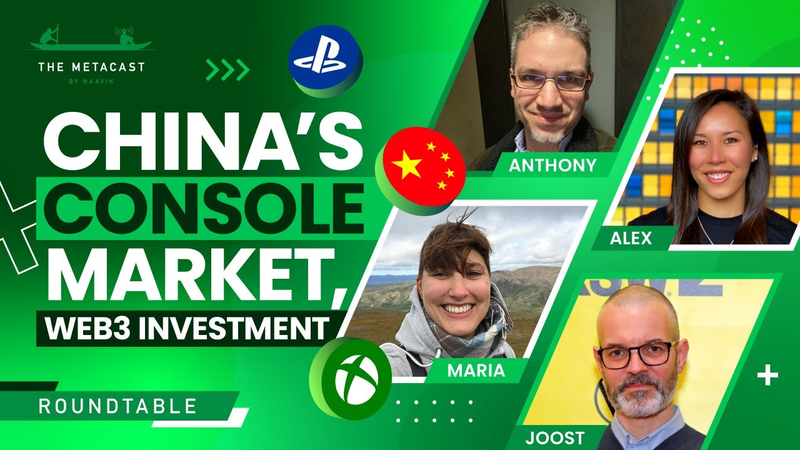
[Music] nowadays my gut kind of tells me that you need a pretty convincing reason for why your game needs the blockchain and if you just slap that on your deck it's going to be proceeded as a negative because if you're that means that your primary product isn't backable [Music] hi friends welcome to the metacastron table by navic this is the one podcast for you to stay up to date with all the latest game business news and how they could impact the future of the industry I'm joined today by Anthony pecorella co-founder of level up labs and navic contributor also Alex Takei so yeah you know Alex as the metacast co-host for the crypto corner and also Yos van roonen investor at new Brooklyn host for the unboxing podcast book author and
professor at NYU welcome hello hi yes how do you have time for all of these professions you know there's actually four of me I have three identicals so Alex I always ask a random question when someone joins a round table for the first time and I have clearly a favorite question which is about what's your favorite animal to pet in game it can be a real animal it can be a fantasy animal oh a chocobo for sure oh yes yeah there's nothing better than going to Chocobo farm and just petting hello hello music is so fun yeah it's quite uh jubilant um I definitely had a couple of favorite chocobos in Final Fantasy 15 which I think was just an excellent use of them since you like you know for all Final Fantasy 15's flaws like you definitely can ride chocobo's around in this big open world
expanse and run really fast and it's kind of exciting um so I had like four or five and so some of them were like neon pink it was it was exciting so definitely a chocobo I love this okay we can be Chocobo friends um before we move on to the updates just wanted to do a couple of shout outs so Q3 and best games gaming deals report that's now available to download we're going to have Anton gordodeski join us for an episode in December to do a whole overview of um the Acquisitions market during this year and then also a shout out to Simon slee who commented on last week's YouTube video adding a valuable application of genitive AI I always appreciate when listeners join into the conversation so thank you for adding that comment and I have the first update today that's very close to my heart it's called what are cozy games and what makes them cozy so this was an article from gamesindustry.biz and it made my heart really warm
so cozygames are best defined by how they make players feel I thought it was a very interesting definition because usually we settle on a genre on first person shooter because you're shooting people in first person but cozy games is all about that feeling and it makes it very hard as a game developer to try to encapsulate that feeling into the game design so it brings all of these extra challenges if you're a studio building this kind of game so I think this genre is here to stay and this is what the article concluded and I completely agree with it currently the switch platform is a favorite platform for this kind of games but I totally know that there's a market for it on mobile simply for my willingness to the studios to just take my money if I can be on my phone very warm very cozy and a world that can sometimes be quite lonely in cold so yeah there's a market for this and I'm very excited to see what's going out there if you're building a cozy game connect with me on LinkedIn please I want to know all about
it my thought of this is very simple it's um I got back at the Candy Crush and Candy Crush advertises with like swipe distress away and I've found it to be very stressful in fact this is not a relaxing game at all anymore it's like classes like get more of these extras because you suck at this game and so I think perhaps this is a reaction to a free-to-play monetizations you know you're just stressing me out about all this you know Market transactions it's also like I think the Cozy game mechanic already exists inside a lot of other bigger RPGs um and there's definitely parts of Pokemon or Animal Crossing or even something like Persona or Fire Emblem that could be described as cozy like going to the Chocobo Petting Farm is like a cozy part of the experience I actually think this is just more like taking like a mini game that you might have in like a kingdom hearts or something like that and then just like blowing it up into like a real full-fledged genre be in this space for
a little bit yeah exactly yeah that's true when I played Persona I always went back to the cafe to make some Cafe and hang out and absolutely a little warm environment anyway after all this adorableness we move on to a less happy topic which is uh Australia's loot box bill so you'll see how to do this transition okay so what makes games cozy is not being shaken down by some kind of Mafia and uh and and games industry can kind of ER on the side of you know acting like Mafia so the lead into this is of course a courtesy of Electronic Arts when they released a game that was so expensive and so vigorously trying to monetize microtransactions and loot boxes that you know it was somebody calculated it cost you thirteen hundred dollars to get a pink Darth Vader
in that Battlefront and so it ends up basically being the result of the industry's own aggressive Revenue Innovations let's call it that Regulators have taken um a sort of a more staunch approach it saying like well this isn't cozy at all this is in fact very detrimental so in Australia then this week we had MP Andrew Wilke introducing a bill which does nothing else except for the fact that it requires a specification that any computer game containing a loot box has to be classified as basically rated R you know it has to have a warning on it and making it more obvious to Consumers that as you're playing this game you're going to be asked to buy bundles of items and you may win something or you may not but your money's gone either way right it's a sort of a regulatory response to some of the practices that we've seen over the last few years so you can question a few
different things go ahead so it's less heavy-handed than for example the bill in the Netherlands or Belgium where it's a complete ban yes right so the I mean that was so the belgians so across the country across different countries and Regulators they all kind of tend to compare loot boxes to gambling mechanics to varying degrees they kind of turn the dial to you know to different strikes but it ends up being while it's similar to it so therefore we don't want it particularly the belgians they did the same thing with Social Casino games five six years ago we're not having it it's not allowed to go away stop it in Belgium and it's um the Dutch are never far behind the UK similar in that sense too they tend to be very hesitant to accept and adopt these things as normal because the children think of the children right it's the uh and I think that that's about not just because I'm a dad but because I think that that's you know some of these Innovations they just
kind of you just end up in the wrong part of the uh you know whatever monetization strategy so the Australians doing this what's interesting for me about this is of course uh it's a little bit of a a watered-down version I should point out at the same time what I like so much is the abundance of data and research that comes with this right so this bill was introduced after about a year ago they had this huge increase in five month long period where they have all these people and researchers submit their opinions and their data and their thoughts and it's just a treasure Trove of information as to like how this all plays out and why it would be good or bad um and so we think that that's that's one of the main benefits right so you have this transparent process which I think some governments could learn from but rather than unilaterally sending something down the line saying we're not doing this they open up this forum and it creates a much broader conversation at the games industry yeah that's that's my first one that's actually exactly what the UK did
a lot of research and now there's a commission where people from the industry with Yuki are trying to understand how to design loot boxes that prevent these negative consequences but just to just to confirm this is just a bill that was introduced it's not regulation yet it still needs it's not regulation but it's expected to be expected to be acceptable yeah if I could jump in here um I mean we've been working on at least I personally have had exposure to working on the loot box Bill problem since like 2017 I was working on the OverWatch monetization system which is obviously very prevalent with with loot boxes and we had the Belgium regulation that was passed basically I think like 2018 or something like that or in that time zone um and we had been doing a lot of contingency planning right for what happens to OverWatch and its business model if in the case that all of a sudden there's Mass scale like Global regulation that loot boxes don't exist and so but when you were reading some of the statements made by the politicians right you can definitely see that it's a platform to run on right because for the
children it's a very um parents don't understand it politicians need something to sort of that is um almost like that emotional Cornerstone to like get parents angry and so I felt that a lot of the information that was being shared from the voice of there's a Hawaiian politician um I forget his name it was like something Lee who was basically just like writing about all these kind of derogatory things that video games are and the violence and all it's almost kind of like this like whole like jumbled up mess where the only thing that people can say about video games is violence and gambling and in reality like you know what we ended up doing was kind of showing drop rates same thing with hearthstones another card pack model showing drop rates um guaranteeing um kind of like downside protection so making sure that you're guaranteed like a gold in common or a golden car like every so often in terms of how many packs you open and so I think there's a lot of ways to avoid this and soften this by just being clear with the value proposition that you're giving to a consumer when you have a loot box economy and and furthermore like it also just such a cultural difference between the west and the East
I mean like gotcha mechanics are just like not no one even thinks about that stuff in in Asia like it is is just the de facto way to acquire things um and so I think the other thing is that Belgium is a relatively small Market so is potentially Australia and so I think in terms of being afraid I think when the bigger Western countries start to really like pass bills and and do regulation I think that's when you know people in the game industry should start really maybe planning for the contingency that loot boxes will get um yeah banned and I think that's actually a really good segue into Anthony's update about Mobile versus console growth yeah um this came out of a um an article that was discussing um basically the the technology that mobile has empowering its graphics and its interactions and immersion compared to console uh the next generation of consoles is expected to be somewhere around 2027 so you know we have quite a
few years until then meanwhile um mobile is being updated I mean even every individual company is putting out a new device every year and so we're seeing actual new devices on almost a monthly basis now um that combined with the fact that you know the PS5 versus PS4 there are differences there but there's so much more subtle than like PS1 versus PS2 um Gamers who know to look for you know various things like the you know the anti-lacing and particle effects and um you know they can spot those but it's only say so trained nine you know to be able to see the difference between um graphics and you know the will that continue to be the case for the Next Generation meanwhile phones are you know quickly catching up in terms of you know their High Fidelity and the types of Graphics that they can produce so you know I expect you know average players really do not
be able to see a difference from a pure visual perspective um between mobile and consoles I mean some now and certainly within a few years I think that's that's very expected uh so then becomes a question of like you know immersion and the experience that they provide because I think one of the core questions is is Mobile going to replace consoles um and and I guess that's sort of an initial question like if we looking at um switch and the steam deck like we're starting to have a lot more docking of attaching a small device to a TV and getting a console like experience out of it um with the power of phones like is there even going to need to be a next generation or will we start to just dock our phone when we want to have a big screen experience like so I guess I'll put that out there as to uh thoughts on that I don't think the console Market is going anywhere um I mean maybe that's a counter appointment uh like counter-intuitive but I think that there's a level of content and the experience of playing on
a console that I think people are really um it's very sticky and it's something that's ingrained in the gamer mentality and the psyche of the way they play I mean yeah it's true like for example like yeah Tick Tock short content is there that doesn't mean someone's not going to go see like full full-fledged feature film I think there's room for both of these experiences in the market so I don't think that mobile is going to like suddenly eat away console I think your question about docking the phones I think is interesting because that would that's more just like the um implementation level rather than the actual experience level so if I can I can use my phone to make a console experience I think those are two different things but I think that the people will still always want the console experience I mean just like look at the God of War like sales in the past like two weeks right it was clearly a demand for this like High Fidelity AAA content and if you can make that on a phone well then that's the second question but I think the console experience is here for the Long Haul yeah yeah that's a good Alex the um you know and I would say that based on
the timeline you give like you you say by 2025 right that's that's a little short notice for all this to be bifurcated in such a way uh you know I do believe yourself there's there's there's parallels where you know you spent 1500 bucks like an iPad Pro and you think oh I'm gonna use this as a laptop no you're not it's totally not going to help you do any of that right it's it's kind of like you're in a pinch if you're on the road if you're not trying to bring all these adapters so you know the inevitable solution there is like cloud gaming but even then you know it's like is that the best device to access all this all these libraries you know I can't get away from the controllers like it's just for console experience that's just ideal so just a form factor uh when it comes to timeline when it comes to like I believe that the Fidelity uh as you put it is like that makes sense like most people don't notice but it's a dedicated experience for the
same reason that people will go to the movie theater that should have been done years ago if you think about it but it's just fun to socialize and hang out and have the big screen and just sit back and relax like maybe uh you know expand on that experience rather than replace it so they don't necessarily exclude each other but I do think that they can learn from each other right I think Council got much wiser because of bubble and I think mobile is really pushing its boundaries because it's always going to be compared to console so it there's a very good sort of productive relationship between the two that they should you know for the same reason that you have soap series and quiz shows and reality TV and whatever Top Gun too and like big Productions that make you cry so so so that's kind of how I see that future but oh sorry and I mean this is a little bit tangential to that but I think similarly to this like docking experience I'm not a technical expert right but I I would just like right now let's take the switch right which is optimized for the
handheld experience and has docking capabilities what we know that some of those are pretty weak um I think the switch is actually powered by nvidia's old Tigra chips which um Nvidia sold off to Qualcomm because like in a video is like oh we're gonna do mobile chips and then they didn't that didn't work out for NVIDIA and so they basically um kind of divested that side of the business and that's clearly like not doing very well it's powered by a mobile chip that's intended for mobile but it's not doing very well translating back and forth to a bigger screen experience I don't know how it is from like mobile phones specifically but one would suppose that maybe optimizing the mobile experience is not always just going to not going to be like a one-to-one easy translation onto a larger screen so there's also some sort of like Hardware capabilities that like might need to to increase but again I'm going to caveat that with I'm not a technical expert on on these types of things but you know there's a reason why the PS5 comes in is like this big like right yeah especially
especially as consoles start being built to power VR as well so the ability to power VR with mobile I don't know if we'll ever get there we'll probably get there one day but not not in the midterm future actually I I think this this conversation will continue into Mainland China's console Market discussion just looking at the platforms that um they favor so excluding established IPS that have these massive marketing treasure chests the answer is no no in the near nor midterm future and we're going to be diving into why that is the no comes with some exceptions of course as a product manager I love if statements so if the game is cross-platform and is tailored for mobile the answer is different if you are going to be trying to release a popular console game favoring free to play over premium can also bring an advantage but still if you're purely a console game
um going through the regulations doesn't really bring that much upside we'll dive into that further there's also the technical cost and finding the right partner to reduce the opportunity cost of an internal team working on this deal so if you have a really good partner that will take most of the cost of doing this well then it's still worth analyzing and then additionally if the game is console or PC only the best strategy is to translate the game into simplified Chinese and then sell it through the import market because Elden ring is a great example of this it was majorly successful in mainland China but it's not going through the appropriate legal domestic Market it's all through the steam which will will dive into as well um so the first the first question I was trying to investigate is what kind of games are successful in this market so is generally targeting Esports and RPGs so most of the esport market is in
Mobile and PC not on Console but looking at the games that perform well on Console it still seems to be multiplayer games and RPGs I mean I don't know I think it depends on whether or not when you say console right do you just mean like a western AAA title that has maybe essentially a PC port or do you mean something that's built first for PC because like for example on the I I worked on the neti's deal for wow that got canceled and I also have lots of exposure to the neti's JV partnership um from my work at blizzard and you know we always kind of talked about you know bending over backwards kind of to basically get these games to be shippable in China you know the China like skeletons what is the I will have lots of skeletons you have to remove all the skeletons and so it's like it's funny because we're talking about kind of like what's the replacement for um the partnership that just fell through and we're like ah Taiwan VPN like that'll be the replacement and like yeah we ship G3 um oh we shipped a D3 switch port and
tons of unit sales in just adjacent countries around China right so I think it just really depends on like are you talking about like taking god of war and targeting that towards a Chinese market are you talking about kind of any Western Title that has a PC component to it and targeting that towards the Chinese market because we all know that nobody in China has a PlayStation or an Xbox like that's just not the way they typically engage right I mean I'm seeing P L's for at least almost all the blizzard titles and in China there's just like no console Revenue um right but it's all PC um but you know Elven ring is just a port or right or an optimized experience on PC or it's both right not sure I fully understand your question so The Habit on in in China's Market is definitely mobile and PC there's no doubt about it I believe the numbers I've saw is that console game sales about four percent and it's only projected to grow from 4.1 to 4.4
percent by 2026 like that's how small that market is and that's including gray Market sells so this is when we're talking about console about what the experience looks like nowadays is I believe 80 of consoles in the market are from the gray Market because the due to the regulations the games are available for domestic regulated consoles or extremely limited so the Xbox game pass is not available the PlayStation Plus has a different library of games and then if we look at outside of subscriptions the games are limited in nature again due to the regulations but also because there's an Ethics Committee that defines what kind of game times are ethical for the the community to play and so this is why when I was talking about whether if you're a console studio if you should be targeting this Market if it's a no because you can actually
get more Revenue by going through that gray market and just yeah not not going through the regulation process also having your game available on PC on Steam that's also not regulated yet does that answer Alex yeah well that's exactly what I mean you should definitely not be targeting the China console PC like if sorry China Sony and Xbox Market there is no Market that is not a thing but I'm like but what I'm saying is like there's like the um in in the same let's say that when the way that we think about consumer Behavior there's the job to be done which is playing this game right I think that if you're if you're talking about the China console Market in the sense that you want to give them a console like experience the job to be done would be to Hive a high fidelity AAA experience I think that that's something worth going after but like to actually target the people who have Xboxes and Playstation fives like right that's stupid like sorry if you're targeting the market it has to be cross-platform and
so the reason why I decided to look into this analysis is because Sony's doing announced a third round of investment into Chinese developed games so it's called the PlayStation China hero project program and I believe in the two phases before they have invested in about 17 games and they're going to publish at least a couple of them and now for the third phase they're looking to invest in more they say far exceeding the number of games that they invested in and so part of trying to grow the console Market is that console Market barely exists because the content is limited and there's favorite habits because there is a ban also for about 15 years on consoles being sold in mainland China and so the habits have just developed for mobile and for PC and that plus the content being lacking it's extremely hard to grow that console so that console market and so Sony is making these Investments because
especially looking at their relation with oilverse and the success of gentian impact they're they they could potentially try to build that market of console by investing in domestic developed games that are high quality for players to engage with it it's just it's the weirdest experience but to see how the discouragement of the Chinese government has been so effective so I I would um for a while I did a case study and there's a friend of mine who used to work at Microsoft he was part of that launch of the Xbox in China it's just she's just a cataclysmic situation where you know they would have to advertise the Xbox and so so much so so of course Xbox had to sort of a dream under Steve uh farmer still like overgoing to just break into this Market there's lots of people there we're going to launch Xbox and then that gives us a leg up of soda so they did they spent a ton of money and I think in the end they sold like maybe a million units which for China is nothing
but but the process of how that conversation went with the Chinese government was just you know idiotic they said though they're basically positioned the console as this device in your house where you switch from homework into fitness and then and then at first watching your favorite show with your mom on the couch as opposed to I'm in my basement having a blast it's like no it's all sort of advertise is parentally guided entertainment and like noble educational Pursuits and so so that fall that's such a weird way of marrying in my mind you know what the council stands for everywhere else and that's succeeded to some degree of course because Microsoft is very wealthy and they could just really pushed it and they made all these concessions and they subsidized all this content it just kind of gets a critical mess and it just didn't work in it right and then Sony kind of walked through the door now open by Microsoft and kind of did their thing they're probably a little closer um to make that reality but still I
think it's just so actively discouraged because the Chinese government thinks of basically just in in a home gambling machine and slot machines and I think there's also just the fundamental fact of the GDP per capita in a country like China is not as high compared to the United States I mean you people typically have to just pick one thing same thing and even when we're looking at the graphic card value requirements for something like a crossfire right in Korea like those kinds of games with like low frame rates can do well there because people don't have the kind of graphic cards that can run the specs and so same thing goes with this sort of situation I think like you know the US is like fifth in the world for GDP per capita like China's like 60th or something um you know if you already have a phone that's why right you already have a phone like you can't buy a console and a PC like you need to kind of like pick one thing so I think the gray market demand is definitely there but um you know there's a huge amount of people in China but that's just that doesn't mean anything if they don't have Deep Pockets and console is a deep pocket Market oh totally totally I mean that that rhymes with like Brazil where
you would have like so many uh import taxes that a PlayStation will cost like 2 000 US dollars for the average Brazilians like that's never going to happen right but it's you're absolutely right like there's just a fundamental economics yeah and in terms of the Chinese um well Mainland China's mobile market it's also that the access to mobile devices has just boomed and that brought in a more diverse audience tapping into the female Gamers that are starting to become Gamers and getting gaining those habits additionally I know that the government is doing a lot of investments into 5G and cloud gaming growth so I think the market will accelerate further for mobile and console will have a very hard time to catch up if they will ever catch up uh interesting side tidbit um for uh targeting and genres um I think in large part because of that 15-year ban on consoles um we've found that games with a sort of like retro pixelated
um aesthetic do very very poorly in China because there is no sense of nostalgia associated with it like it just looks like bad Graphics um whereas you know our generation grew up playing those Nintendo just you know nothing like that existed there so um if you're working on something in that uh kind of aesthetic I definitely don't don't Target China I was looking at um the the revenue So based on what Alex was saying about the the purchasing power in China alongside the market being so small it's just it's just for a comparison console game sales in Japan totaled 3.85 billion dollars whilst in China it just drove 156 million and we're looking we're looking at only legal console game sales so then if we consider the gray Market we're comparing 3.85 billion in Japan with 2.16 billion in China so it jumps from 156 million
to 2 billion yeah but there's also like three people in Japan and like a billion people in China I mean you gotta respect I'm half Japanese you got to respect the the gaming the gaming drive but it's yeah it's there's a Delta so I wanted to take a look additionally to the Market's risks because there's a great Reliance of the console Market into navigating this gray area that has not been regulated regulated yet we're also looking at PC where a lot of games managed to Target the market through Steam that has not been regulated yet so that's one of the main risks for the market is if the people's government of China decides to start cracking down on these gray markets so that you can only purchase and play consoles and games that were acquired
domestically there's one really popular e-commerce platform called jd.com that has started to crack down on not selling gray Market games to prevent a potential I don't know fine or consequence in the future yeah I said when you've got a government that as us pointed out is can be so effective at reducing the market potential and uh you know very little control over when they will decide that they want to do that um I I think that represents a tremendous risk and um you know for a variety of reasons the the model that I I feel like I've seen the most have the most success and certainly are would be the most comfortable with if I'm not a huge company or maybe even if I am is finding those Partnerships in China where um you know there you work with tencent or something and they take on the kind of the responsibility and the financial risk of making sure that you can
distribute but um yeah it's it's a tremendous risk that it could just be pulled out from under you at any point you'd have no control over it and and to be done um and I think you really do have to control for that um if you want to make any serious push into it and adding on to that in terms of the out of your control is also the licensing so last week we were discussing the licensing for mobile but for console The Slowdown is even worse looking at the number of mobile games even though it's a lower number mobile games still being approved especially domestically uh developed games if we look at console barely any games are being approved especially then if we even look at internationally developed console games the number is just tiny and so there's a massive risk there that even if you do get a partner if you hopefully you choose the right partner to reduce these costs and these risks but your your game could take years in order to be approved additional to this
risk there's also just a general geopolitical risk that we've been discussing where sanctions could be established so especially if we're looking at the Reliance of the console Market onto the gray Market if due to geopolitics there's some bans on Imports or Commerce that could also impact we saw the difference in terms of the numbers of how much Reliance there is and then the last risk that I also analyzed is that the restrictions for young players and there that's one risk is more restrictions but going on to the restrictions that currently exists is that the Esports industry that gaming in general in China relies on is that it's reducing the talent that's available to get into Esports because you need to be training like in any sport you have to be training from a young age and if you can only spend that time training seriously once you're an adult
that means that it's not a viable career and I've been reading quite a lot about the Esports culture there and there are serious concerns about Mainland china-based Esports teams that are already suffering from lack of talent to join them yeah they capped the player hours like there's a literal law that says like you cannot play more than two hours a day or something like that yeah there's I think you can play one hour on Friday one hour on Saturday and another two hours a week on Sunday good luck no I'm really not kidding yeah it's like because again like because I think these regulations came out um uh like right at the tail time that was at blizzard too and you're like oh World of Warcraft like oh no like the hours like and you obviously don't know if that's gonna be enforced but it's you know that's a huge I think what Maria is saying is totally accurate if you can't play six seven hours of video games a day like you're not gonna have the reflexes to turn into Faker it's just a fundamental fact like when I was a kid my mom handed me a GMAT vocabulary
book and I learned the word loquacious when I was six questions you can do that you can hand your kid a vocab book and they can get really good at taking standardized tests wow so I I was just put into competitive swimming okay so we'll we'll wrap up this um this discussion just to reiterate the conclusion if you're a console Studio it's not valuable to Target Mainland China's Market directly through their regulation route okay so now yeah Alex it's a web three investment all right um I hope you guys will be patient with me I'm about to be that like uh screaming duck meme um the one that's like and then it shouts um with the the double horizontal gift generator um but the topic that we're going to be discussing is like with all this FTX um blow up and the kerfuffle that kind of happened like should Founders
fundamentally still be considering building a web 3 gaming studio and would the investment come easier if they build a free to play game and so I've got a bunch of reasons for this but I think generally the tldr answer is yes yes being you should still build web 3 games um I actually don't think that any of this stuff is a deterrent for web3 really um and now here's here's why so first I think it's true that we've seen blockchain gaming Investments decline since Q2 2022 but I don't think that's a really like a signal that you shouldn't be building I think it's more a example of investors learning to be careful with their Capital um you know you could argue that prior it was they were too loose with their Capital so I don't think that anybody should be building a studio based on the thesis that this is going to get funded um I think generally a VC can sniff this out and I mean again FTX did pull a fast one on a lot of really amazing investors but you know I think people in the past did pivot their projects to web3 out of
survival but nowadays my gut kind of tells me that you need a pretty convincing reason for why your game needs the blockchain and if you just slap that on your deck it's going to be perceived as a negative um now because if you're that means that your primary product isn't backable and you're just basically putting in this Buzz of word to get it funded so that's the first reason one like just don't build something because you think it's going to get funded um that's not exactly the that's not exactly what a VC is looking for in an entrepreneur the second reason is that there's actually plenty of dry Capital to the tune of around 5 billion out in the wild um the latest data from pitchbook reveals that um yes the investment is down in Q3 of 2022 and obviously as I stated for blockchain specifically down in QT of 2022 um which is you know more than 50 year over year but that doesn't necessarily detract from the fact that VCS are sitting on previously raised Capital um and VC still have to fill the mandate to find the best and hottest entrepreneurs and furthermore you've got players that are not maybe even bespoke
VCS like game seven who just announced that they're going to issue 100 million in Grants to upcoming web 3 startups and this stuff is specifically meant to Target web 3 so if you were to even if you were to follow logic that a lot of the 5 billion of BC ecosystem Capital isn't meant for whip 3 which is also erroneous there's still be other stuff like this and you know andreessen's got their big crypto fund four which is going to be something like a whopping 4.5 billion or something like that so that's a second reason lots of dry powder third reason is there's tons of smart people you know giving this a shot on goal I think midnight just announced their 7.5 million seed this is not to be confused with Midnight Society which is Dr disrespects web 3 FPS there's Mighty bear games Laguna games mythical games eluvium shrapnel azra Court Loop um limit break the list can go on right uh and so I think you could interpret this as it's getting crowded but I think it's a positive signal that you have a lot of smart game developers trying to build in the space um and you know it's a euphemism but you you know you want to follow people and then finally there's lots of web 2
companies um with web 3 strategies like Nike Swoosh um Adidas and Disney that are going to need solutions that are built by web3 entrepreneurs with the dgen DNA and so the better the building here on picks and shovels the better the web 3 Studio development is going to get and so kind of like my argument is that if you're a web 2 Studio that makes money or your web tube company that makes money making moves into web 3 is going to actually substantiate and qualify the people who are building and if the infrastructure improves and the obstacles to making a web 3 game um a nightmare right are actually going to go down and so then therefore the cost of building web 3 game is lower and therefore it's easier thing to do um this is where the Phoenix games investment is coming from so if anybody was wondering the mystery has been revealed the mythical guys left to go basically found Phoenix games which they've raised 150 million to do so for um under a dual mandate which is a you
know be a publisher for web3 blockchain gaming and B uses Capital to invest in interesting and emerging free-to-play game developers um so in reality they're kind of more like a CVC slash publisher and they're going to be kind of like in my mind like a devolver digital of web3 um and so I think they're not picks and shovels but they're um like display case Greenhouse right they just the web free content needs to be shown to people and and for a very very long time there's more I think in there but um the summary is that build a web 3 game if you believe in the ideology and the value it brings to your team and your players two there's lots of money floating around everywhere three there's lots of smart people building in web 3 which just means that it's exciting and um you know a chance to Define and create something new and four I think there's funding signals that indicate towards tooling and tooling means better a better potential at Mass adoption Mass adoption is margin margin is fundable is done
is the money there though 413 I remember when was it earlier in the year and last year where if you just said I'm building a web 3 Studio you get investment way easier if you were saying a free-to-play game and that now is just tighter you can't just say you're building a web 3 game you have to yeah actually make the right things yeah you should be making a good pitch that's not an argument against web3 that's just an argument of not putting things that don't belong on your product on a pitch deck do you think there's enough reason to build with blockchain and mine first well I'm sorry to build a studio that has blockchain in mind first is there enough evidence that it's a critical component to the success of your studio that's for the founders to figure out I mean that's I think that that's the testing right lots of people are coming with pitch Decks that say like oh blockchain is integral to my game for
XYZ reasons and um what we're doing is you're funding the opportunity to test that thesis right no one right now I think has found like the one thing that's like oh this must be used for this and investors are still willing to take the shot to see if those experiments pan out yeah I mean I think so I think there are there are funds that are specifically meant to be deployed against crypto right um and blockchain games I mean I think we are definitely seeing a um uh an evolution of what a web 3 game means um you know the we were going from you know basically a a defy app with a simple you know graphical interface on top of it um to things that are actual games um that you know have to be fun that need real game developers behind them so you know I previously it was yeah it was all driven by fomo like Alex as you said and you know if you slapped what three on it you would get funded because everyone just
was throwing money around um and so yeah it's certainly I think it's harder to get funded in that it's no longer just sort of an automatic thing um I agree that I you know it's it's unclear how important web3 blockchain crypto is going to be going forward um you know there's it's hard I think to really make a case so far that your game has to have crypto to work um I have seen only a couple where they really kind of use that technology in a way that couldn't have been done otherwise um and then we're also seeing I think a lot of you know realizing that the you know a lot of the promises of crypto of free open market and you know public availability and all that um leads to a lot of problems and so we're you know seeing some shifting to more uh consolidation and centralization in certain ways to provide security for um you know investors and and people that are participating and so you know I
I think there is still a lot of interest out there like the the technology is interesting um if you can create something that really has a reason for it um you know as Alex was saying we are getting better tools we're getting you know hopefully better onboarding it's you know getting into crypto is as a user is getting a little bit easier as we go so there's opportunity there but um it's the the there's a lot more kind of rigorous due diligence required to um really make a case for what you had as opposed to just being able to relatively easily raise kind of an absurd amount of money I agree with that it's the um and I appreciate Alex everything that you listed here you know I'd have to agree with you I think I would add some Nuance to it in terms of building things deliberately for one technology or another you know why not do both right isn't
cross-play sort of what has been the big success of so many different like adding multiple Revenue models to your to your franchise like that's really been a big driver of success for major publishers and in fact I am I think there's this recent collapse is actually a great great moment for crypto and everybody else because it just gets rid of all this like really centralized clutter like all these billion other companies that are really just monolithically governing this whole Space so crypto isn't really any anywhere near its potential Purity because of the macro infrastructure um you know and it reminds me a lot of this of um the 1984 video game crash where you just had all these companies all these manufacturers quickly just producing very mediocre undifferentiated hardware and software that nobody really understood to be different or exciting anybody and then the whole thing collapsed and then somebody showed up called Nintendo and made it made it good
they were Gatekeepers they had incredible quality control and so so that tension of course is difficult to imagine in a decentralized universe of course because who's going to control the quality if it is supposed to be centralized and so on but you know I think we grow we go through these iterations and Evolutions where um you know you have to always think about what's fun for people to play and what's like worth their time and so on the number of people that are now entering the space from limit break on you know these are experienced seasoned people and that's the same uh generational shift that you saw at early mobile where the successful companies then like supercell those were all former Digital Chocolate people and they had done this already you know so it's um you know it's a batch of seasoned senior grizzled folks out there making stuff so I think that's very investable um and there's a lot there and so that the only Feast that I look at for all this is um you know will people be spending more or less of their life online yes or no
and and the answer to me is very obviously it's only going to be more and so that therefore they're going to want to have more ways to express themselves more way to connect with others more ways to transact with people in whatever format that may take place and at some point I also want to have cool things like stuff behind me in my house I see a Witcher poster there you know that's how people Express themselves you have your Porto scarf like what what's the digital equivalent of that and ownership will be part of that right so for me all of that kind of comes down to like okay gaming is that sort of sticky layer in the middle and there's enough money out there to keep trying it but so of course I'm not the creative entrepreneur in that sense like I would I have no idea what to build for this I just am fascinating but I it's just you know it's so early for all of you well that was really cool while Sony released that it was these motion sensors that you can buy and then it's hooked up to an app and it can translate your body into this Avatar
at least a video it looks so cool and it just made me really excited oh no it might be a flop um it's a bit expensive I just thought it was very exciting especially in terms of the world of the vtubers and making it more 3D maybe uh augmented reality where you can just dress up you're still acting in the real world but you're in this persona it's an exciting it's an exciting future I was wondering Alex this this might be a bit uh rumor gossipy David would be happy if he were here and now we're asking this do you know why um the group of Phoenix games felt that they had to leave mythical because I thought mythical was an investment company in web 3 where they know um so I've also been asking around I've Got Friends at Dapper and some of the mythical guys are ex blizzards so we've been sort of they're like one like the earlier um like I guess official like or I guess AAA founded blockchain companies
um I think that there was if I could guess and this is kind of I put this piece together just from random slack conversations LinkedIn messages and public sentiment is that there's probably just like a shift in direction for what they want to build I think maybe the people that were building the Blanco's block party and the people that had founded the studio I think fundamentally wanted to do different things now I'm again this is just me spinning and like kind of like putting together a story based on the rumorville um but I think that's basically the question and I think what they what these guys are doing like what the value proposition of Phoenix games is actually really really really needed for web3 like maybe more needed than another game Studio that's just going to use blockchain technology because like right now the distribution for web3 games is quite difficult and when you think about the role that a publisher plays for a web 2 game it's it's massive right they're doing all localization they're doing marketing distribution um in kind right like it's actually
somewhere you're hosting on a storefront right those types of things web developers don't have so I actually think like someone needs to go do it and I think maybe these guys thought that they they should but um again that's just me yeah hypothesizing don't have like confirmed statements yeah understood cool thank you uh we'll wrap up the episode here if you enjoyed the episode help us reach others by subscribing or leaving a comment on the platform that you're listening is from and like I said at the start I always really love hearing from you so if you have anything to add to the conversation just drop us a comment on YouTube tube you can listen to our other podcast content whoa maybe with Alex the crypto Corner little plug here and yeah thank you so much for joining everyone it was lovely to have you on and we'll see you all next week [Music]
Summary
The global gaming landscape is currently defined by a shift toward experiential genres like cozy games and a narrowing fidelity gap between mobile and console hardware. As mobile devices achieve performance levels that rival traditional consoles, the industry is increasingly prioritizing frequent hardware iteration cycles over the diminishing returns of new console generations. Simultaneously, regulatory environments are tightening, evidenced by legislative efforts in regions like Australia to impose stricter ratings on games featuring loot boxes, signaling a broader move toward increased consumer protection.
In mainland China, the console market remains a marginal segment, representing only 4% of total game sales with little expectation for near-term growth. This stagnation is rooted in a legacy of long-standing console bans, stringent government content regulations, and deeply entrenched consumer preferences for mobile and PC platforms. While initiatives like the China Hero Project attempt to foster domestic high-quality console development, the regulatory hurdles and lengthy licensing processes make direct entry into the official Chinese console market a high-risk endeavor. Consequently, developers are encouraged to bypass these barriers by utilizing cross-platform strategies or leveraging the gray market and Steam to reach local audiences.
Beyond regional constraints, the broader gaming industry is undergoing a maturation process regarding Web3 integration. The sector is moving away from speculative, decentralized hype toward a focus on functional utility and professional infrastructure. Although investment in blockchain gaming has faced volatility, significant capital remains available for projects that demonstrate a genuine need for decentralized technology. This professionalization, led by experienced developers addressing critical distribution and publishing gaps, suggests that the future of digital ownership and expression will be built on more rigorous due diligence and sustainable development models rather than short-term financial speculation.


















Comments