1 free read left. Create a free account for unlimited reading + AI research.
Create free accountReport DiGRA
1 free read left. Create a free account for unlimited reading + AI research.
Create free accountReportDiGRA
Loot box debates have been shaped mainly by players and regulators. The authors argue developers, who directly build these systems, have been overlooked.
This paper investigates how professional game developers view loot boxes, the paid chance-based virtual items that have spread through major games and drawn regulatory and player criticism. Its central aim is to add the perspectives of industry practitioners to a debate that has largely been shaped by players and policymakers. The authors position the work within scholarship on creative labour in digital industries, arguing that developers have been neglected in discussions of monetization despite their direct role in building these systems.
The study draws on in-depth interviews with almost thirty professional developers working across the triple-A sector and independent studios in single-person or small-group teams. Respondents hailed from the United Kingdom, the United States, Canada, Germany, Poland, Singapore, and Taiwan, offering a geographically and career-diverse sample. The interviews cover new monetization models, loot box controversies, ethics, the political economy of development, and the increasing link between career progression and monetization success within the games industry.
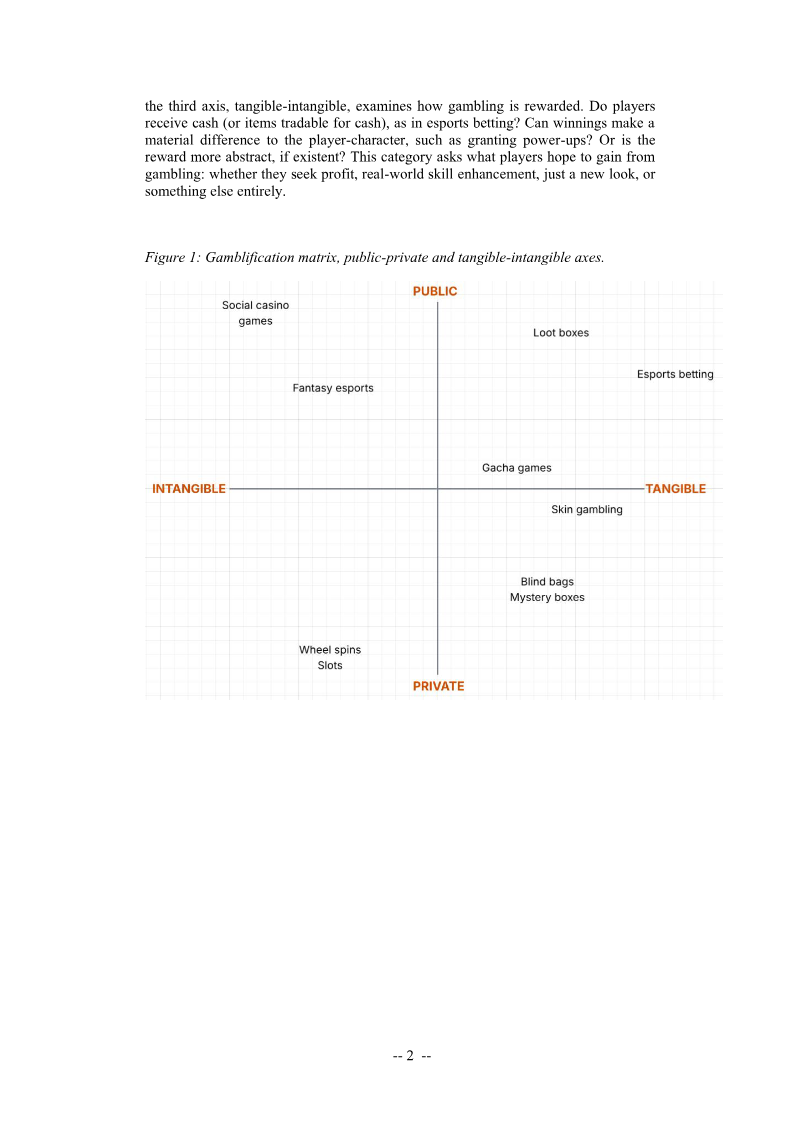
The authors frame loot boxes as a hybrid of gambling and play, noting their resemblance to gacha games and slot machines, since they require no player skill and deliver randomized rewards for real money. They also situate loot boxes within the broader microtransaction economy, citing the revenue of free-to-play titles such as Candy Crush Saga, League of Legends, and Fortnite as evidence of the commercial incentives behind these mechanics.
The findings are organized around four themes: developers' perceptions of ethics, whether loot boxes constitute gambling, the effects they observe on game development, and where respondents believe loot box practices are heading. The paper presents these as initial results, reflecting its status as an early study of how developers themselves understand monetization. Its stated contribution is to bring the people who create games into a policy and public conversation that has so far centred on consumers and regulators.
Each row is a game or company this document names, each column a document, oldest first. A mark means that document names it. Select a row to see those documents.

DiGRA · 2026

DiGRA · 2026



DiGRA · 2026
DiGRA · 2026