1 free read left. Create a free account for unlimited reading + AI research.
Create free accountWhitepaper International Journal of Serious Games
1 free read left. Create a free account for unlimited reading + AI research.
Create free accountWhitepaperInternational Journal of Serious Games
Distilling the key insights…
Digital game-based learning serves as a potent vehicle for developing higher-order mathematical skills, specifically probabilistic reasoning, when integrated with structured pedagogical support. By utilizing the game Dicey Dungeons, eighth-grade students are challenged to apply proportionality and mental tree models to navigate chance-based decision-making. The primary thesis posits that while digital environments provide the necessary framework for complex problem-solving, the quality of teacher-student interaction acts as the critical catalyst for cognitive growth. Open-ended feedback systems are essential in this process, as they provide the dynamic scaffolding required to translate game-based experiences into measurable improvements in mathematical reasoning.
Empirical analysis, conducted through the Probabilistic Reasoning Rubric and the Experience Sampling Method, reveals a consistent, positive correlation between the quality of teacher feedback and the development of student reasoning. Statistical testing indicates that these learning outcomes are not static; rather, they fluctuate throughout the duration of the intervention. While concentration levels generally trend upward during gameplay, student interest and joy remain heterogeneous and variable. Notably, the research identifies a disconnect between feedback quality and engagement levels, suggesting that while feedback is vital for cognitive advancement, it does not necessarily dictate the emotional or motivational state of the learner.
These findings emphasize that the efficacy of digital game-based learning is contingent upon the intentional integration of human-led feedback mechanisms. By moving beyond passive gameplay and implementing tailored, open-ended guidance, educators can better foster the metacognitive abilities necessary for complex mathematical tasks. Ultimately, the research underscores that successful instructional design in this field requires a balanced approach that prioritizes dynamic scaffolding to sustain both the cognitive demands of the curriculum and the diverse engagement patterns of the student population.
Serious Games Society · 2026
Serious Games Society · 2026

International Journal of Serious Games · 2026
International Journal of Serious Games · 2026
Serious Games Society · 2026
Serious Games Society · 2026
Serious Games Society · 2026
Serious Games Society · 2026
Serious Games Society · 2026
Serious Games Society · 2026
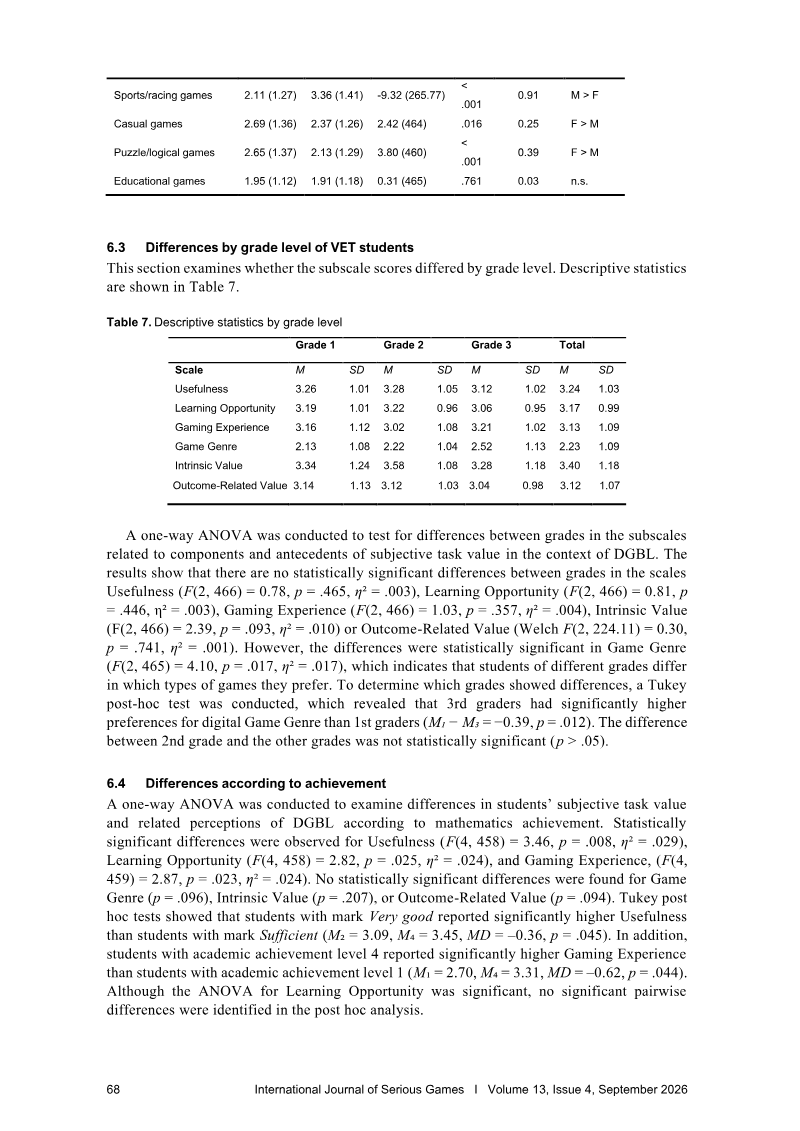
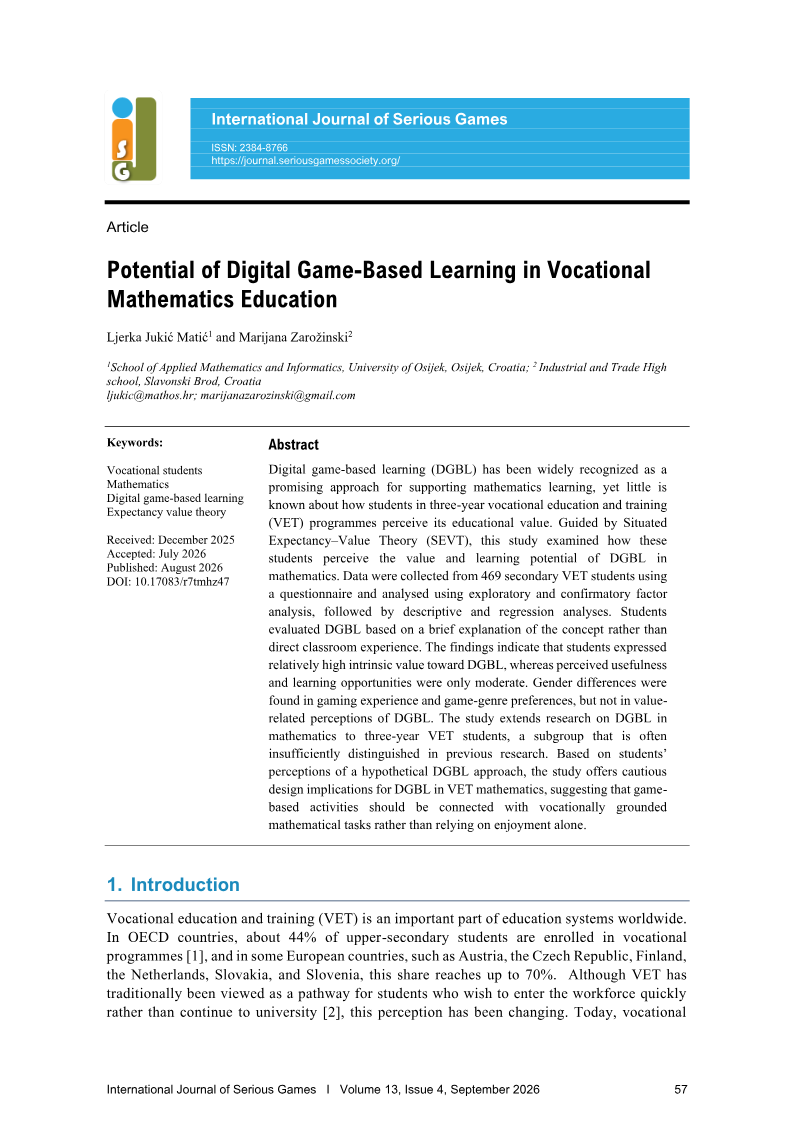
Serious Games Society · 2026
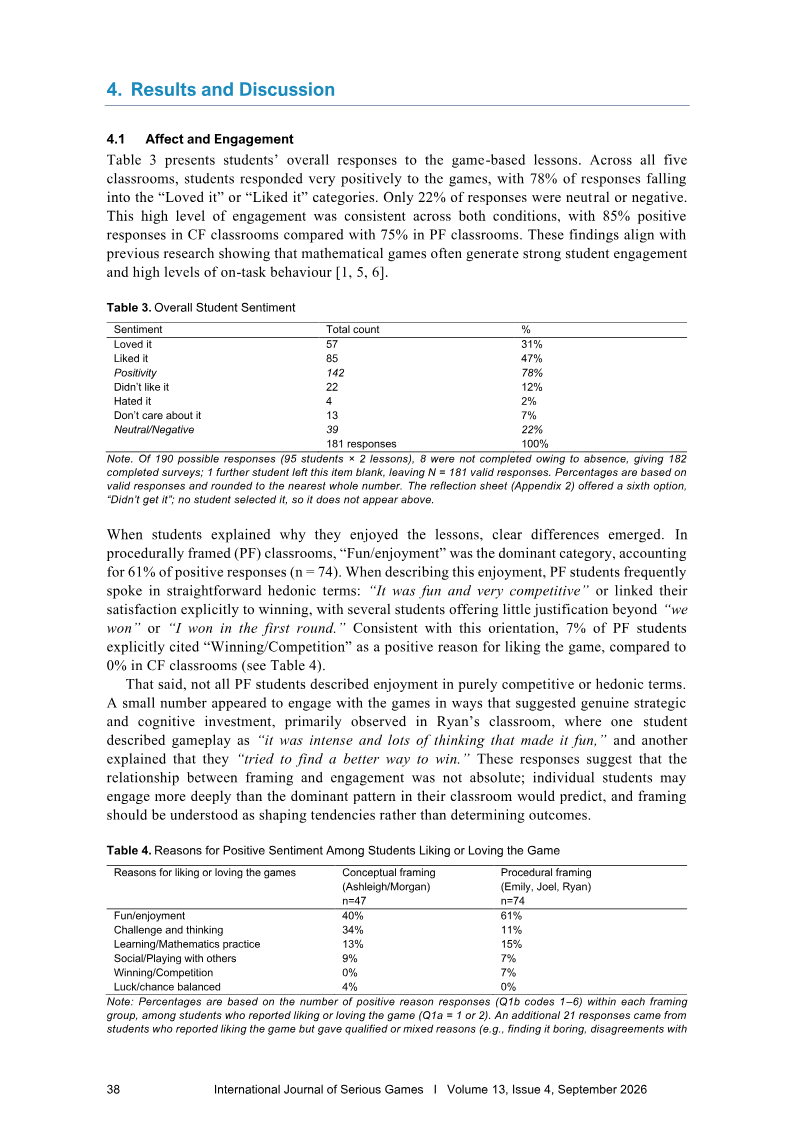
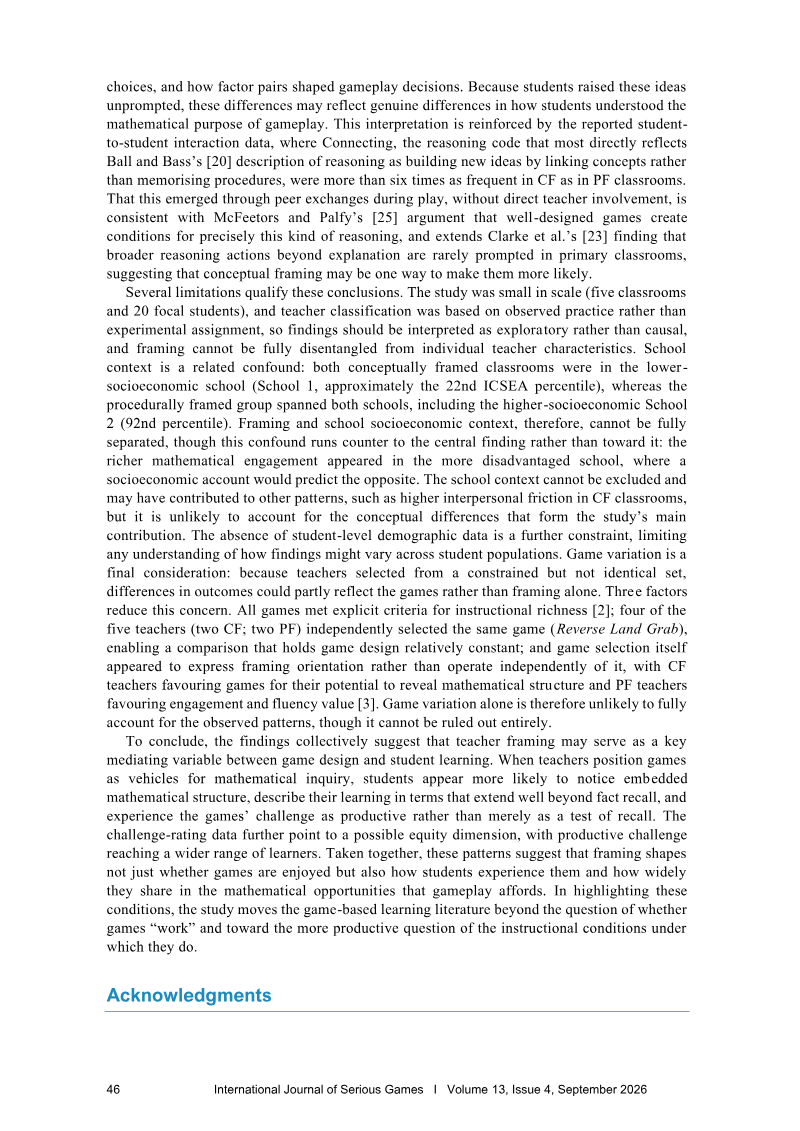
Serious Games Society · 2026
Western Norway University of Applied Sciences · 2025