1 free read left. Create a free account for unlimited reading + AI research.
Create free accountWhitepaper International Journal of Serious Games
1 free read left. Create a free account for unlimited reading + AI research.
Create free accountWhitepaperInternational Journal of Serious Games
Distilling the key insights…
Traditional rote-memorization methods often fail to capture the nuances of student learning in primary science education. To address this, an Educational Design Research framework has been employed to develop and validate four serious games designed to serve as both formative and summative assessment tools. By aligning digital gameplay with Inquiry-Based Science Education principles, these tools provide a more comprehensive evaluation of student knowledge, skills, and attitudes than conventional testing. The research demonstrates that integrating narrative-driven scenarios and interactive mechanics effectively reduces assessment-related anxiety while fostering higher levels of student engagement.
The study, conducted within the Portuguese primary education system over a two-year period, highlights the efficacy of iterative design cycles involving multidisciplinary teams and educators. These games cover a broad spectrum of scientific disciplines, including biology, physics, and environmental science, with specific tasks tailored for students in grades one through four. By utilizing flexible, self-paced structures, the games support differentiated learning, allowing students to navigate complex concepts such as material properties, light, density, and ecological sustainability through drag-and-drop mechanics and targeted inquiry.
Ultimately, the findings confirm that serious games offer a viable, adaptive alternative to decontextualized assessment practices. While the development process faced technical constraints regarding software interactivity, the resulting tools successfully balance educational rigor with playful, student-centered design. The research concludes that while multidisciplinary collaboration remains a complex undertaking, the iterative EDR approach is essential for creating effective digital assessments. Future efforts should prioritize mobile adaptation and broader longitudinal evaluations to further refine these tools for diverse classroom environments.
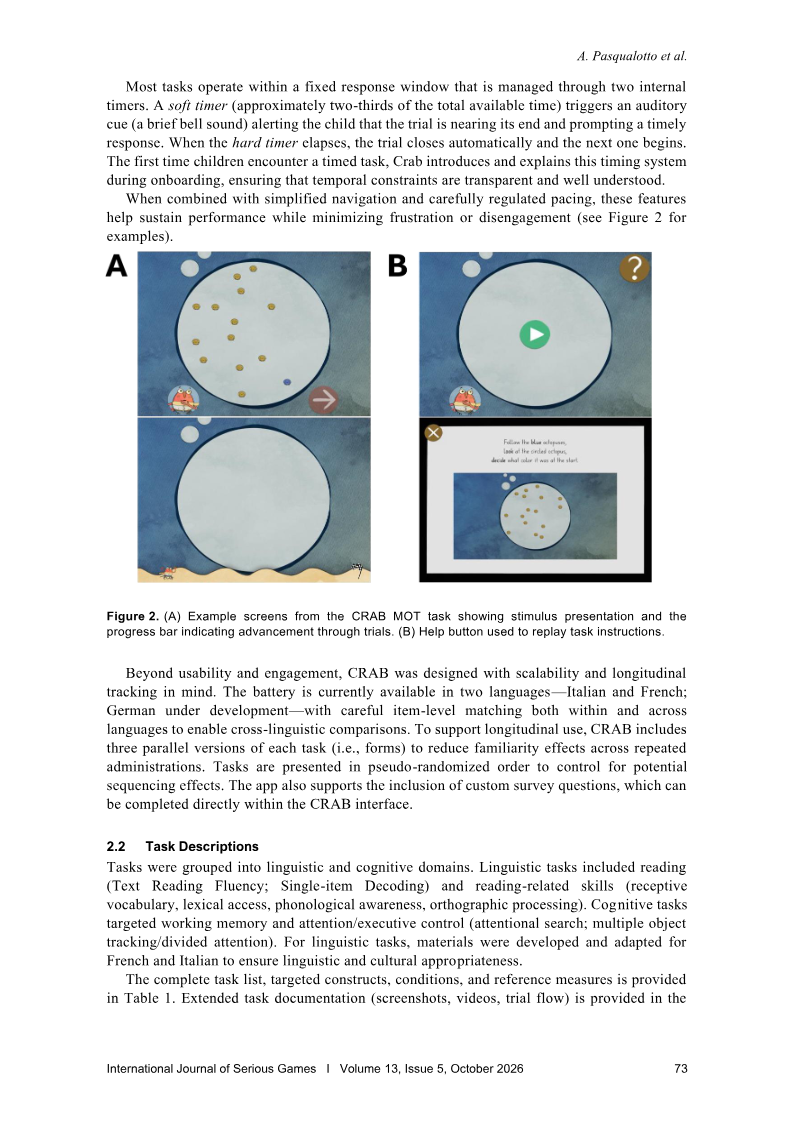
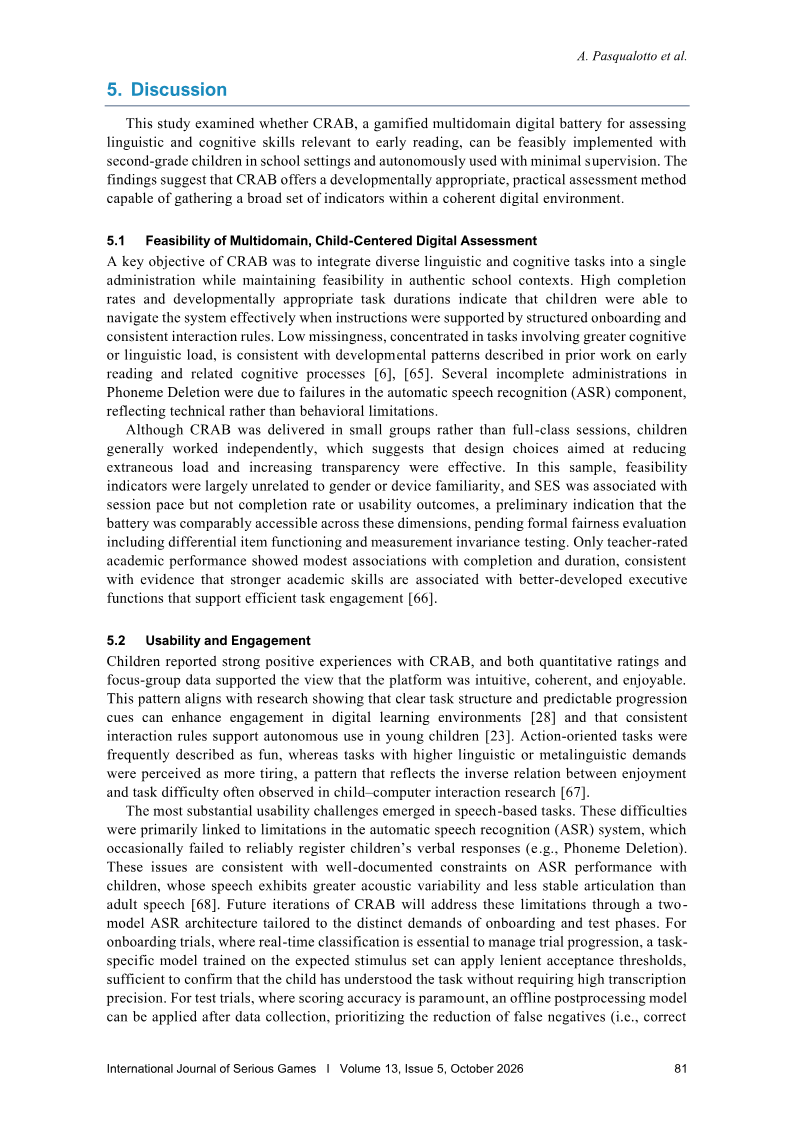
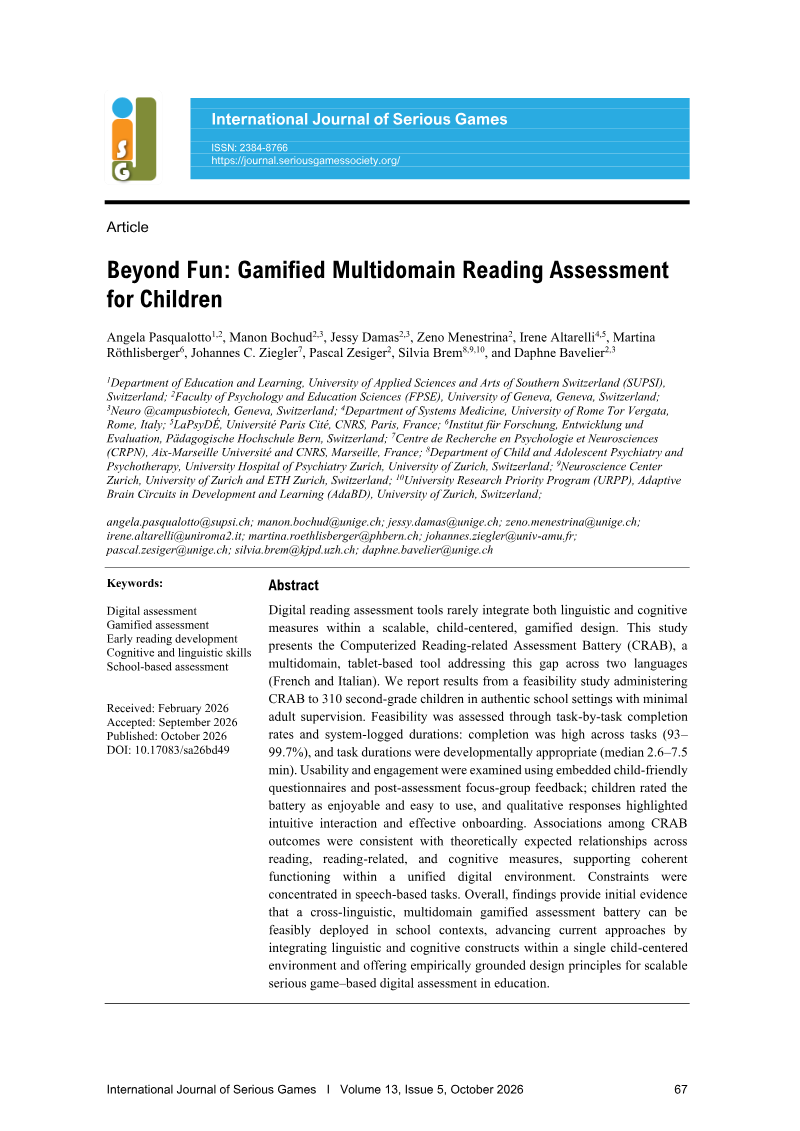
International Journal of Serious Games · 2026
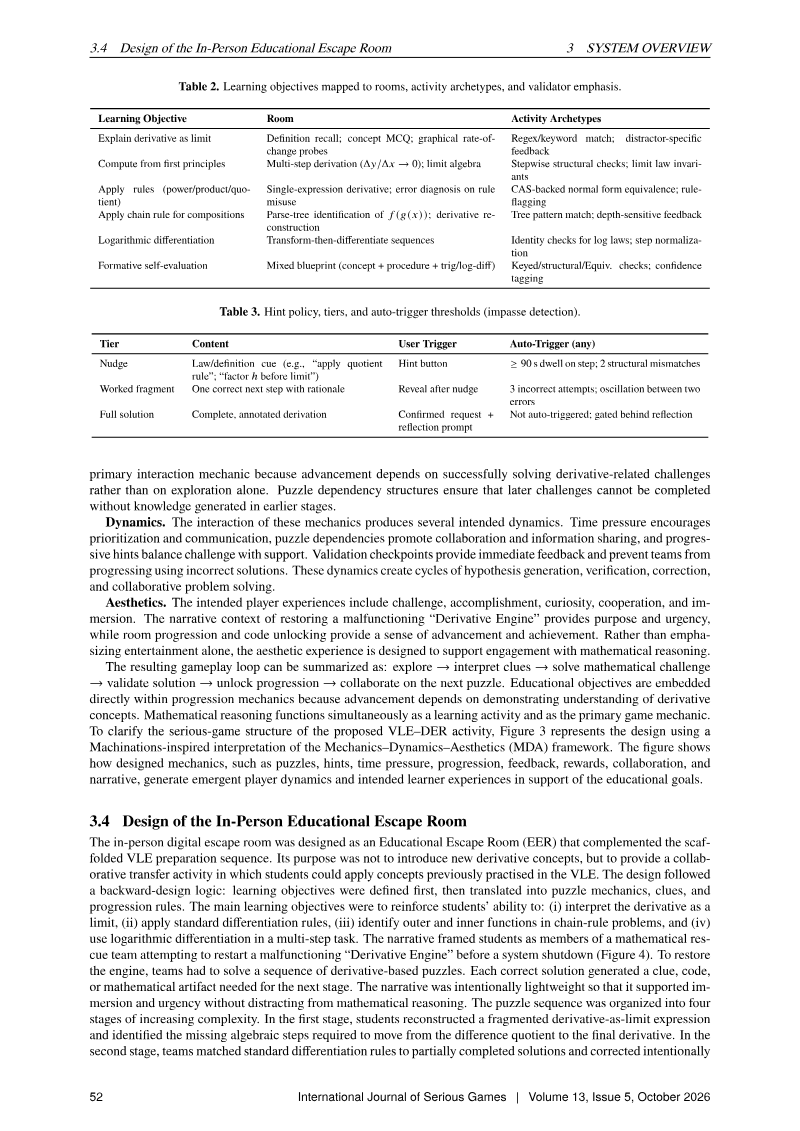
International Journal of Serious Games · 2026
International Journal of Serious Games · 2026
International Journal of Serious Games · 2026
International Journal of Serious Games · 2026
International Journal of Serious Games · 2026
International Journal of Serious Games · 2026
International Journal of Serious Games · 2025
International Journal of Serious Games · 2025
International Journal of Serious Games · 2025
Serious Games Society · 2025
International Journal of Serious Games · 2025
Western Norway University of Applied Sciences · 2025