ReportBoston Consulting Group
Video Gaming Report 2025: How Platforms Are Colliding and Why This Will Spark the Next Era of Growth
202526 pages~48 min full read
Key insights
7 slides
The structural shift
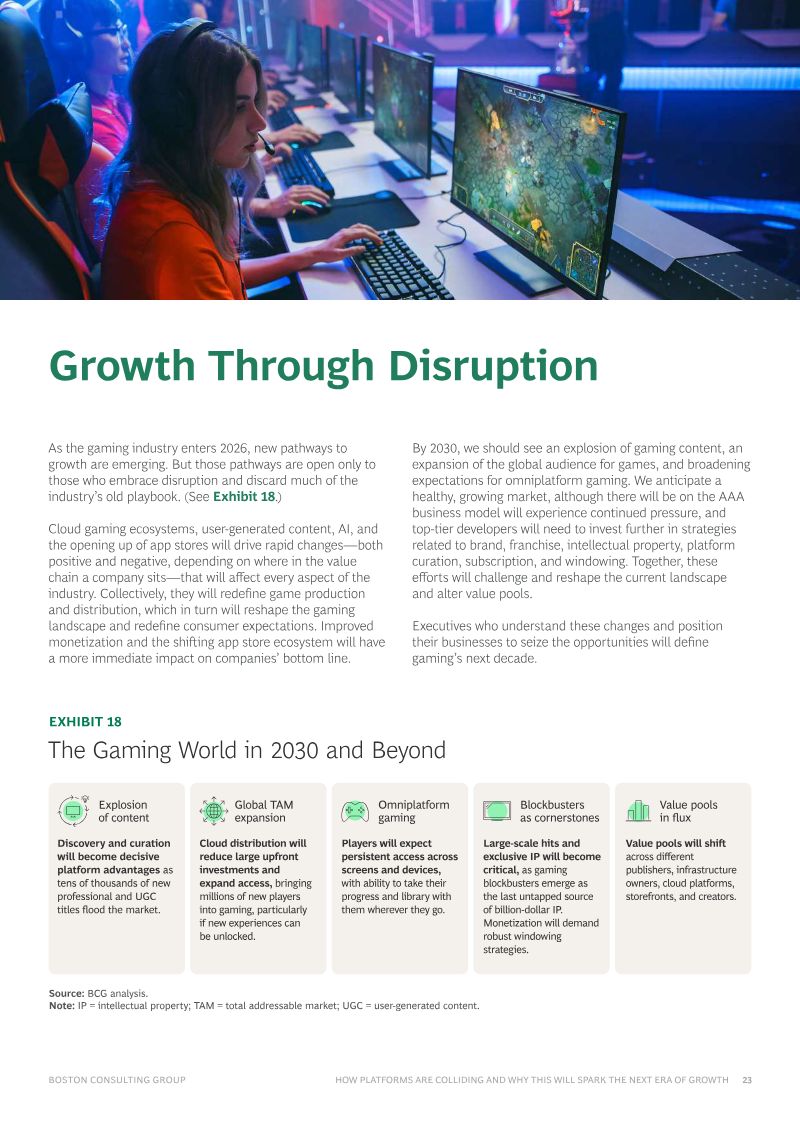
The industry is moving from console-centric competition to a multiplatform model.
Success is increasingly dictated by community engagement, user-generated content, and discoverability. This shift is underpinned by generative AI, cloud gaming, and diversified distribution channels.
Key number
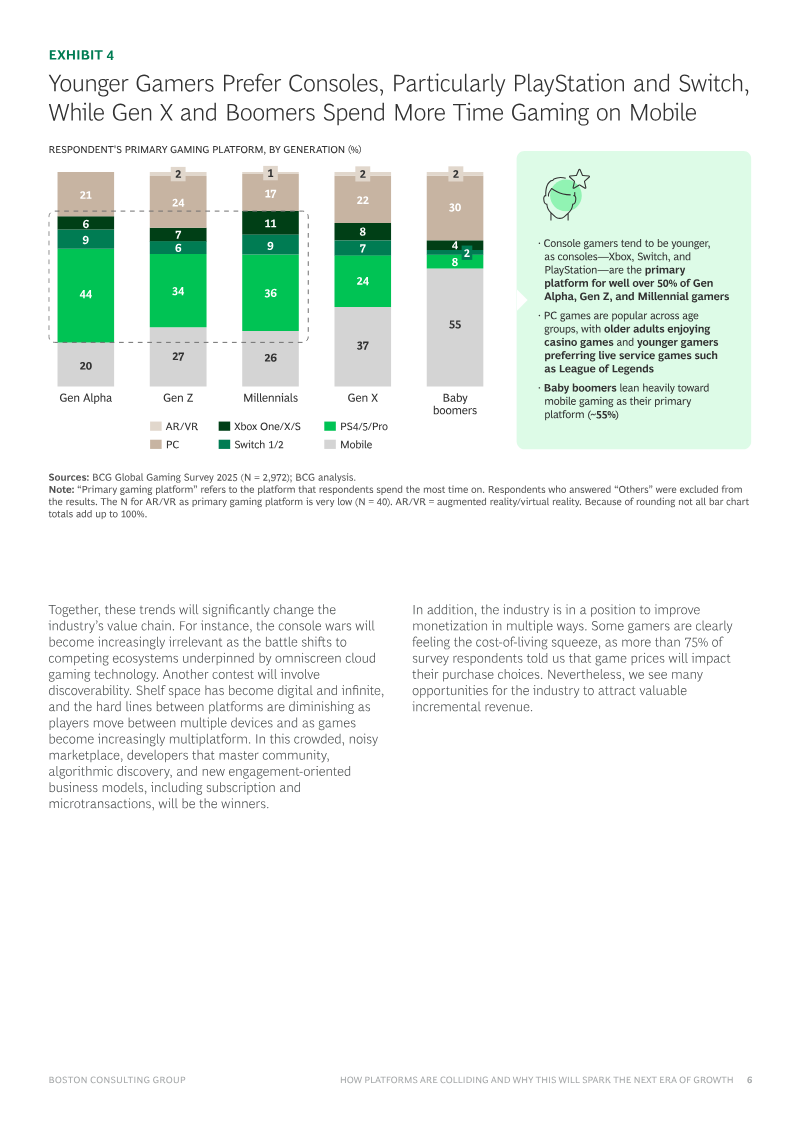
Cloud gaming is projected to reach $18.3 billion in revenue by 2030.
Cloud gaming is acting as a primary catalyst for industry growth. It serves as a primary driver as the market moves toward hardware-agnostic ecosystems.
Page 10 of the report20230.8
20241
20251.4
2026E3.7
2027E6
2028E10.1
2029E13.5
2030E18.3
Monetization pivot
Developers are adopting direct-to-consumer strategies to address price-conscious players.
These strategies include tiered pricing models, windowing, and the integration of in-game advertising. They are designed to capture value from an increasingly price-conscious global player base.
The content risk
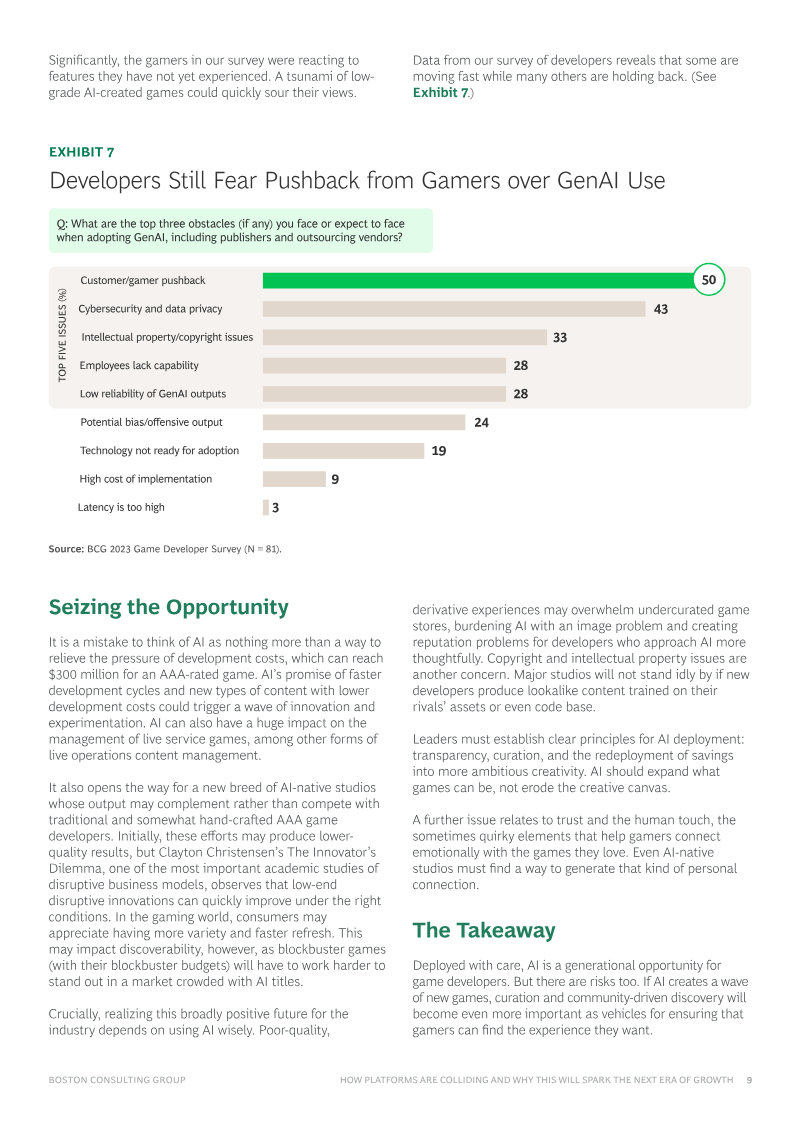
Low-quality, AI-generated content poses a significant risk to profitability.
Market saturation caused by an influx of low-quality, AI-generated content is a significant challenge. Addressing this requires a focus on sustainable creator economies.
Distribution shift
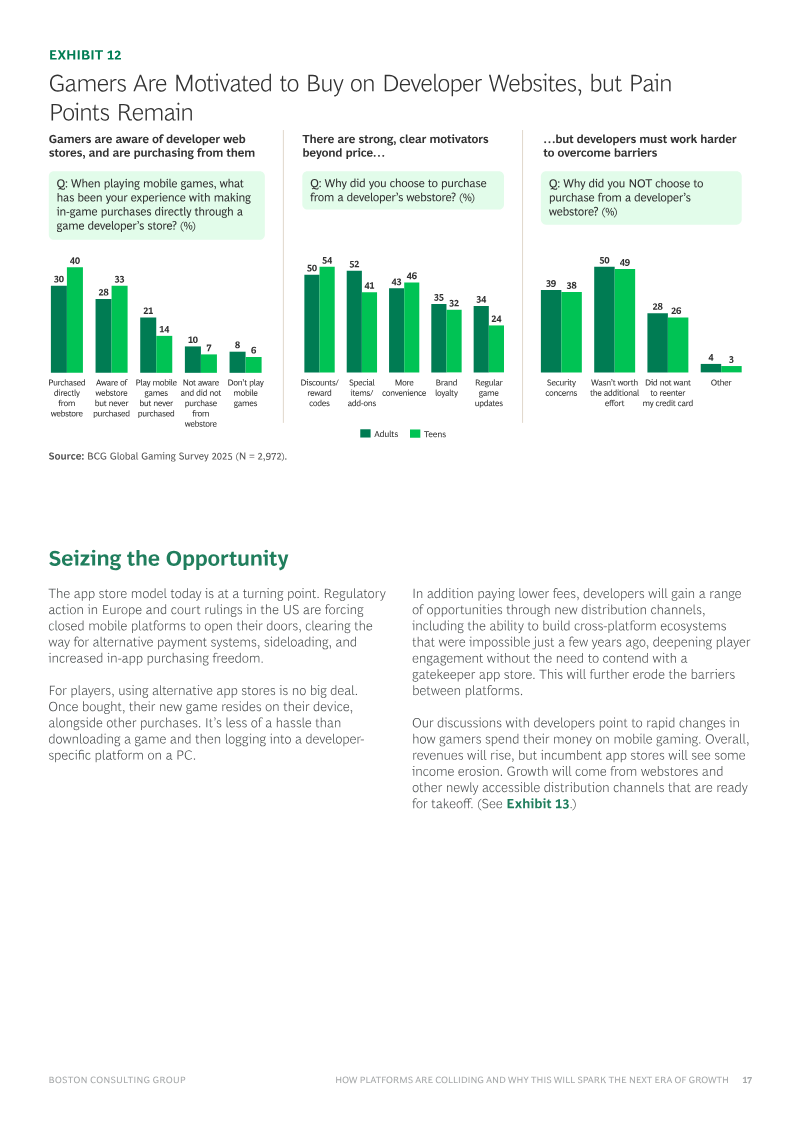
Developer-owned webstores are challenging the dominance of incumbent app stores.
These new channels offer the potential for improved margins and deeper player relationships. Their long-term viability depends on addressing consumer concerns regarding security and platform convenience.
Webstore rise. The rise of developer-owned webstores and alternative distribution platforms is challenging the dominance of incumbent app stores.
The balance
Future growth depends on balancing technological integration with consumer demands.
Stakeholders must balance technological innovation with the necessity of fostering sustainable creator economies. Discoverability remains the central pillar of the modern gaming experience.
Growth balance. Future industry growth depends on balancing technological integration with consumer demands for platform security and convenience.
UGC adoption
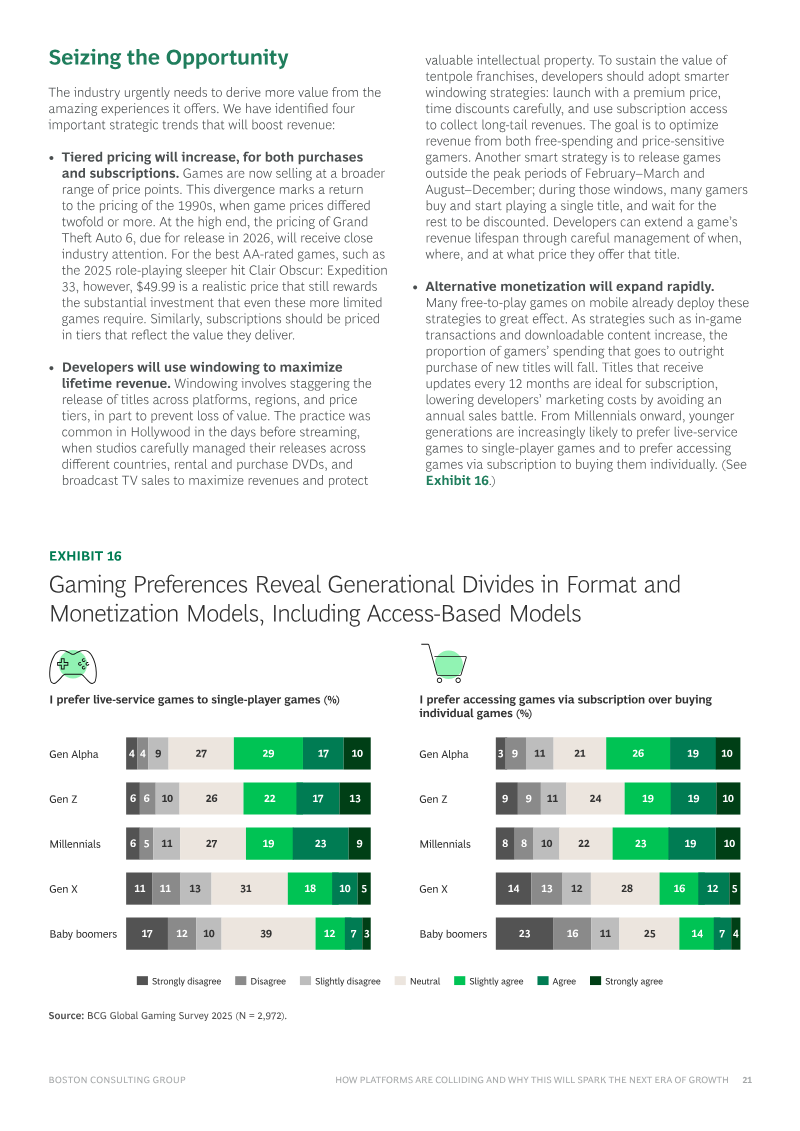
More than 40% of gamers are consuming more user-generated content.
Community engagement and discoverability are becoming key drivers of the experience.
UGC consumption. More than 40% of gamers are consuming more user-generated content than they did a year ago.
Page 14 of the reportStrongly agree8
Agree14
Slightly agree20
Neutral25
Slightly disagree11
Disagree9
Strongly disagree13
1 / 7
Ask AI about this report