1 free read left. Create a free account for unlimited reading + AI research.
Create free accountArticle DiGRA
1 free read left. Create a free account for unlimited reading + AI research.
Create free accountArticleDiGRA
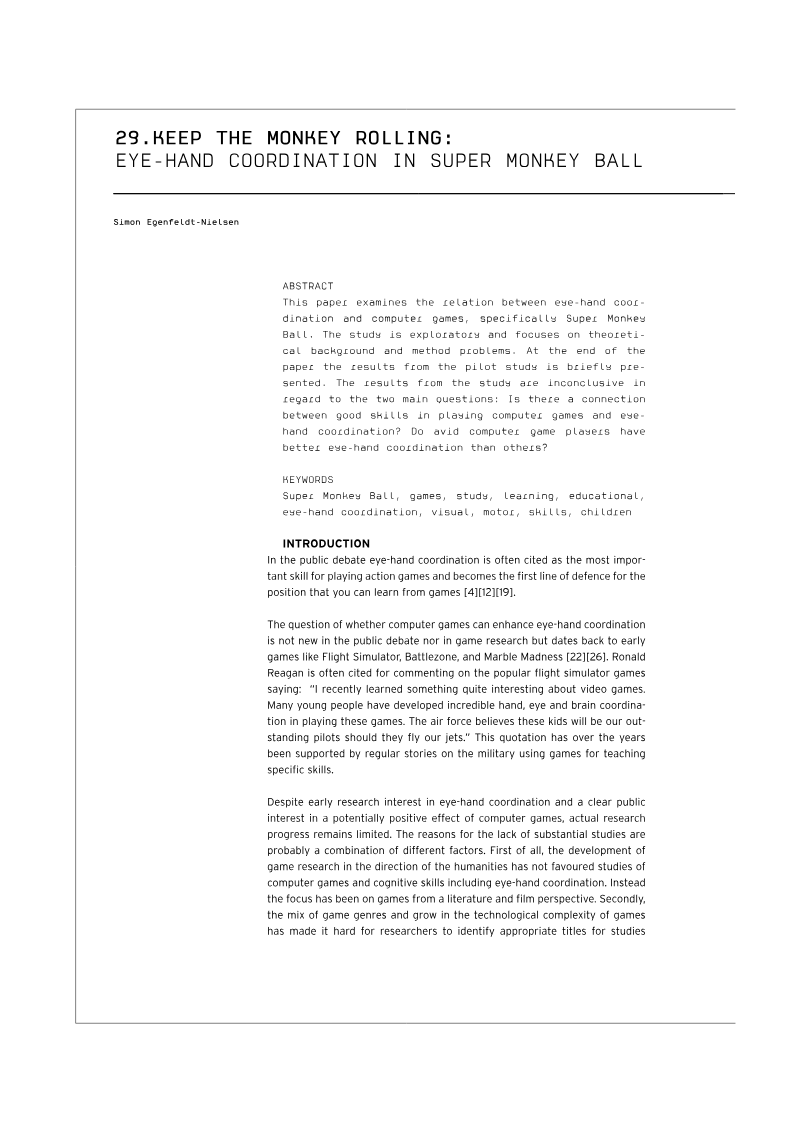
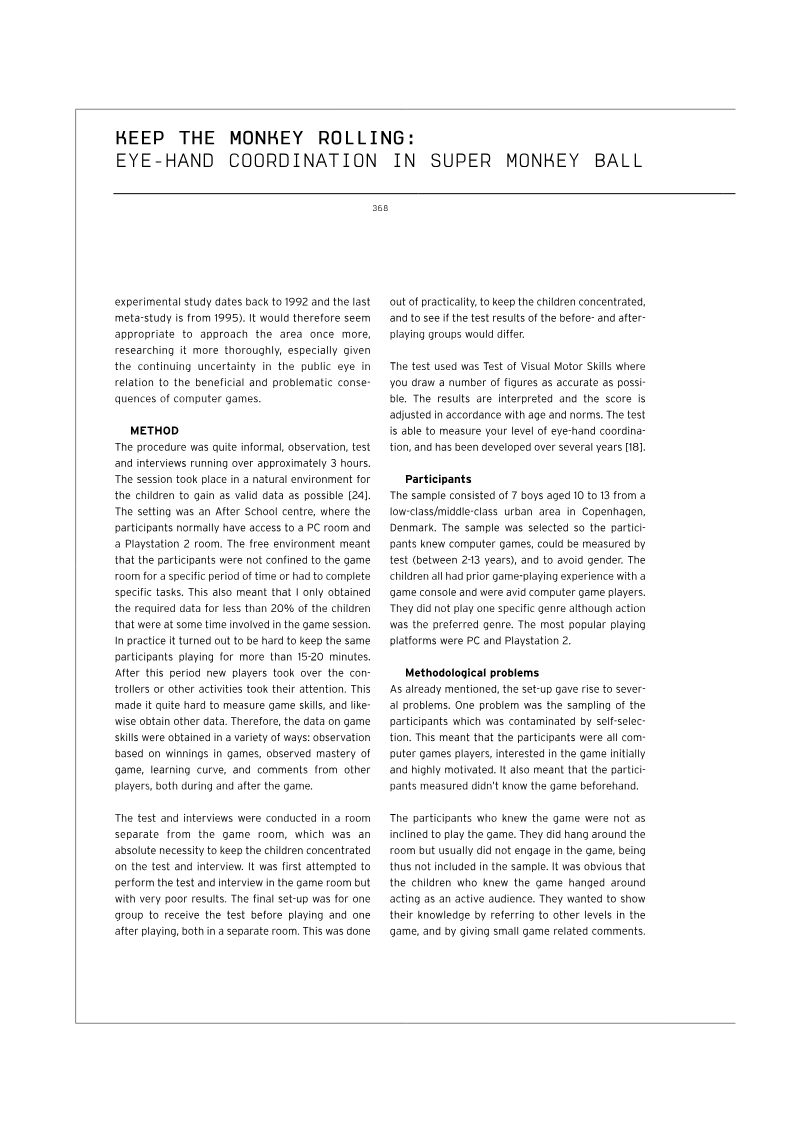
The paper argues that Super Monkey Ball's vertical design and frequent failing give it meaning beyond a light party game.
This paper by Troels Degn Johansson examines Super Monkey Ball (SMB) through the lens of its verticality, arguing that the game's distinctive vertical design, together with the frequent experience of falling and failing, gives it an allegorical and rhetorical dimension beyond its surface as a light party game. The author contends that the game's cute monkey imagery, caricatured infantile behavior, and playful thematization of physical insufficiency invite a lighter mode of play that appeals to non-gamers and hard-core players alike, positioning SMB as a deliberate suspension of serious gaming conventions while retaining their underlying structure.
The analysis rests on the author's own play experience and an informal empirical study of test players, with a supporting observation drawn from a related study in the same collection. It focuses on the console setting, in which two to four players share a living room, watch one another's progress on a split screen, and engage in social comparison, bragging, and teasing. The paper situates this multiplayer dynamic against broader discussions of networked play and draws comparisons with a physical toy maze, the Tivoli amusement park, and roller coaster aesthetics, as well as with the Belgian comics series The Obscure Cities.
Central to the argument is the concept of mise en abyme, the staging of an abyss, which the author uses to describe how SMB's depiction of plunging into endless voids reflects the fragility of play itself. The paper concludes that this self-reflexive quality gives the game a melancholic undertone, as the wish to master the game parallels the impossibility of attaining eternal life. The author frames this as a broader association between Game and Life, previously explored in earlier work on rhetorical strategies in short web-based computer games.



DiGRA · 2023

DiGRA · 2023



DiGRA · 2023

DiGRA · 2023



DiGRA · 2023



DiGRA · 2023



DiGRA · 2023



DiGRA · 2023



DiGRA · 2023



DiGRA · 2023



DiGRA · 2023

DiGRA · 2023
Extra Credits · 2026