1 free read left. Create a free account for unlimited reading + AI research.
Create free accountWhitepaperKinephanos
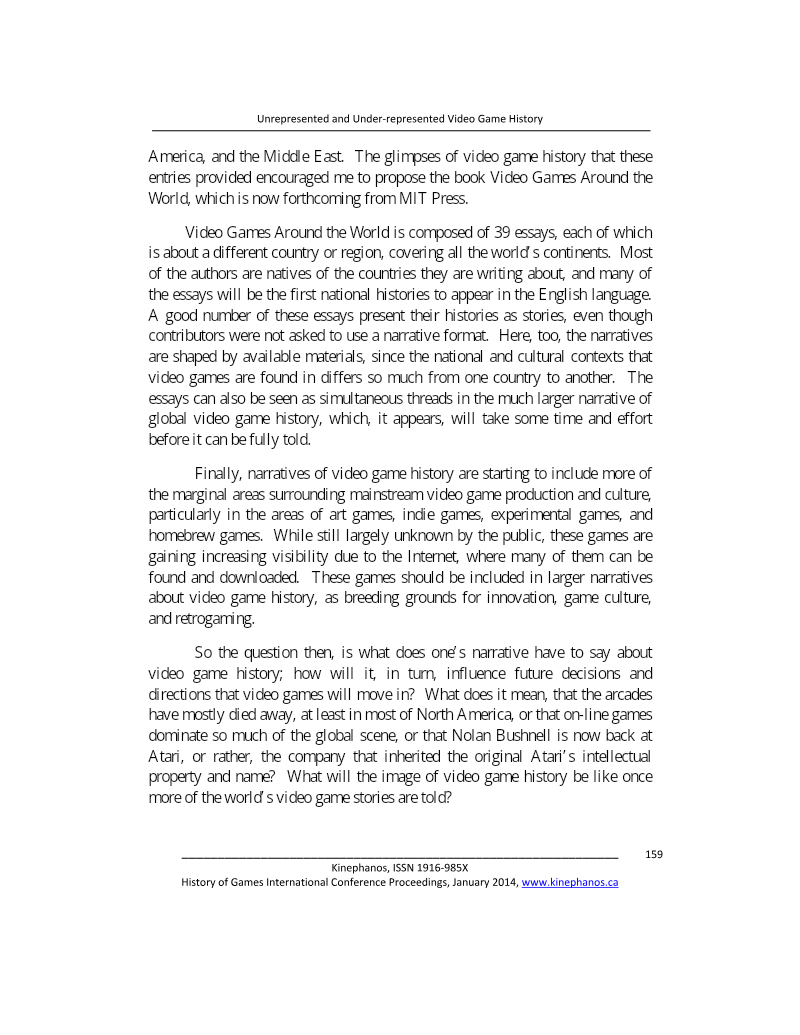
The goal is to integrate diverse cultural contexts into the global narrative.
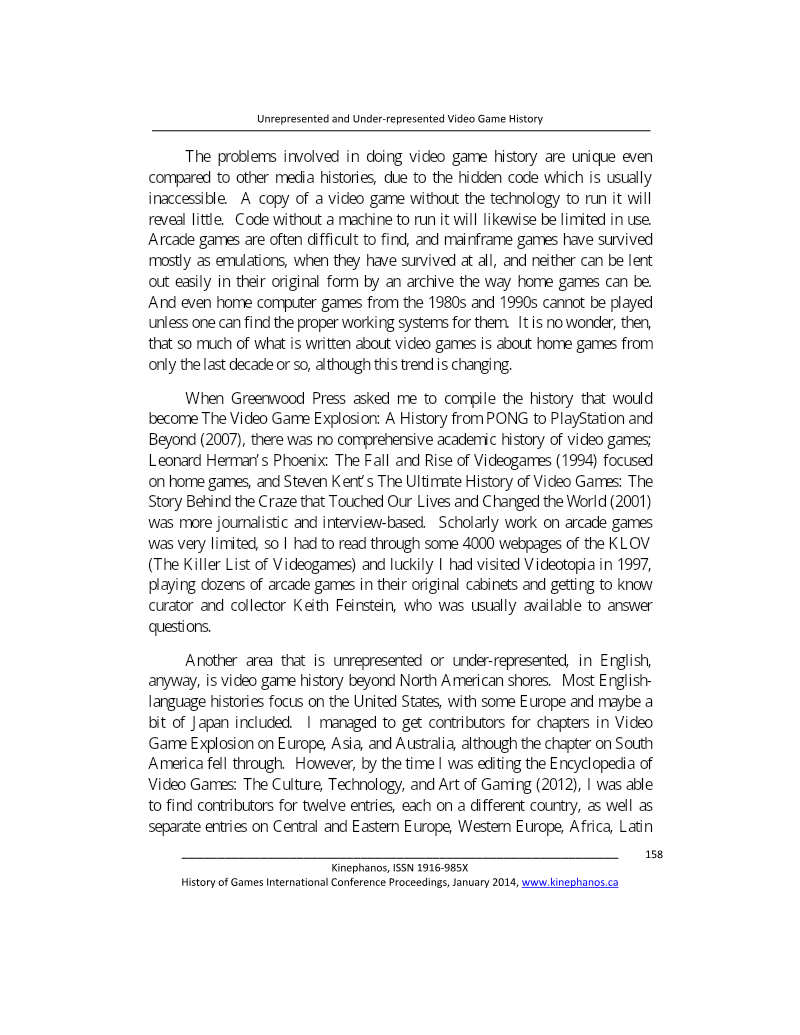
Broader coverage. Current research is expanding to include previously neglected sectors, specifically international developments in Africa, Latin America, the Middle East, Asia, Europe, and Australia.
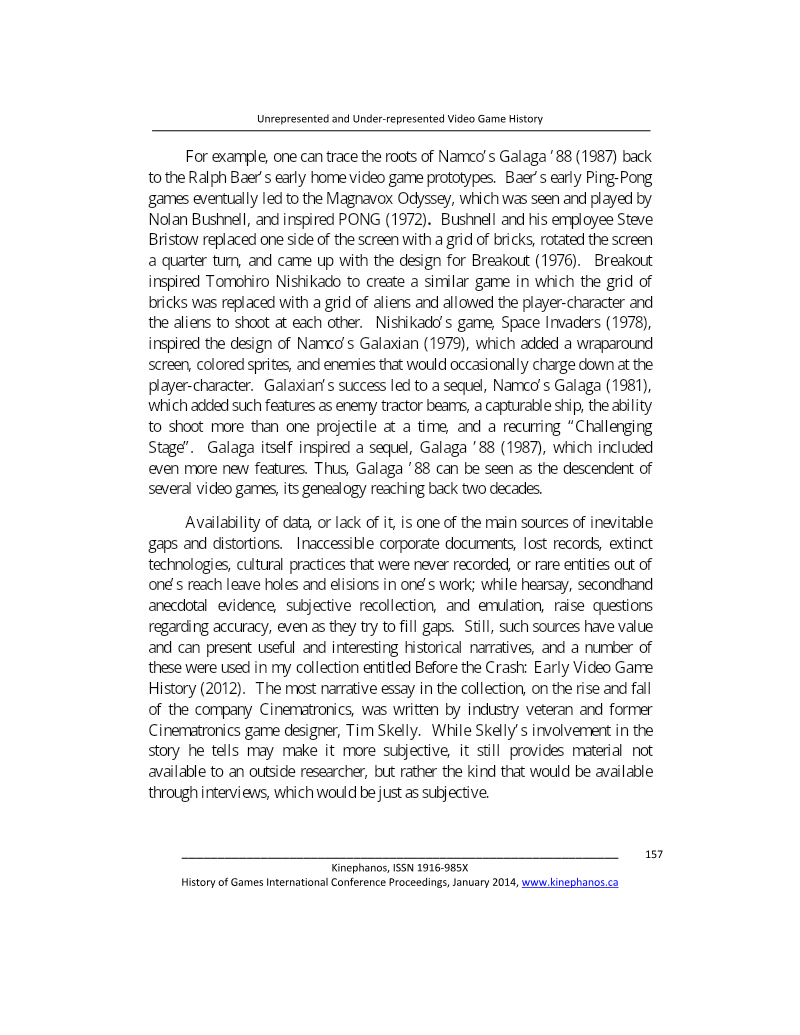
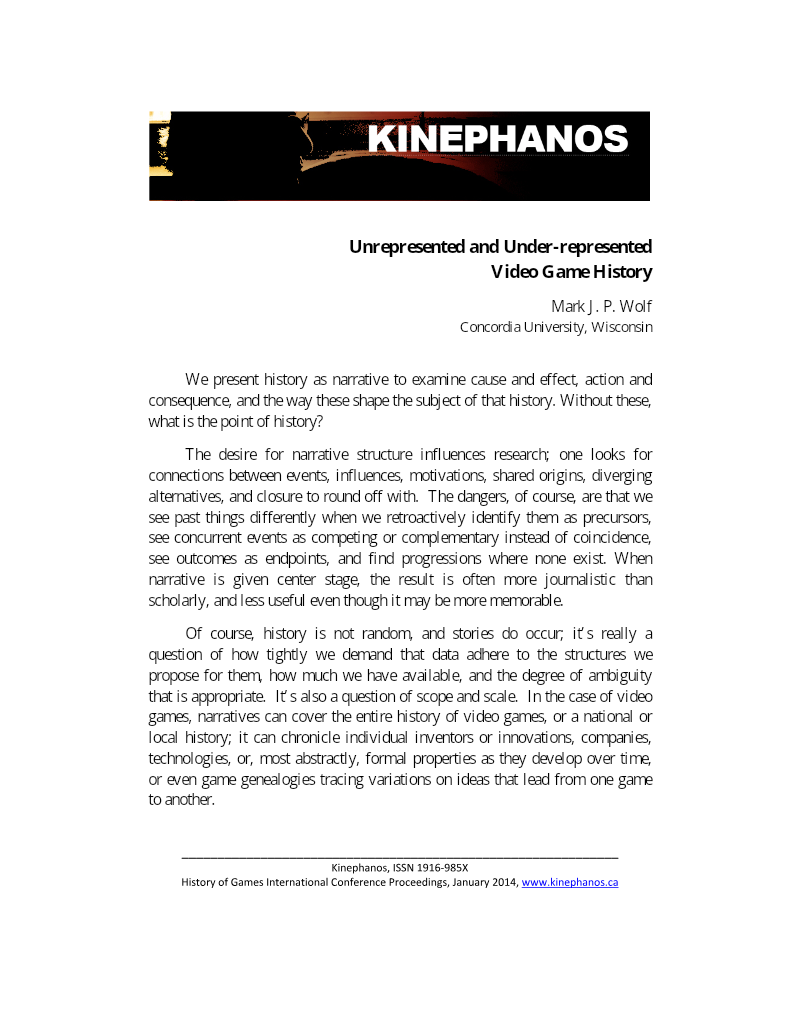
The study of video game history is fundamentally shaped by narrative structures that connect events, innovations, and genealogies. However, these narratives are often constrained by the availability of data, the loss of extinct technologies, and the inaccessibility of corporate records. Because video games rely on both hardware and software, they present unique archival challenges compared to other media, leading to a historical record that has historically favored home console gaming in North America while neglecting arcade, mainframe, and international developments.
Methodologically, the field has transitioned from journalistic, interview-based accounts toward more comprehensive academic inquiry. Early efforts to document the industry relied on subjective recollections and limited secondary sources, such as the Killer List of Videogames (KLOV) database. Recent scholarly progress has expanded the scope of research to include global perspectives, moving beyond the United States to incorporate histories from Europe, Asia, Australia, Africa, Latin America, and the Middle East. This shift is supported by collaborative efforts to compile national histories and integrate diverse cultural contexts into the broader global narrative.
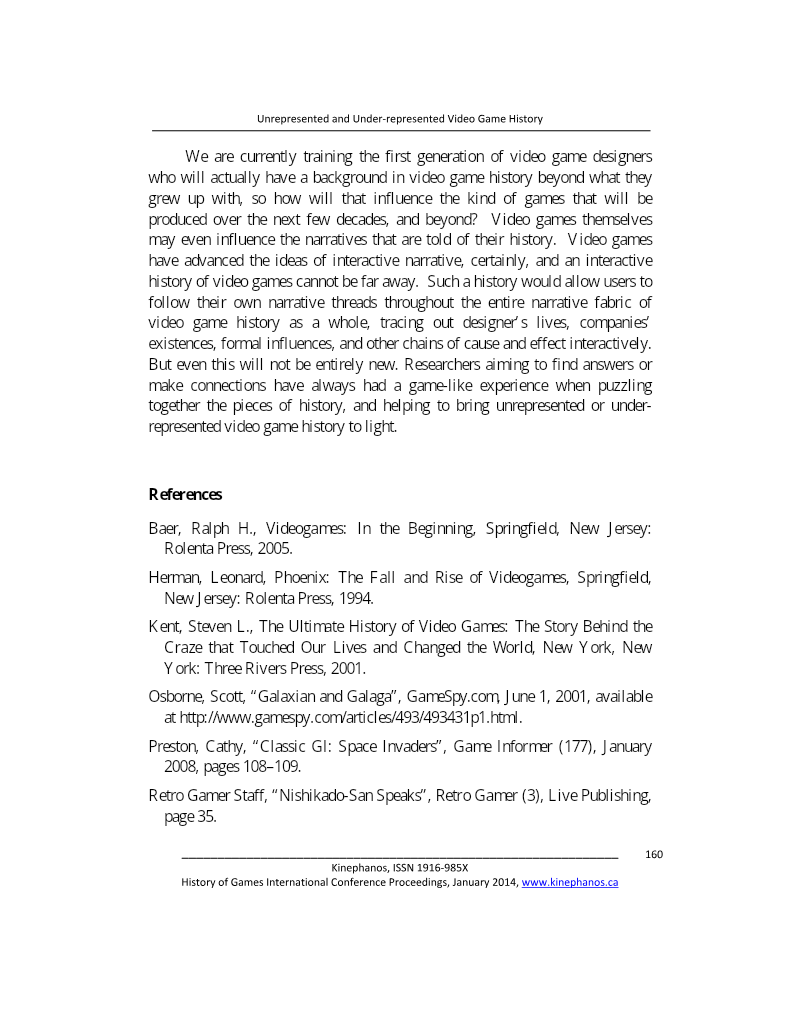
The current trajectory of the field emphasizes the inclusion of marginal sectors, such as indie, experimental, and homebrew games, which serve as critical sites for innovation. As the first generation of designers with formal historical training enters the industry, the understanding of game lineage is expected to deepen. Future historical research may move toward interactive, non-linear formats that allow users to trace complex chains of cause and effect, mirroring the game-like experience of archival research itself. Ultimately, the goal is to fill the existing gaps in the historical record, ensuring that under-represented regions and niche development communities are integrated into a cohesive, global history of the medium.



Kinephanos · 2026
Kinephanos · 2026
Kinephanos · 2026
Kinephanos · 2025
Kinephanos · 2025
Kinephanos · 2025
Kinephanos · 2025
Kinephanos · 2025
Kinephanos · 2025
Kinephanos · 2025
Kinephanos · 2025
Kinephanos · 2025
International Journal of Role-Playing · 2026






























Comments