1 free read left. Create a free account for unlimited reading + AI research.
Create free accountFinancial report Ubisoft
1 free read left. Create a free account for unlimited reading + AI research.
Create free accountFinancial reportUbisoft
Distilling the key insights…
The 2016 Registration Document and Annual Report provides a comprehensive overview of Ubisoft’s financial performance, corporate governance, and operational strategy for the fiscal year ending March 31, 2016. The primary thesis centers on the company’s transition toward a digital-first, brand-owned model, supported by significant investments in internal R&D and production. By leveraging successful franchise launches such as Tom Clancy’s The Division and Rainbow Six Siege, the company aimed to secure long-term growth, targeting €2.2 billion in sales and a 20% operating margin by the 2018/2019 fiscal year.
Financially, the company reported annual sales of €1,394 million and a net income of €93.4 million. Despite a shift toward net borrowing to fund game production and share buybacks, the organization maintained compliance with all financial covenants and retained a robust liquidity position, supported by €310 million in unutilized credit lines. The report highlights a capital-intensive production model, with capitalized software costs reaching €514.6 million, reflecting a strategic commitment to organic intellectual property development over external acquisitions.
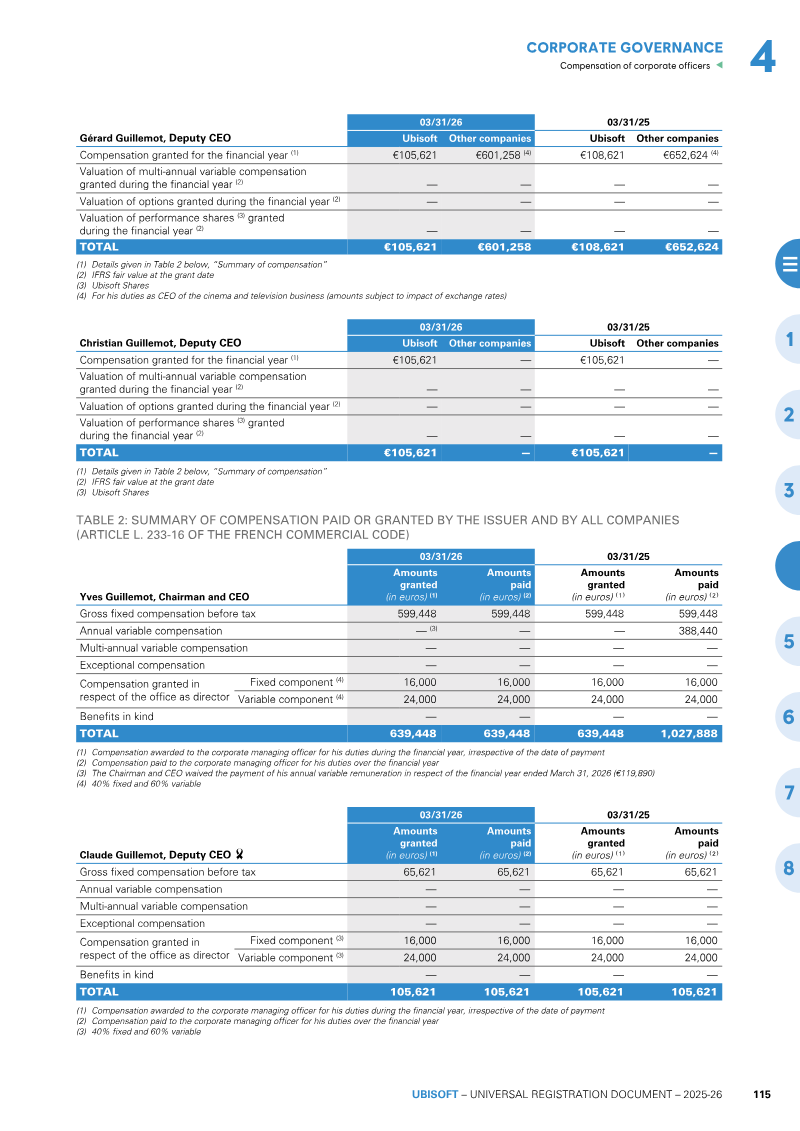
Governance and operational oversight remain central to the company’s stability. The Board of Directors, led by Chairman and CEO Yves Guillemot, utilizes specialized independent committees to manage executive compensation, audit functions, and succession planning. The report also details a growing emphasis on corporate social responsibility, including environmental sustainability initiatives and a 9% increase in headcount to 10,667 employees globally. While the company faces risks related to market volatility, cybersecurity, and regulatory compliance, it employs a centralized internal control system and rigorous auditing processes to mitigate these threats. Notably, the period saw a significant shift in the ownership landscape, with Vivendi emerging as the largest shareholder by July 2016, prompting the company to reinforce its governance protocols and change-of-control protections.
Ubisoft · 2026


Ubisoft · 2026
Ubisoft · 2026
Ubisoft · 2026
Ubisoft · 2026
Ubisoft · 2026
Ubisoft · 2026
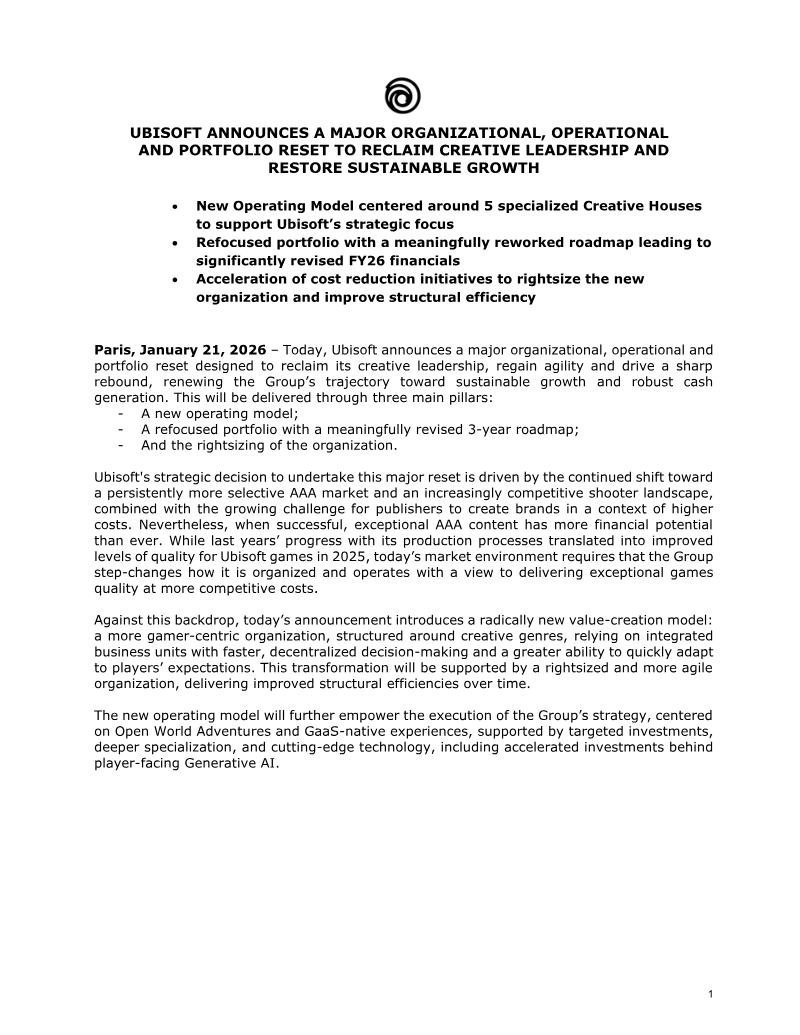
Ubisoft · 2026
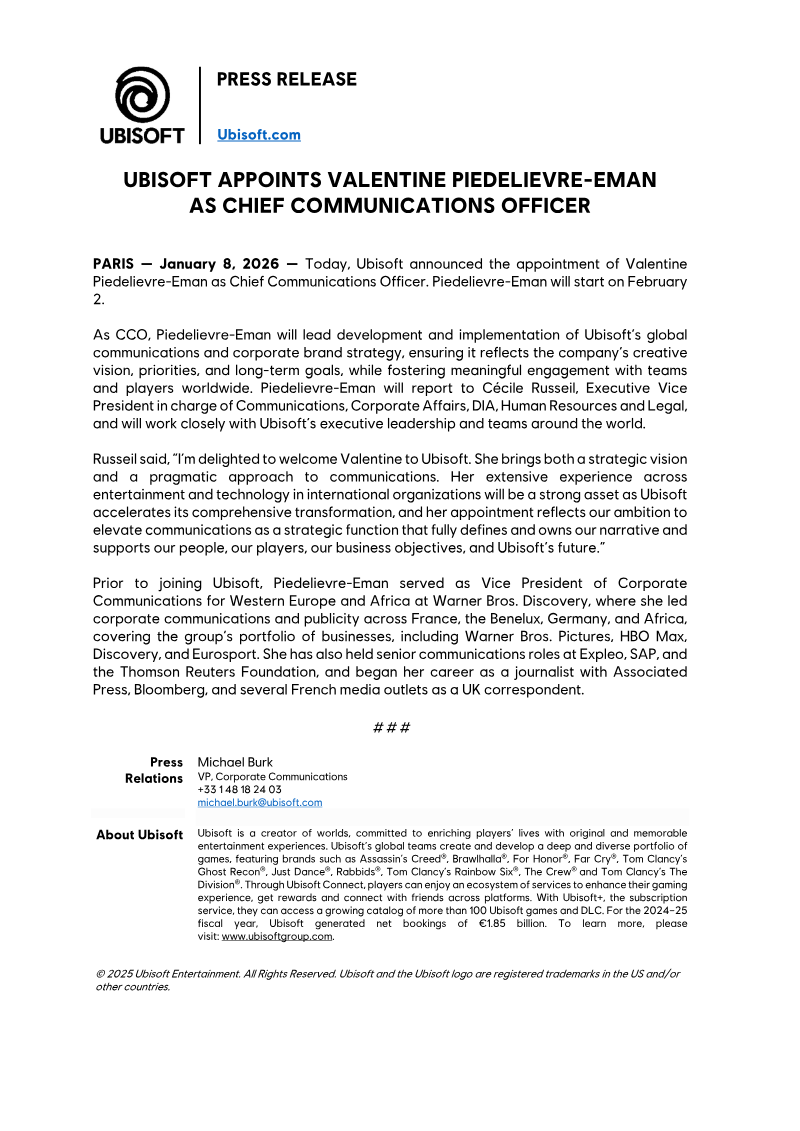
Ubisoft · 2026
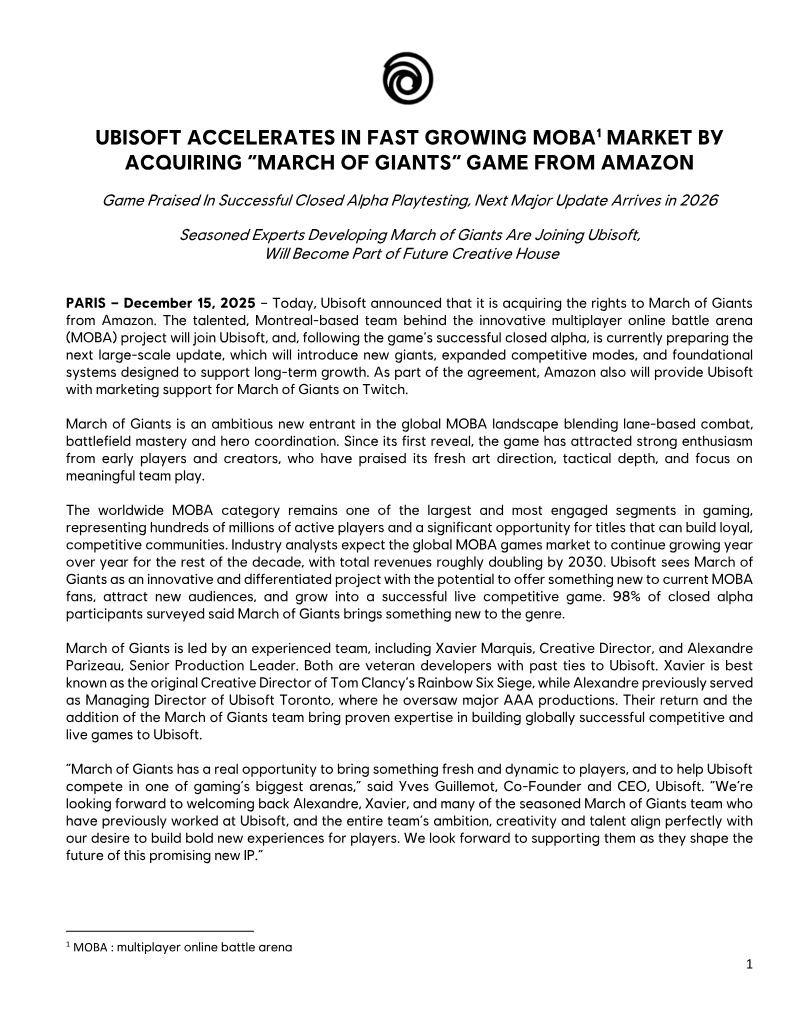
Ubisoft · 2025
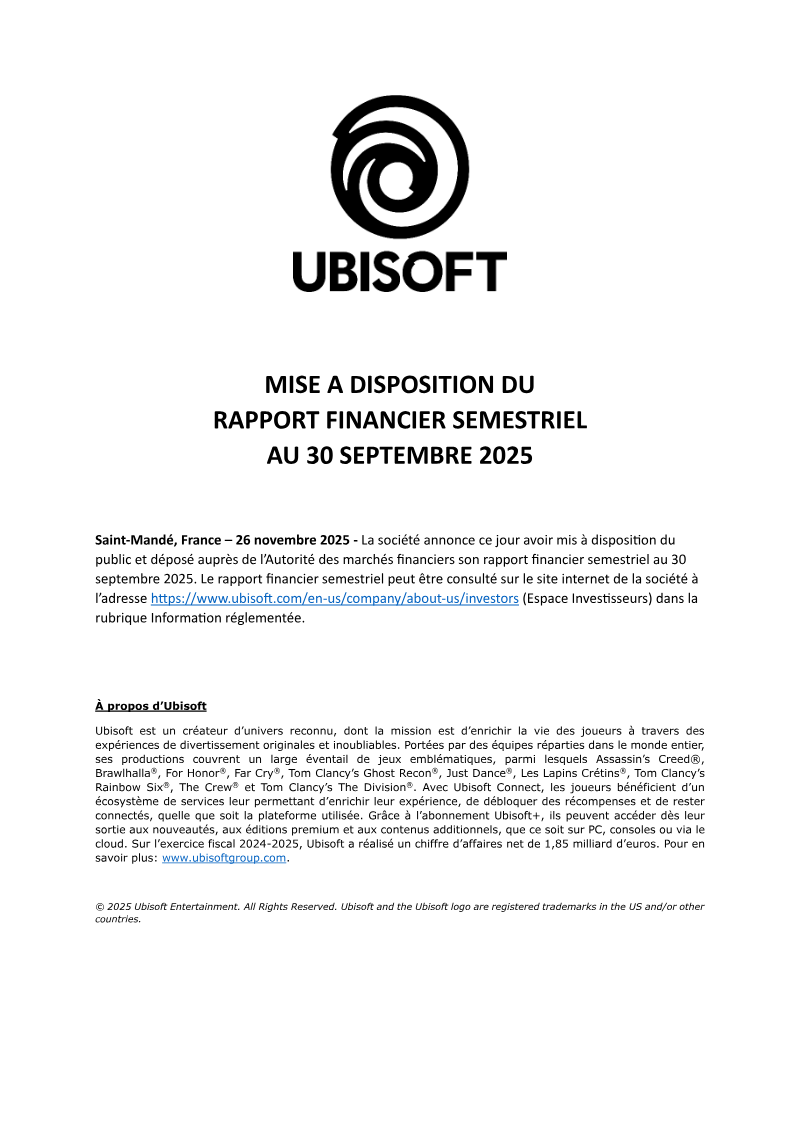
Ubisoft · 2025
Ubisoft · 2025
Jason Schreier · 2026