1 free read left. Create a free account for unlimited reading + AI research.
Create free account
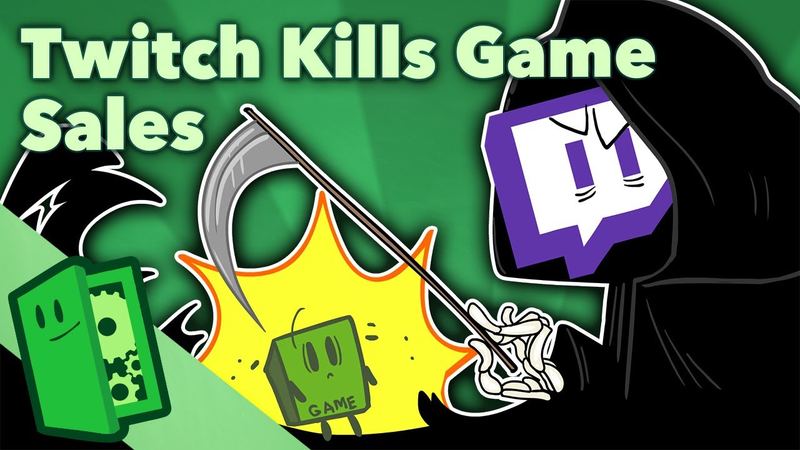
Twitch Kills Game Sales... but not equally! - Extra Credits
Key insights
5 takeaways- 01Streaming acts as both a discovery tool and a consumption substitute, with 40% of U.S. consumers purchasing a game after watching it, while 39% forgo a purchase because watching the stream provided sufficient satisfaction.
- 02Narrative-heavy, linear games are at the highest risk of lost sales, as viewers often feel they have experienced the core content without needing to play the game themselves.
- 03The 'demo effect' of streaming allows potential customers to determine if a game meets their needs, which can lead to a loss of unit sales if the viewer decides the title is not for them.
- 04Competitive, puzzle, and creative-building games benefit from streaming, as these genres foster long-term community engagement and increased player spending, as evidenced by data from titles like League of Legends and Dota 2.
- 05The net impact of streaming on industry sales remains ambiguous, as the marketing benefits of exposure are frequently offset by the erosion of individual unit sales.
Ask AI about this video
Transcript
During a recent design club live stream over on our Twitch channel, Will and Jeff got into a very calm and reasonable discussion about whether or not streaming video games is good for video game sales. Will said, "Of course streaming helped out." as he's seen firsthand how it gets more eyeballs on games people were thinking about buying. Whereas Jeff mentioned he saw some studies that might say otherwise. So, I think you know what time it is. Zoe, crack open the old data vault. Hoho, this one's going to get crunchy. Thanks so much to World Anvil for helping boost our world building game. To help try and dissect this complex topic, Jeff got permission from his friends at the market research firm NPD, the company that bought his old video game research studio EEDAR, to share excerpts from their 2020 gamer segmentation report. So, let's take a look at some info from the streaming section. Turns out that during the 2020 pandemic, 74% of US consumers were
actively playing video games. That's 243.6 million people, up from 67% in 2018, which of course is not surprising given the circumstances. But here's where things start to get really interesting. Of these people playing video games, nearly half also watch video game content on YouTube, Twitch, or Mixer. Wait a minute, Mixer? They weren't still around last year, were they? Shut the front door. July of 2020 they closed. Ah, time has no meaning. Anyway, by video game content, NPD means things like live streams of games, let's plays, reviews, tutorials, and tournament play. Oh, also fun fact, 8% of viewers of this content also streamed themselves playing video games as well. Which is up from 4% in 2018. You go streamers. But then they found the digital bee in the data's bonnet. And you know what? I'm just going to read what they gave me verbatim because it's super interesting. How has watching game content impacted the habits of said game consumers? 61% say they used video guides to help
them get past challenging sections or improve their play. 40% bought a game because they saw someone play it online. And 32% experienced a game that they wouldn't have otherwise played themselves. But, this could also come at a cost because 39% didn't buy / play a game because they could watch it instead. Now, a lot of this data made sense to Will because people routinely tell him that watching him stream a game is the reason that they bought it. And this happened so frequently, in fact, that he's finally set up a Nexus store to help people find the games he's played on stream for themselves. Heck, and the fact that there are even groups creating solutions like this for streamers does tell us that there must be a bunch of viewers wanting to quickly and directly purchase the games that they're watching. But, over on the flip side, Jeff pointed out that he identified more with the last data point, having gotten his fill of such games as Mortal Kombat 11, Catherine, and Rocket League by watching videos and streams instead of playing these games himself. Hence, no sale. So, let's break this down. In general, it
seems that watching games is entirely positive for game consumers. Video guides help players learn, strategize, and engage, providing guidance for players who don't want to figure out every puzzle, and assisting players looking to achieve mastery quicker. Seeing someone play a game and wanting to buy it might even be better than a game trailer because you're watching an actual person enjoy a game and then think to yourself, "This looks like a lot of fun." And getting to experience a game that you wouldn't have otherwise played yourself is a great way to learn about why other people might be playing it. But, to all of the benefits to game players, from a developer's perspective, the fact that someone might choose not to buy their game because they watched someone else play it might lessen their desire for folks to share gameplay in these ways. And keep in mind, we're not talking about the people that wouldn't have bought it anyway. That's this group here. Who we're talking about is the people that would have bought or played the game, but then opted not to because they could watch someone else play it. And this isn't new. Jeff points out that some of his research from the old seventh generation console days actually showed that demos might hurt game sales.
Turns out people who took the effort to find and play a demo back then were often already interested enough just to buy the game. But given the opportunity to try it first, they might get their fill of the game's core experience. Similarly with streaming, you might watch someone play a game and decide that you no longer need to download or spend money on it. And again, this isn't entirely positive for the game consumer. I mean, more options to check out the thing you might buy, that's always a good thing. Just not necessarily great for the game's developer. The Will posits this doesn't affect all games equally. That games with narrative cinematics and large story reveals might be particularly susceptible because players might feel they can get enough of the core experience from watching someone else play. Whereas games where players build things and solve puzzles or that focus on online and competitive play might be less susceptible because watching them is a completely different experience from playing them yourself. And both of them agree that streaming communities often form around large multiplayer games such as Final Fantasy XIV, Fortnite, and Warframe causing increased engagement and revenue for
both the individual streamers and the game's developer. In fact, Jeff even has data from when he still ran E3 to back this up, particularly around eSports communities. Players who watched eSports for a game such as League of Legends, Dota 2, or CS:GO on average played these games longer and spent more money on them than players who didn't watch. So, to summarize, most people think that streamers streaming games is all upsides. And for game players, this is pretty much true. But for game developers who spend years working on a single title and who are often trying to hit publisher set sales targets before they see any royalties, streaming does present an interesting quandary. Nearly the same amount of people say they bought a game because they saw someone play it online as say they didn't get a game because they could watch it instead. Now, is one of these data points more valuable than the other, making it a net positive or negative for developers, or is it just a wash with the benefits of streaming canceling out any downsides? Well, the data doesn't give us a clear answer on that. And like many topics about video games, turns out it's
complicated. But which side of the discussion do you fall on? Do you think that the benefits of increased exposure to games from streaming are worth the copies that might not be sold? Or do you think too many sales are being lost as we increase the options to experience a game's content outside of buying it? Let us know where you land in the comments below. Oh, and if you'd like to be a part of discussions like the one that spawned this episode, please be sure to swing by the Twitch channel for Design Club Live, Extra Breakfast, and a ton of other live shows and streams discussing the wonderful weird world of gaming. Seriously, we love interacting with all y'all over there. So check out the link to our schedule in the description. Now, will one of you please help me get the cat out of the data pool? No, it's not a litter Ah, okay. I'll get the scooper. So, maybe keeping data for all of the stuff we create in an animated silo isn't the best idea. You know, if only there was a tool that could help us organize all of our world-building info cleanly and easily. Oh, hey World Anvil. What a fortuitous circumstance. You know, a lot of us here at Extra Credits
have been creating our own imaginary worlds for years now, be they video games, RPGs, or novels. And as I'm sure you know, it can be a ton of work keeping all of the disparate elements organized, which is why we were so excited to check out World Anvil. It's an award-winning tool set used by millions of world builders, and gamers that helps you create, store, and organize your world setting. And let me tell you, this tool set is robust as heck. You can use it to craft entire RPG campaigns tracking timelines, family trees, and diplomatic relationships, create interactive maps to help bring your world to life. And once you're ready, you can easily share what you built with your players, readers, patrons, or whoever. Not to mention, with over 25 stunning visual themes at your disposal, it's perfect for all genres, from sci-fi to fantasy, historical fiction to space opera, which you know, come to think of it, means my riffs Earth beats Enter the Gungeon 17th century rom-com RPG campaign is now officially a possibility, and it's going to get spicy. Right now, you can check out World Anvil yourself absolutely free, or for a limited time, you can
receive 40% off any annual membership using the code extra credits. Then, not only will the fantastical worlds you dream up be built better, but you'll be helping out our channel in the process. Once again, that's code extra credits for 40% off any annual membership, and thanks so much again. We can't wait to see what you build. A huge thanks to our legendary patrons, Oreels1, Kyle Mergatroid, Joseph Blame, Dominic Valenciana, Casey Muscha, Alicia Bramble, and Ahmed Ziad Turk.
Summary
The impact of video game streaming on industry sales is a complex, multifaceted issue that presents both significant opportunities and distinct risks for developers. Drawing on 2020 market research from NPD, data indicates that while streaming serves as a powerful discovery tool, it simultaneously functions as a substitute for direct consumption. Among U.S. consumers, 40% reported purchasing a game after viewing it online, while 39% opted not to purchase a title because they felt satisfied simply watching someone else play it. This suggests that for many developers, the net impact of streaming on sales remains ambiguous, as the benefits of increased exposure are often offset by the loss of potential customers who view the stream as a complete experience.
The influence of streaming varies significantly by game genre and design. Narrative-heavy titles with linear story reveals are particularly susceptible to lost sales, as viewers may feel they have experienced the core content without needing to play. Conversely, games centered on competitive play, puzzle-solving, or creative building often benefit from streaming, as these formats foster long-term engagement and community building. Data from eSports sectors further supports this, showing that viewers of competitive titles like League of Legends or Dota 2 tend to play longer and spend more money than non-viewers.
Ultimately, the relationship between streaming and sales is not a zero-sum game but rather a nuanced dynamic. While streaming provides invaluable marketing and educational resources—such as video guides and live demonstrations—it also creates a "demo effect" where potential players may decide a game does not meet their needs after watching it. Because the conversion of viewers into buyers is inconsistent, the industry continues to grapple with whether the visibility gained through streaming platforms justifies the potential erosion of individual unit sales.
















Comments