Turtle Beach’s third‑quarter 2020 filing documents a continued operating loss, with nine‑month results showing a $3.2 million loss that widened from the prior year’s $1.9 million, largely due to higher cost of sales and selling‑and‑marketing expenses. Net revenue rose sharply—$227 million above the same period in 2019—yet operating expenses and cost of revenue increased, leaving a net loss of $3.1 million for the nine months ended September 30, 2020. Cash balances climbed to $27.3 million, driven by borrowing under an $80 million revolving credit facility and a modest equity sale; interest expense on long‑term debt was $0.4 million for the period.
The company’s strategic focus remains on its gaming headset portfolio, with new product launches such as the Recon 70 and Stealth 600/700 contributing to a 65 % year‑over‑year revenue lift and an improved gross margin of 41 %. Market dynamics are dominated by console and PC platforms, with Xbox, PlayStation, Nintendo Switch, and PC gaming accounting for the largest share of headset usage; major franchise releases in 2019 generated over 45 % of headset revenue. Turtle Beach’s acquisition of ROCCAT in 2019 added $8.2 million of goodwill and $5.6 million of intangible assets, amortized over 7–10 years with no material operating impact reported.
Risk disclosures highlight supply‑chain vulnerabilities, dependence on a few large customers (42 % of sales in 2019), and exposure to rapid technological change, currency fluctuations, and trade tariffs. The firm also notes the importance of influencer, athlete, and esports partnerships for growth, while acknowledging potential legal and regulatory challenges such as intellectual‑property disputes, product‑liability claims, and cybersecurity threats. Overall, the filing presents a company navigating strong revenue growth amid heightened operating costs, significant financing activity, and a complex risk landscape that could affect future profitability.
Turtle Beach · 2026
Turtle Beach · 2026
Turtle Beach · 2026
Turtle Beach · 2025
Turtle Beach · 2025
Turtle Beach · 2025
Turtle Beach · 2024
Turtle Beach · 2024
Turtle Beach · 2023
Turtle Beach · 2023
Turtle Beach · 2022
Turtle Beach · 2022
UnitedHealth Group
Ubisoft · 2026
Sony Group Corporation · 2026
Enthusiast Gaming Holdings · 2026

Aream & Co · 2026
Drake Star Partners · 2026
Capcom · 2026

Modern Times Group · 2026
Bandai Namco · 2026
Aream & Co · 2026
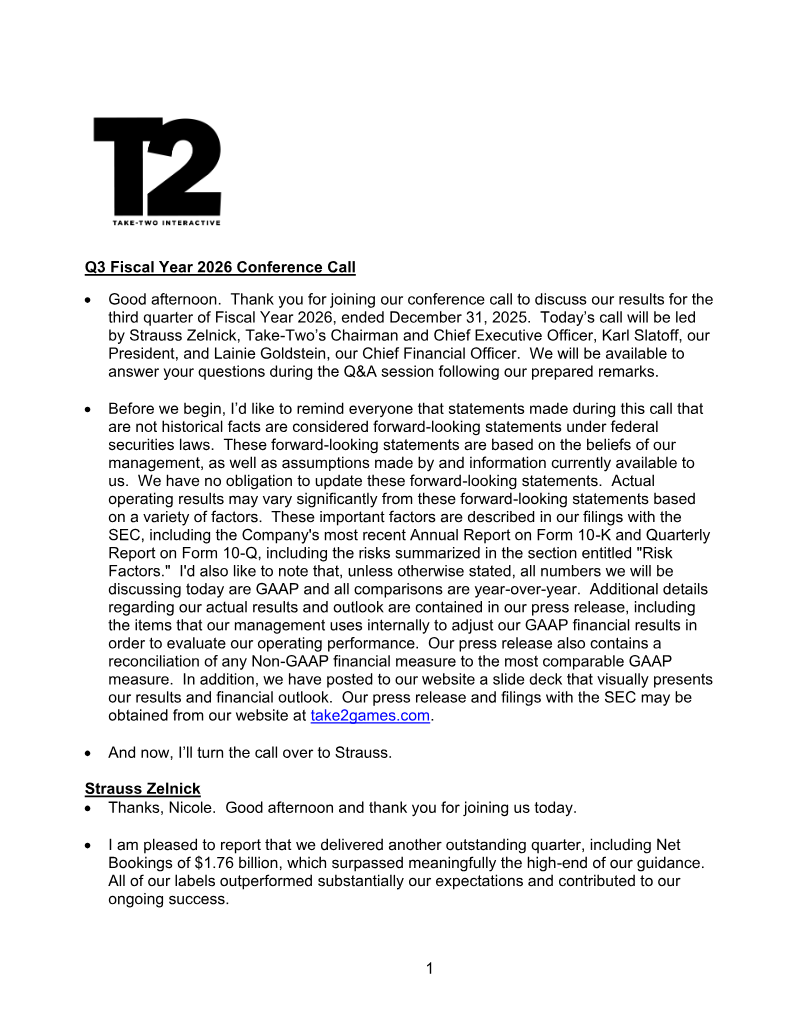
Take-Two Interactive · 2026
Take-Two Interactive · 2026