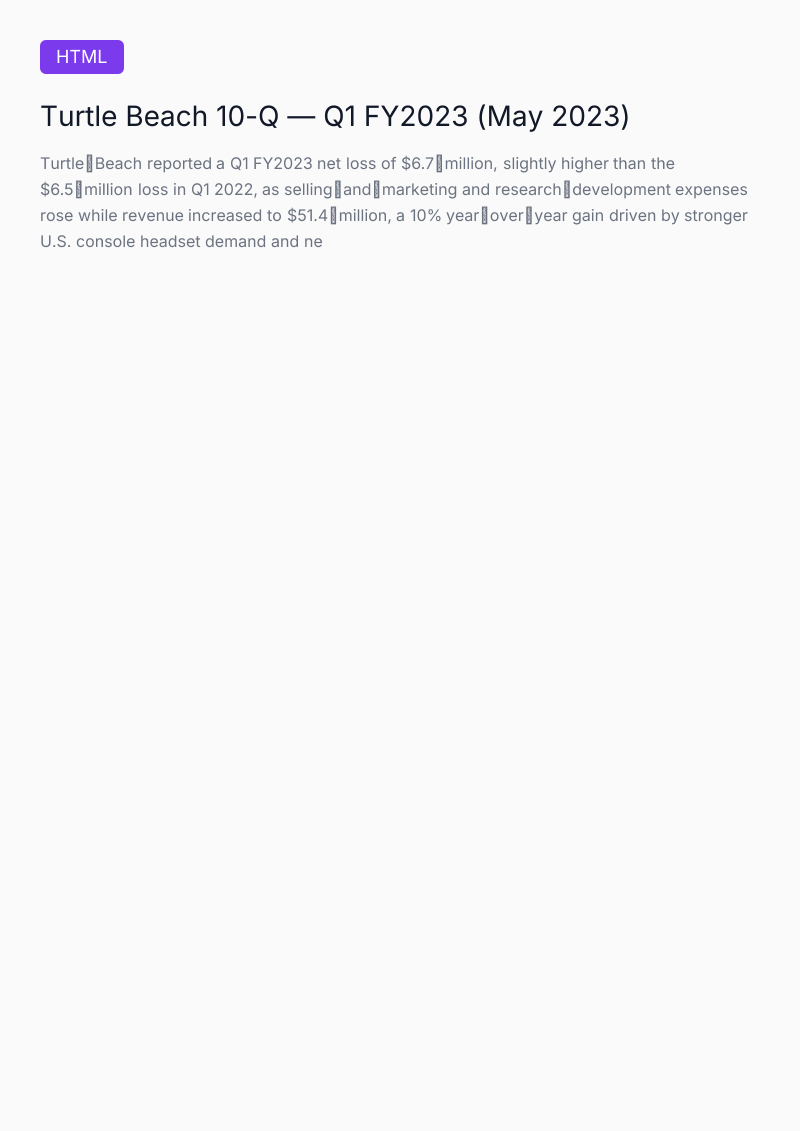
Turtle Beach’s second‑quarter fiscal 2023 results demonstrate a modest revenue expansion of 18% to $47.98 million, yet the company remains in the red with a net loss of $15.92 million—an improvement from the prior quarter’s $17.83 million loss. Gross profit rose to $11.87 million, reflecting a higher gross margin of 24.7% versus 19.1% in the same period last year, largely due to reduced freight costs and a less promotional sales environment. Operating expenses fell 8% to $27.67 million, driven by a 10% decline in selling and marketing spend while research & development and general‑administrative costs increased modestly, underscoring continued investment in product innovation.
Cash flow dynamics show a healthy liquidity profile: operating cash inflows climbed to $24.2 million, and the company’s cash and equivalents rose to $15.8 million after a substantial draw on its $80 million revolving credit facility. The facility, extended to April 2025 with a $40 million accordion feature and LIBOR‑to‑SONIA transition, remains fully compliant with covenants, leaving $38.5 million of excess borrowing capacity. Total assets declined to $139.5 million, largely due to reductions in accounts receivable and inventories, while shareholders’ equity fell to $74.1 million because of an accumulated deficit increase and a modest foreign‑currency loss.
Legal exposure remains limited; the company has resolved shareholder, employment, and trademark disputes without material losses recorded. Warranty reserves have grown to $640 million, with accrued costs of $375 million and settlements of $353 million. Operating lease liabilities total $8.183 billion, with minimum payments of $9.461 billion over the remaining term. Overall, Turtle Beach maintains sufficient liquidity to support working capital needs and future investment while navigating inflationary cost pressures that have tightened margins in 2022.
Turtle Beach · 2026
Turtle Beach · 2026
Turtle Beach · 2026
Turtle Beach · 2025
Turtle Beach · 2025
Turtle Beach · 2025
Turtle Beach · 2024
Turtle Beach · 2024
Turtle Beach · 2023
Turtle Beach · 2022
Turtle Beach · 2022
Turtle Beach · 2022

Ubisoft · 2026
Aream & Co · 2026
Konami · 2025
Konvoy · 2024

DDM · 2024
Nintendo · 2024
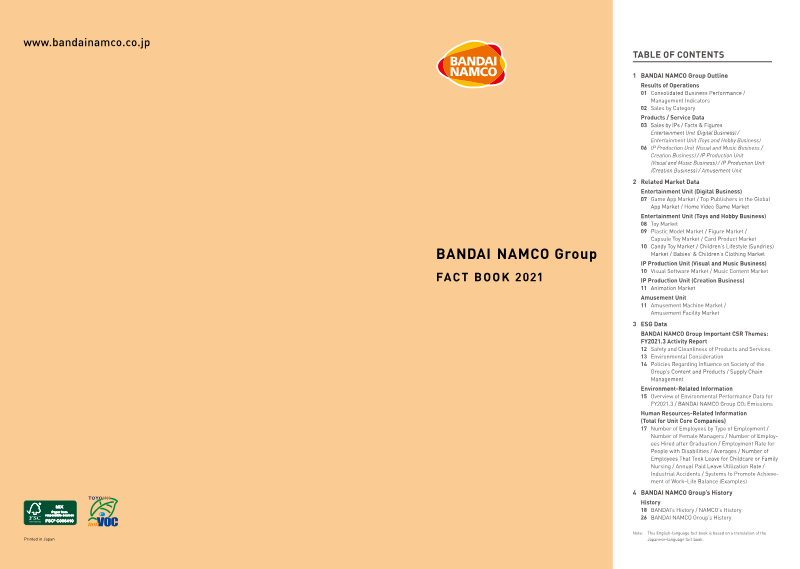
Bandai Namco · 2021
Bandai Namco · 2017
Bandai Namco · 2014

Bandai Namco · 2012
Frontier Developments
Frontier Developments