1 free read left. Create a free account for unlimited reading + AI research.
Create free accountWhitepaper European Conference on Games Based Learning (ECGBL)
1 free read left. Create a free account for unlimited reading + AI research.
Create free accountWhitepaperEuropean Conference on Games Based Learning (ECGBL)
A 2013 Hong Kong Baptist University survey found secondary students concerned about climate change, yet weakly engaged in low-carbon living. The paper cites rising urbanization and energy-driven emissions as motivation.
This paper presents an augmented reality mobile application designed to teach sustainability and carbon neutrality to students in Hong Kong through gamification. Its central premise is that simulation games, cartoon-style animation, achievement badges, and social sharing can increase student engagement with environmental topics and encourage low-carbon habits. The authors motivate the work by pointing to rising urbanization, energy-driven emissions, and evidence from a 2013 Hong Kong Baptist University survey showing that secondary students are concerned about climate change yet weakly engaged in low-carbon living. They also review comparable tools, including Carbon-Carbon Island and Alipay's Ant Forest, and a Taiwanese online gaming competition, as precedents for game-based environmental learning.
The application comprises three main components: simulation games on topics such as climate challenges, daily eco-friendly practices, and fuel reliability; an AR tree-planting module and gesture-based interaction using hand landmark detection; and a reward system in which points earned in games are exchanged for shareable digital medals. The design was shaped by four in-depth interviews with students and teachers and one focus group conducted in May 2023, which informed the emphasis on subtle, continuous reminders and age-appropriate, curriculum-aligned digital materials.
The evaluation involved 130 students who downloaded and played the game, completing pre- and post-surveys on environmental knowledge and willingness to act green. The authors report a significant rise in post-survey scores, notable gains in understanding of renewable energy, waste reduction, and sustainable living, and higher reported interest and motivation. The study has clear limitations, however: the sample is small and its selection, the interview pool is limited, the reported statistics lack detailed analysis, and the authors acknowledge that content will require regular updates and that device constraints may affect performance.

European Conference on Games Based Learning (ECGBL) · 2026



European Conference on Games Based Learning (ECGBL) · 2026

European Conference on Games Based Learning (ECGBL) · 2026



European Conference on Games Based Learning (ECGBL) · 2026



European Conference on Games Based Learning (ECGBL) · 2026



European Conference on Games Based Learning (ECGBL) · 2026



European Conference on Games Based Learning (ECGBL) · 2026



European Conference on Games Based Learning (ECGBL) · 2026



European Conference on Games Based Learning (ECGBL) · 2026



European Conference on Games Based Learning (ECGBL) · 2026



European Conference on Games Based Learning (ECGBL) · 2026



European Conference on Games Based Learning (ECGBL) · 2026
European Conference on Games Based Learning (ECGBL) · 2024
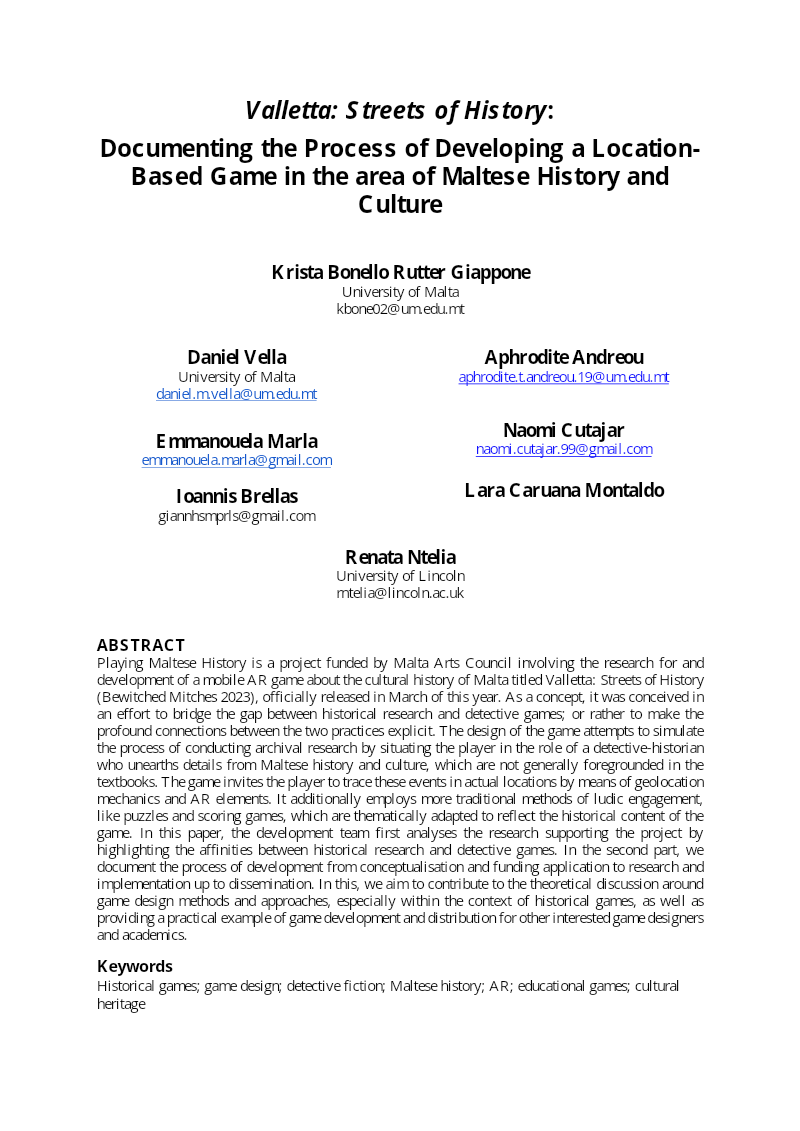
DiGRA · 2023
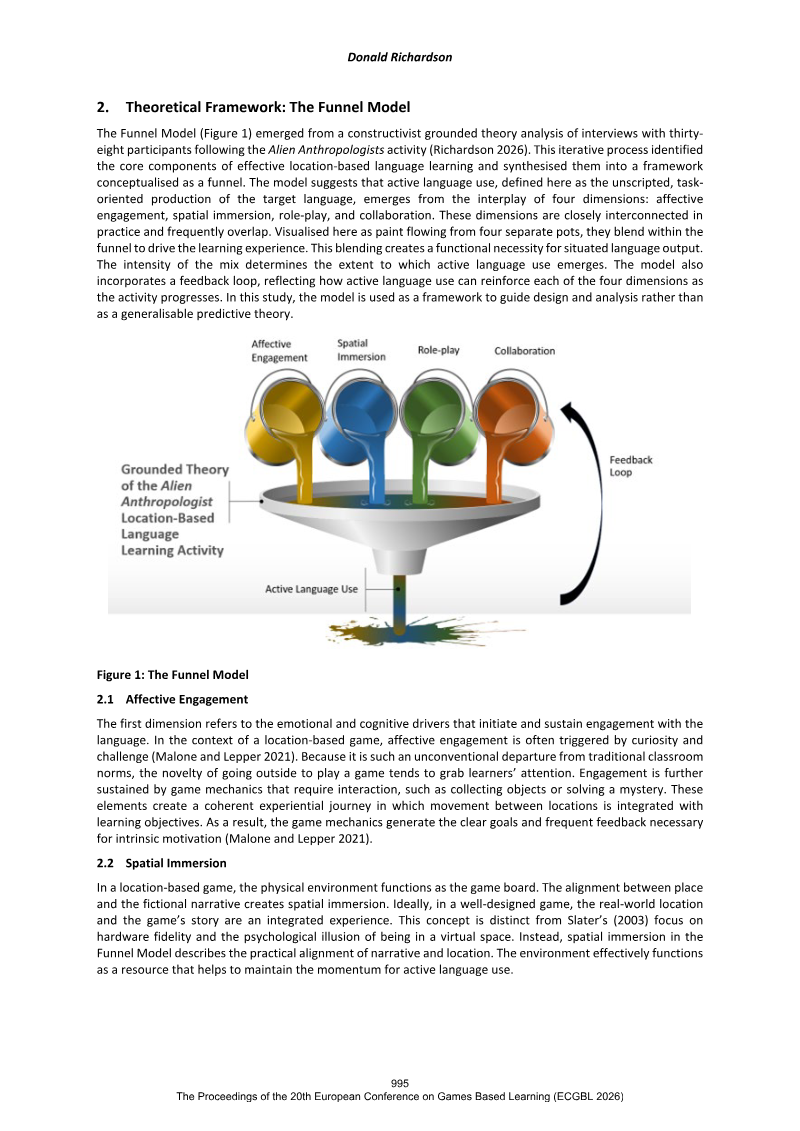
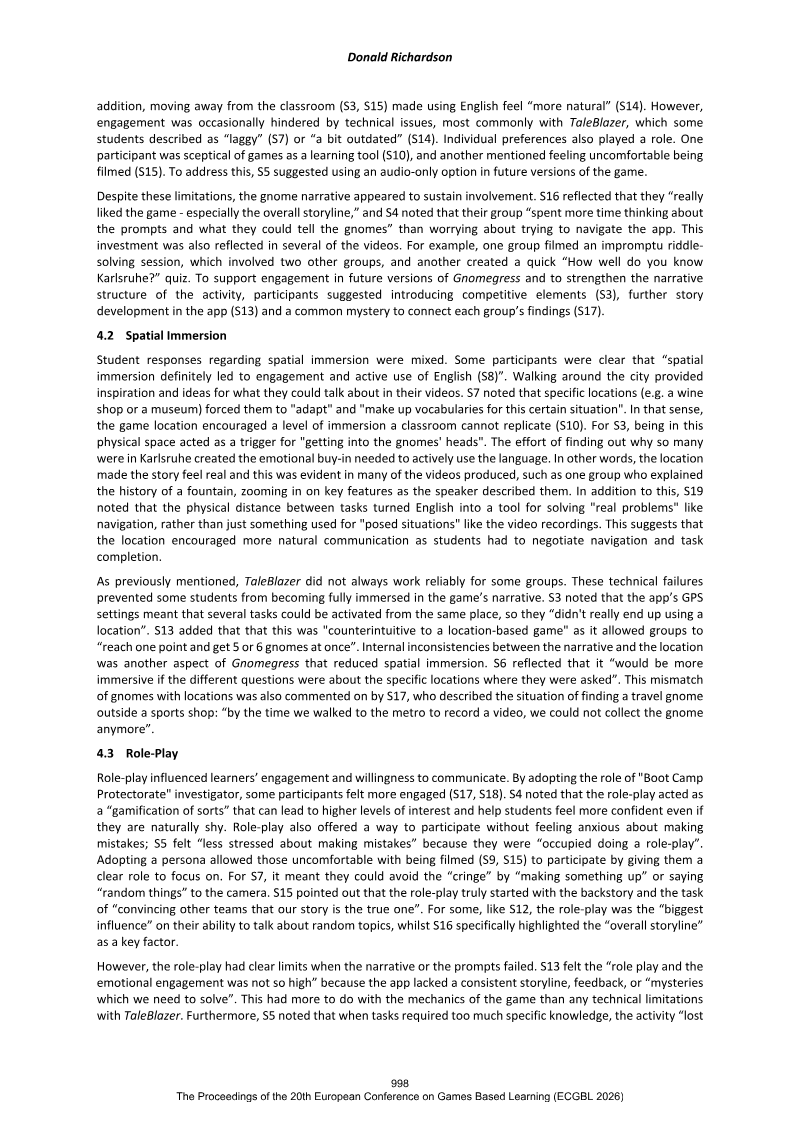
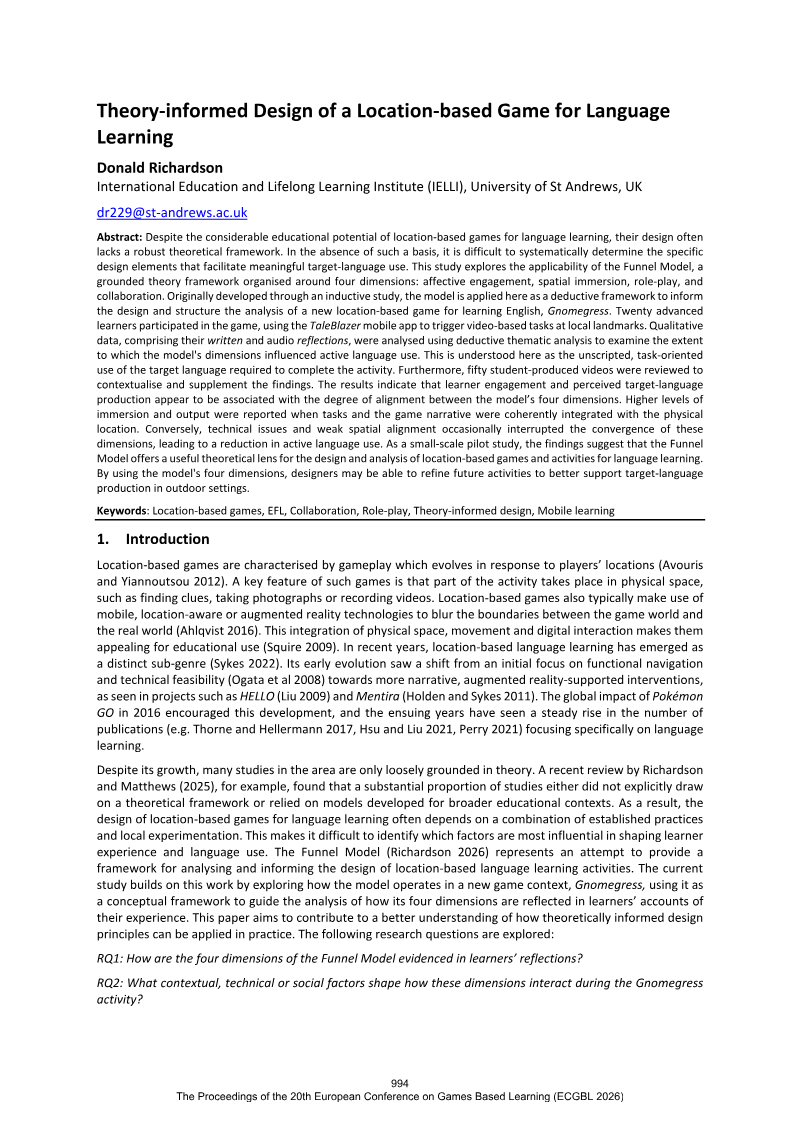
European Conference on Games Based Learning (ECGBL) · 2026