1 free read left. Create a free account for unlimited reading + AI research.
Create free account
Trends in mobile game investments
Key insights
6 takeaways- 01Rising user acquisition costs, particularly for loyal users, have made sustainable growth a more viable strategy for emerging studios than aiming for immediate blockbuster success.
- 02The mobile gaming market is highly saturated and dominated by a small number of major publishers, making it increasingly difficult for new studios to break into the top 100 grossing charts.
- 03The Nordic region remains the primary hub for fundraising in Europe, supported by a collaborative and transparent ecosystem.
- 04Institutional investment has shifted away from pure content development toward platform services, analytics, and virtual or augmented reality startups.
- 05Studios are increasingly encouraged to seek strategic partnerships with Asian publishers to bridge funding gaps and mitigate the risks associated with high entry barriers in Western markets.
- 06Investors are prioritizing studios that demonstrate world-class teams, financial competence, and a proven ability to manage live operations and data analytics.
Ask AI about this video
Transcript
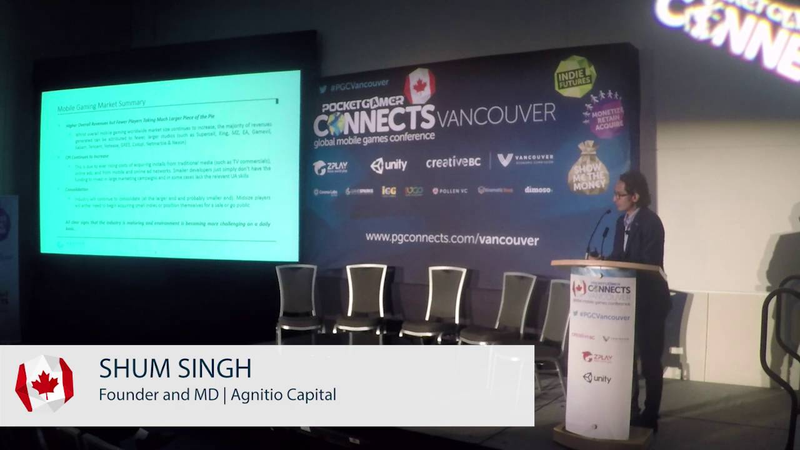
[Music] great thanks Chris um so well firstly it's very exciting to be in Vancouver I haven't been back here in 20 years and I'm originally French Canadian so um hopefully all those Canadians out in the audience I can uh shed a little bit of light and you won't fall asleep uh due to that post lunch uh kind of uh creeping nipping on you um so actually I've done this presentation a couple of times before so there might be a few people in the audience who have seen it so um I have updated it a little bit and um before I'm going to get into it I I just want to uh probably caveat a couple of things so institutional investors I'm really referring in this presentation to venture capital firms um or large
Publishers so that's the definition of Institutions and really the fundraising size um because of those large organizations you're looking at fundraisings kind of minimum of around you know a couple of million up well up to $30 million um or or Plus in some cases um I've in the past this has been uh European focused and so I wanted to keep it European focused because I haven't focused too much on Canada but actually in the panel we'll have immediately after this uh we're going to get a lot of interesting uh Canadian insights from a Canadian panel um so let's just dive in uh so very little you know kind of intro on uh who anneso capital is we're uh games focused Investment Bank we were founded in 2003 in London um we've done quite a few transactions in the space um you know you can go to our website uh to get a lot more information um probably some a few a couple of deals I'll just very quickly highlight um
was one of the transactions we we raised a series a investment um for a Vienna based studio called social Spiel from Nexon uh and uh we also sold um a very very successful mobile freet to-play business based in London called future games of London uh you might recall that they were the developers of Hungry Shark Evolution and Hungry Shark World which is now published by Ubisoft um so uh we also advise and well I should say invest um which is really myself personally leading Angel syndicates um and so I've personally invested into Studios such as funky Panda which is a london-based mobile freetop playay Studio some ex playfish uh uh senior senior uh staff uh social Spiel as well which I mentioned uh Hutch games which uh is a developer of MMX Hill Climb as um as well as a number of other racing titles uh which is also based in London and then gungeon
games which is based in Brighton uh which is another uh gaming Hub in the UK um so I'm going to just talk a little bit about um the market because this is going to actually frame um the discussion later on and the implications on fundraising in the current market so everybody knows the Market's huge um this is actually some figures from Super data research uh this is a worldwide figure um so obviously 2015 was a phenomenal year 2016 is is looking to be uh probably 10 to 20% uh uh growth on 2015 what is interesting to note also during this time let's say this year China is now the biggest Mobile gaming Market uh followed closely by the US uh and Japan and then you know um well in fourth place South Korea um I've done this now a number of times and um it gets even more and more
interesting each time I do this so this is the analysis of the top 100 grossing chart position under the games category for iOS in the US um and and the reason why I do this and I've done it sort of in six-month increments and the first time I did this was actually a couple years ago um and and and and the rationale or the reason for doing this is the US is the largest market uh um in the western world and we're in Canada so you know we're sort of their their their Northern neighbor um it's it's it's this country always is kind of a test bed uh for uh to some degree what might succeed in the US and then ultimately other Western uh uh countries and the reason is I think in the US it's such a diverse mix of cultures ethnicities languages Etc so it really gives you kind of a really broad base of of preference um and also then ultimately in terms of games um so what
is interesting and I remember when I did this this chart this analysis a couple years ago uh at that time it was about 80% of of the uh titles in the top 100 grossing were free to play and now it's 99 so here's a little pop pop quiz there's one title in the previous slide that's a premium title can anybody tell me what that title is okay you guys are all Gamers that's good damn it okay it was a giveaway it was giveaway I was just making sure you were you were still awake um so the majority of these titles were developed by us Studios um what is interesting is obviously you have some pretty you know decent uh uh presence from European uh uh countries so Sweden uh had about nine titles uh eight of them from King one from Minecraft uh Finland obviously everybody knows how successful supercell is they have four titles now given the introduction of clash Royale they had consistently three for the past couple of years
uh roio has obviously performed well uh they have a couple of charts that were in the top 100 to top 200 that have now kind of creeped up given the success of U the recent film release um and you have seriously actually um which which uh uh their best fiends title can continues to perform well and then some other notable countries so you have Japanese developers asy who've developed a lot of their you know kind of Japanese RPG style games uh uh uh D DNA um as well as a few others um that that farewell in the charts and then of course you have a lot of the casino games that companies like PLA and then also some more hardcore uh titles from plarium um featuring in in that top 100 grossing title um another really really important Point um is the larger players are starting to have more and more titles in the top 100 grossing so King has Eight titles EA has seven Zinga has five supercell and pla have four and
there's also multiple other Studios such as sculle sgn GSN that have you know two three titles so it's it's it's becoming an ever ever ever crowded market dominated by fewer and fewer people and also concentrated in fewer fewer geographies or countries that are impacting that top 100 grossing chart um also important also related to this um is the effect of measuring the the cost per loyal user index or you know effectively another measure of CPI um so this is really defined as somebody that'll open up their title three times within a specific month um and it continues to grow uh unfortunately the only most recent figures we could we I could I could search up from fxu was was uh towards the end of last year uh but it has not changed much in fact everything that I've heard and a lot of the research I've read uh indicates that this continues to go up um so
and and this is this is an average right so if you if you actually look at hardcore titles or you know RPG titles strategy game strategy titles they continue to just creep up so what's a summary um the market is really really competitive I mean um you know I remember when I did this presentation probably the first time year and a half two years ago um all of these points were relevant then but they're even ever so more relevant now so fewer and fewer players dominating the industry um those fewer players being able to um crowd out smaller players um before I remember when I'd look at uh um companies I might want to advise and I'd say hey well you know what's your pitch how are you going to sell this to to an investor and they would tell me well you know we want to we want to get into the top 50 grossing this is two years ago then last year oh we think we got a tile that can make it to the top 100 grossing so if you're going to tell me today that you're going to make it to the top 100 under
grossing this chart back here that's an incredible achievement absolutely incredible achievement I would rate your probability probably lower than winning the lottery so I'm not trying to be the the bare bad news or Doomsday you know painter here but um it's a very very very difficult Market out there so if you're going to aim for top 300 that's already a pretty impressive achievement if you ask me even top 500 I think you got I think you got legs I got I think so I think it's a matter of setting your expectations and then also if you're going to be pitching investors particularly institutional investors who have the prowess who have the financial resource who have access to app an intelligence who know exactly what every other large title is making by geography you better do your own research and you better have a pitch that resonates with them and and they can can look you in the eye and say okay you know what I really believe these guys I actually think they're on to something and they've done their market research they've done their homework they've come to me and they've seen what kind of
other companies I've invested in and so therefore I think they actually have a chance of hitting that maybe top 400 and maybe top 500 and if they're lucky and if they're hardworking and if they understand live Ops and UA and bi then maybe they could actually continue to to to to to push themselves up into maybe top 300 top 200 territory and then if they combine forces with a major publisher well then you can maybe get into the top top 100 or higher um the last point on this that I'm going to touch upon in this slide is is consolidation so certainly what what what we've been seeing is in the current market consolidation at the lower end so either uh Studios that are being acquired as Aqua hires Talent Acquisitions um or even smaller profitable Studios um that are that that you know that let's say a slightly larger player a midsize player uh would find attractive as a nice little bolt-on acquisition to give them product diversification maybe they're developing
games in a genre that that particular publisher wants to get into uh but but doesn't have uh um a legitimate internal development capability um so yeah I think that certainly this year um that consolidation at the lower end will continue to accelerate um and potentially at the higher end but in that mid-tier region that's what's really interesting to me is I don't know what's going to happen and I'm not going to name names of mid-tier players we all know who those are um but in my opinion those mid-tier players they re they're the ones who are going to have the most difficulty in this market right now so either they're going to have to find a way to get themselves to a position of being a leading publisher and join to sort of that tier one uh um I guess Universe of of of Publishers which which is few um and so either they're going to have to do that by raising tons of money from huge growth Equity investors or doing Acquisitions or going public which are all again very very difficult to do in the Western World at the current Mark
in the current market so again now that I've sort of at least given a little bit of a a summary of the current market environment um which is which is again not overwhelmingly in favor or or auspicious for emerging Studios trying to raise money um I'm just going to dive in to uh some European game sector fundraisings so these were institutional fundraisings uh some of you in the audience have seen this slide before so um this was in the calendar year of 2015 and again as you all know what's really interesting I'm sure you've read about it in games be gamesindustry.biz or Pocket Gamer as well the amount of fundraisings that a small country with a population of 5 million in in Scandinavia uh I should say nordics actually not Scandinavia nordics that that continues to lead the pack they had eight fundraisings out of 24 um in 2015
followed closely by the UK at 7 and then Germany at three so you guys have seen those numbers this is the first half of this year doesn't look very promising does it so Finland the UK again saw two fundraisings each um there was one deal in in in Germany one deal in Holland um so I I think everybody knows including including in North America investment activities down VCS are definitely retrenching Publishers are retrenching um in the first half of 2015 there was eight institutional fundraisings announced in Europe um and six thus far now I've spoken to a lot of studios in fact well-positioned Studios auspicious Studios studios that have product out that are making money and asking them hey you know what's what's the current market you know outlook for you guys what's what's what's it like you guys are out fundraising what's what what are you
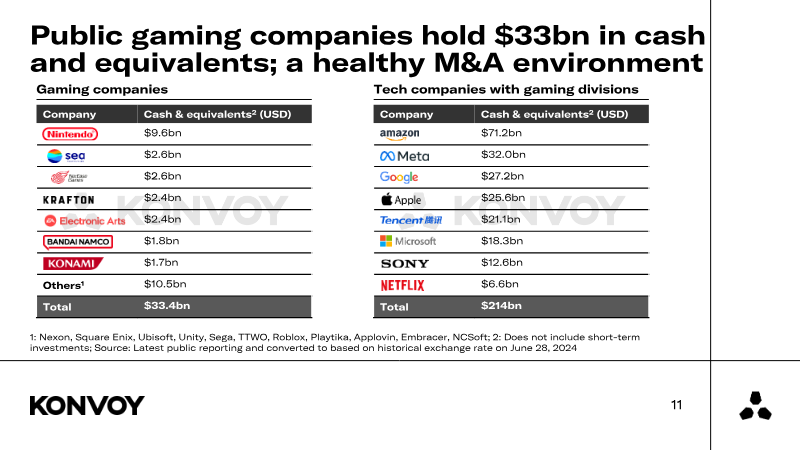
seeing and so um a lot of them are saying well if we're missing particular people in in in in in our you know top sort of senior management team that that seems to be a problem and a hole that we need to fill or we you know we have maybe a title out but um we're just not you know the ltvs are just not there to support ongoing UA activities so so a lot of the investors are are offering good advice back to them but they're continuing they're not let's put it this way the sentiment is not overwhelmingly positive um what I will say in that final point is VCS and Publishers still have a ton of money and they still remain incredibly excited um and see and know the potential of of um the mobile gaming industry but they continue to be more and more selective not because they want to be but because the market is dictating it so based upon what I said
in the previous slides and where we are today they have to also look at it not necessarily from a well you know the market is so ripe the market continues to grow in absolute terms but actually well we have to be selective um so again I mean I'm not telling you guys anything you don't already know I mean why is Finland successful well hey it's it's got fantastic Mobile gaming Talent um everybody in Finland especially in in a of Helsinki speaks to each other they're incredibly transparent um they benefit from this you know this this sort of unique very closely init Community um and so that's why I think it's spurned so many interesting Studios and that's why you've also had three VCS in the nordics that continue to fund and invest not not sporadically not selectively not saying hey this is my one you know I've checked off my One gaming investment in my portfolio and that's that no they continue to invest they continue to support um the finished gaming space and those three are creandum uh uh Sunstone
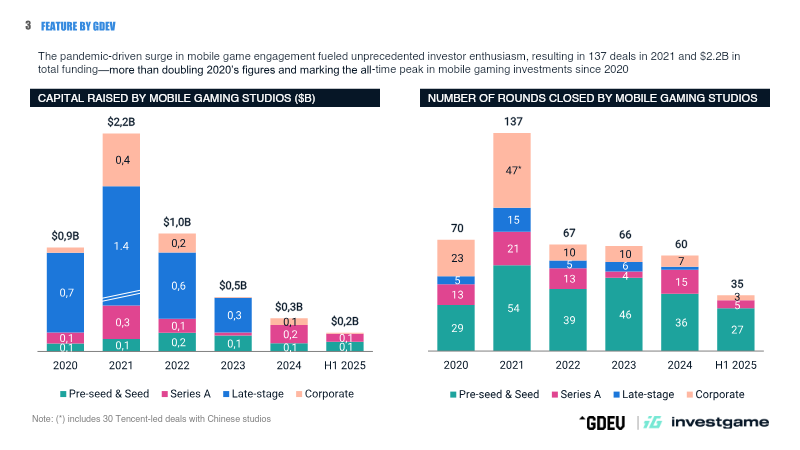
and uh North Zone um you also have in the UK you know uh uh investor such as initial and index and they continue to support not just UK Studios but also uh um throughout Europe um Germany has has an interesting Hub of what I'd like to say platform analytics UA marketing companies um companies such as ajust that I'm sure everybody knows in in this room um applift as well you know so those kinds of compan have have really kind of made a name for themselves in Germany um most of the companies were involved in some part of the value chain of developing launching marketing mobile games um majority of the fundraisings in the last 18 months went into Mobile gaming Studios uh but again you're starting to see the rise because of how difficult it is in a in a Content driven hit driven industry you're seeing a lot more actually activity into platform and services and and businesses and now VR and AR startups um what is also interesting
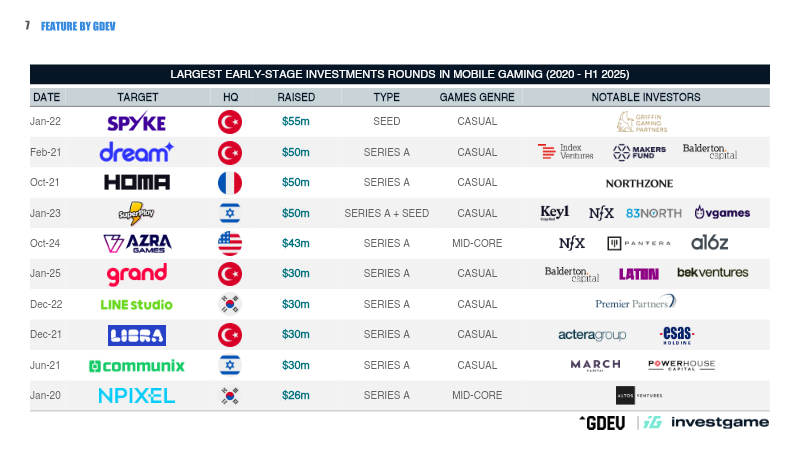
there was only one deal in the last 18 months that was done in the online um or PC gaming space average deal size was about 4 million or less um again only five out of 30 uh deals were done above the 10 million Mark I think I already alluded to some of the funds that are investing um there's only really a handful that I consider long-term committed gaming investors you know you get the three I mentioned and and you know initial index and then there's kind of a couple who you know make a bet but maybe they'll make a bet once every two years um I've I've met some of the Canadian VCS as well such as van Edge and whatnot um they pretty much share a very similar risk appetite or profile I would say to a lot of European VCS um I think also their fund sizes are not as large as some of the European VCS so they they tend to write smaller check sizes and they tend to be a little bit more
selective than than than some of the funds in Europe um so what does that mean for for you guys in the audience raising money well there's a funding Gap and that funding Gap uh certainly in the last couple of years well i' say really in the last 3 four years and where I spent a significant amount of my time in Asia cultivating relationships is the Asian Publishers who are looking to the west to to bridge that Gap because of not only the the insight and the free-to-play expertise that they've that they've built up over you know more than a decade that they can leverage and offer to Studios uh um in North America and Western Europe um and they've already made a number of deals and another number of bets and they're only going to continue to do that but the bar is incredibly high as I mentioned um and so what are those golden rules that they're looking for or what are those criteria and again it's it's it's it's nothing new I mean you guys all know this um and I can't even emphasize
this more how important having a really best of breed worldclass team is um you know and you should really have an amazing team at every function of your business and I can't emphasize enough as well that you should really try to incorporate a business commercially driven individual as well doesn't even have to have a gaming industry but somebody that you trust that can negotiate deals on your behalf a track record is always great if you already have launched product out there in the market that's generating a decent amount of Revenue great or if you're setting up a newer studio if you worked on a great title previously at one of the large Mobile gaming or even online gaming companies great um all of these these are all ways to drisk your proposition to to potential institutional investors uh commercial Focus I think I mentioned this already um again um the more that the more that you can kind of make a game that's going to be appealing to to uh as large of an audience as
possible that's really focused on finding a a a very um attractive you know game Loop but at the same time can monetize those users over the long run uh having networking skills it's it's really difficult to approach VCS and Publishers so uh if you have somebody that has done that before that can Network that can go to all the conferences um that can drink with guys like Michael Chang you know oh EXC EXC me he doesn't drink actually there's there's another pointer for you um so you know that that's what you got to do that's what you got to do um you got to get out there you got to get in front of them you got to established relationship raising money is something that takes a significant amount of time and if they don't know you you can't expect somebody to invest multiple millions of dollars into your studio without meeting them over a significant period of time establishing credibility showing them your product showing them what improvements you've made um and having a a a certain number of of intervals or
frequencies of of sharing that information and showing them your competence and building that credibility and Trust I mean it's it's it's it's it's there's no shortcut to that um and again also having some Financial competence and having good advisors again that's only going to help you in any process whether you're negotiating with a VC or or a uh publisher or ultimately you're you're going to sell the company I mean these are all incredibly valuable important skills to have that's [Applause] [Music] it
Summary
The mobile gaming industry is currently defined by extreme market saturation, where a small number of dominant players capture the vast majority of revenue. As of 2016, the market is almost entirely composed of free-to-play titles, with the top 100 grossing charts increasingly concentrated among a few major publishers. This environment has led to rising user acquisition costs, specifically regarding the cost per loyal user, which continues to climb as competition for visibility intensifies. Consequently, achieving a position in the top 100 grossing charts is an exceptionally difficult feat, making it vital for emerging studios to set realistic expectations and focus on sustainable growth rather than immediate blockbuster success.
Investment activity reflects this challenging climate. Venture capital firms and publishers are retrenching, becoming increasingly selective in their funding decisions. While capital remains available, investors are prioritizing studios that demonstrate world-class teams, proven commercial acumen, and a deep understanding of live operations and data analytics. In Europe, the Nordic region continues to lead in fundraising volume, supported by a transparent and collaborative ecosystem. However, overall institutional investment in the sector has slowed, with a notable shift toward platform services, analytics, and virtual or augmented reality startups rather than pure content development.
To secure funding in this environment, studios must de-risk their propositions by building strong track records and establishing long-term relationships with potential investors. Because the bar for entry is high, founders are encouraged to seek out strategic partnerships with Asian publishers, who are increasingly looking to Western markets to bridge the funding gap. Success requires a combination of technical excellence, financial competence, and a proactive approach to networking, as investors are unlikely to commit significant capital without a sustained period of demonstrated credibility and trust.















Comments