1 free read left. Create a free account for unlimited reading + AI research.
Create free account
Tips for passive narrative engagement in games
Key insights
6 takeaways- 01Prioritize visual storytelling by using character expressions and body language to convey emotional context, effectively bypassing the need for text-heavy dialogue.
- 02Adopt a 'show, don't tell' methodology inspired by silent cinema, focusing on pacing, flow, and visual cues to maintain narrative coherence for players who skip traditional text.
- 03Integrate narrative progression directly into gameplay tasks by linking objectives to specific location graphics and item descriptions, allowing players to reconstruct the story through their actions.
- 04Utilize established tropes and stereotypes to provide immediate, recognizable context for NPCs, reducing the cognitive load required for players to understand character roles.
- 05Anchor the player’s experience in the game world through atmospheric music and distinct, memorable set pieces that communicate setting and tone without written exposition.
- 06Employ 'dirty tricks' by embedding essential narrative information within mandatory puzzle hints or quest-critical dialogue when passive methods are insufficient to convey key plot points.
Ask AI about this video
Transcript
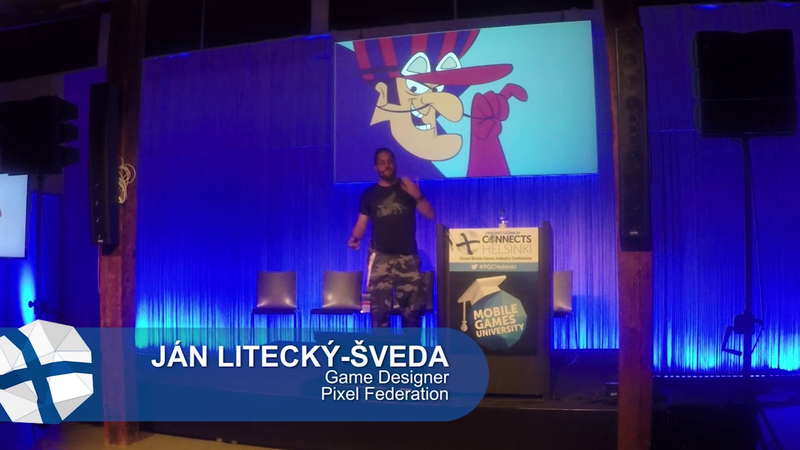
[Music] oh yeah hi and welcome to my talk that is labeled tips of passive notice of engagement and what that means I'll get to in a second so yeah here's the clicker Who am I my name is Ian houses already so I'm a game designer was a game designer most of my life but only the last six years I'm actually in digital I was doing pennant P labs City games stuff like that and right now I'm focusing on digital a little little passion of mine for four long years well right now um I'm earning my bread with it so and I'm working in at pixel Federation it's a lovely small company in Slovakia and I would tell you a lot
of naughty details about it but I don't have the time so maybe if you look me up somewhere down after the show and maybe we can spruce things a little bit up so and if actually anything you know that is of any interest is on the slide so you can you can check that out so passive narrative engagement what is our main storytelling tool with what do we propel our narrative how do we get it across well we have one major weapon and actually it's like the major weapon and that is text we convey stories through text is completely all it and especially on a de mobile platform because we can't rely on sound we can't rely on anything other dentex to convey our story problem being our players hate reading they hated with a passion now there would be this is like more than the modern mobile gaming it's like book burning all over again they're
like oh hell no hi I'm gonna read that skip skip skip skip skip problem is when you have a narrative experience you kind of want to get the story across any means necessary and today I'm gonna talk about the means necessary so the first one the first tip I'm gonna share with you show don't tell you've heard it a million times before you'll hear it a million times after this presentation but think of it as a philosophical over kind of like the framework in which you have to operate to actually make use of the all the other tips that there are that I'll discuss later because this is like the Alpha and Omega perfect examples of good show and show don't tell and really visual visual visual storytelling are kids cartoons for instance they work perfectly with color they work perfectly with characters they really do frame the scenes perfectly their only problem is they rely very heavily on exclamation they're like oh
if the damsel in distress lose me into a dark forest and there are four bandits ready to rip up my gut they just can't resist the temptation to go Admiral Ackbar in my face well don't you say problem is as I stated this is text text is bad we can't rely on text we can do exclamations so what do we do where what is another medium that we can look up to and actually take a few pointers out of silent movies silent movies are a perfect example of how you can make a passive narrative they didn't rely on text sure they had a lot of a tablet with text from them here today but mainly it was about expression it was about Siri it was about the pace the flow everything was super crucial because well it was silent so think of like everybody knows Nosferatu right the pinnacle of German Expressionism cinema fantastic storytelling without a word
without text actually as we would we would say everybody knows the final scene it's perfect it's it's bloody brilliant and that's what you need to do with your games at every step when you don't want to rely on text which you don't because they don't read so crystal clear objectives super-important is it another tip the one thing players care about in your game is if anything else fails they care about objectives because that's how they progress if they wouldn't care about objectives they're probably not playing your game and they're not that much of a problem for you now are they so crystal clear objectives we ate full of flavor so you really do have to work with location names location graphics item names item pictures what would every objective that the player encounters should be really good fleshed out because this is the focal point of their interest that is
something that they don't want to lose our out of their sight they never will and that is something that they will always remember quest pictures also a fine fine fine tool for for creating atmosphere and everything else should be like really clear and yet convey a general general sense where the story progresses because in an ideal case the player should tell his story it could tell his story by the objectives he was doing if you can do that you pretty much won the battle because if you ask the player what he was doing and he just recites the objectives and it makes for a compelling story yes ma'am you're set you're set that's fantastic right there it's like Oh what was I doing well I was I was looking for a golden thingy for the golden haired dude with the that was living there up in the house and bam it's it's a super rudimentary but it's still a story it's not a if he skipped every bit of text he was encountering on the way he's still
good so yeah right now you can see our this is from the game I'm working on the adventure it's like it's a story based narrative driven puzzle adventure with we babble non-readers at every step so yeah clear clear objectives with a with a quest picture anything nice alright next point make mute protagonists speak humans which comprise the majority of your player base are really good with emotions we as a species are really good and bad recognizing emotions at reading faces what you want to do is try to jam in quest speakers or or any portrays or any animation that you can to convey any any emotion that you find deem necessary for the story that is that is being told is it is the MPC afraid is the MPC angry is the MPC relieved every bit of this
information enhances your story you have the location name you have the objective you you know how the MPC felt even though you didn't read no text like you you don't have to read the text to see that this guy there's guys Mady worried he probably left the oven on and I hope you know something you know something and together with the objective talk to that a problem messed up so yeah that helps you a lot another point very important and super cheap is extremely cheap make stereotypes work for you you got a lot of stereotypes stereotypes do have to work for you they're great they're fantastic don't shy away don't be don't be all arty artsy fartsy cinema all over all about it now make makin do that work they're not connected to a lot of a lot of em oh they're connected to a lot of emotions they're connected to a lot of a lot of preconceived notions and you can take advantage of them for instance you
have a you have a pair a married pair well make him look like siblings yeah everybody knows married people look the same right this is like this is like incest extravaganza right here right but it works it body hair works of course they're married right I hope so because otherwise Miller has entered for a treat you want an evil character he better through his mustache now am i right yeah Dick Dastardly fantastic bad guy he's completely iconic if you have a bad guy if you have a bad guy without a mustache you're doing it wrong right pretty much this is this is the takeaway from this point I'm probably a bad guy in my store here I do have a mustache I can twirl so yeah probably the bad guy so yeah make these stereotypes work for you very fine very clear another one visual storytelling this is only good for actually games that work with locations
this point is centered on locations if you don't have locations maybe maybe you can use them in a map these tips or anything but visual storytelling it with location you can see you can see the little the stage makes the play this is all about framing it is all about framing a narrative and directing the players focus two points where you won't have it what did what that means send the stage setting the stage means you have to do the framework you have to for you have to frame the focal point you want the player to focus on set the stage and then the story may unfold the it has the players undivided attention it's perfect and the second thing is lying down set pieces set pieces are super important set pieces are the one thing that makes your story and your location memorable nobody will remember the third dark forest he was in but for instance everybody will remember a bloody giant
ghost ship somewhere in the docks with on Dad's well yeah and I was there I don't know what went on I wasn't reading but that was giant ship man that was nasty good you conveyed something you remember something he takes it all together with all the other stuff I'm talking about he said these pieces together a story even without his knowing is is completely passively engaging in your story without him even knowing because it's skipping through the text oh no just just not text anything else not text but here he knew he knew where he was he's got a pretty pretty clear idea next point slow story progression this is controversial but I would say slow story progression works in your favor in in these moments because as we said the player is not that engaged he's not reading so but it is important for you as a designer and
as the narrator that the player has at least a general sense of where he is in the story the story can be long drawn-out like a season like the final ever season of friends right oh how I met you mother right super drawn out but you have a general feeling you skipped out three episodes nobody cares you're still at the same place pretty much and this this is exactly the principle with this you have a long drawn-out story the player vaguely knows where he is but the important thing is that the player there is the player should be able to wrap up a story beat like a mini session or an episode of the series ideally in one session well which is with because would you want to leave them with a sense of story progress that is absolutely crucial you can't overdo it you can't overdo slow story progression because then he's like yeah nothing's happening so you want to divide the like big story arc into little little pieces and then wrap them up one by one all right another
easy point just tip as I'd say only one changes sides allowed mustaches all over again right so you know what happens he turned evil he turned rogue that's that's clear use visualization spontaneous mustache growth perfect Brooks every time lucky charm and but even make he may even joined a good one good side but if if the player is not reading it's super bad to to change sides more often because then he gets confused don't confuse him one chair the change of size is pretty much the tops you can you can get away with without reading and only with the graphical communication cinematics everybody loves cinematics know everybody hates cinematics but there's super crucial because cinematics forcibly focus the player on extra player dynamics super smart right nobody knows what that means and I mean not if not even me that means
you can do stuff that the player cannot and you can folk drag his head focus him right in the direction you want to look here and Dairy Dairy stock until the cinematic plays over and then it can go about his own business but you sure showed him what is happening that's very good it's very powerful because you can you can you can do stuff that you normally can't like for instance dialogue or NPC interactions anything that is out of the players of reach for instance movement we don't have movement in our game right anytime we want to do movement our game we have to do with will cinematic critical not to overdo this of course because the way and you take the player out of the narrative out of the engagement out of the play he loses interest because here you you have your story and you're very good at telling it yourself so why don't you I'm gonna stand right here over the beer stand he loses interest goes away not over music another point super cheap very effective
music conveys mood it is perfect for conveying mood mood enhances your story by a thousand fault and you don't need really don't need that much they're manufactured like what for maybe one jolly everything's fine one dramatic when things are really deaf one scary of course you need that one and by the way scary horror movies are fantastic example like you ever tried watching a horror movie without sound even the jump scares didn't scare me because yes she's just walking down the hallway that's perfectly normal thing is with the music oh boy my pants were never browner but without the music yeah ghosts whatevs so that's the perfect example of how you can work with music to your advantage it's fantastic and like you need a couple of tracks lay down the atmosphere and together with all the other points you puzzling it down for the player he s
set he isn't reading he doesn't care but he pretty much knows the atmosphere he knows the feelings he knows what he's supposed to do he knows how it looks he knows where to look and all that when you piece together it starts to create a story right music is long fantastic fantastic fantastic tool so use it well and the final point the final tip are 2d tricks when all else fails and it will because players are crafty mothers then you have to rely on dirty tricks dirty tricks meaning that you have the tools this were actual disposal to actually force him to read oh yes they they hate it super super much but you from time to time you have to do it what I understand I'll give you a couple examples of dirty tricks for instance we have a puzzle game which means from time to time you have to read hints you just
have to you have a couple of colored stones you've got a couple of places where you need to put them in no nothing makes sense you read the hand that has a cryptic message thing is the hand can be super technical like put the red Boulder on the circum position put the third Boulder on the first yeah sure but it can convey a lot of the story that the player actually needs to read because else he can't progress which means you can write it like this I the Dark Lord is first having chance it's this magical Boulder with the power of one fantastic you know that there's a Dark Lord right you can't overdo it but at least you know there's a Dark Lord because if you don't read the Dark Lord never may have his appearance right now you definitely know that there's a doctor or another example you have to find out where an NPC is for instance in a village or where where their stash of cocaine is you definitely want to know what at it so you ask around problem is not every
NPC is gonna say oh yes it's in though in the in the right house right right there near the church beyond the pub has to be stash a coke no nobody's gonna nobody's gonna tell you that you can tell stories not everybody knows where where the coke is hidden they shouldn't and and what they term I tell you about is is a part of the daily lives how this village is suffering terribly under the Dark Lord mentioned earlier and already you're conveying a lot of the story through dirty tricks because they did have to read if they wouldn't they would never find a house they would never get the ball just to the right position they wouldn't progress so you're actually getting progress through text super dirty I told you I was the evil guy that's - so all right and those are my 10 tips kind of passive narrative engagement I went through them in a hurry all of them can be can be explained in much further detail and that means I will twirl my evil mustache and thank you for your
undivided attention so we're open for questions does anyone wanna ask yes and be careful what you ask he he's funny thank you very much I I can feel the frustration just coming through here talk I'm also actually a narrative designer for mobile gaming it's it is frustrating and I was actually gonna ask you see or your whole talk was about how to get past the fact that your player doesn't read exactly like forcing the nativity Hunter throat no no matter what but the question is that I'm daily struggling with the problem of why even bother like how do we at the same time like there are players who love the story who want to read it and who want to experience it and then there are all the the ones that
don't and this talk was maybe more directed at the ones who don't but at the same time we have to keep in mind that like there are players who actually want to hear the story and they might not like your stereotypical characters and all that and and that's like a problematic situation so how do you deal with that oh that's pretty simple well I actually depends on what kind of game you you do right for instance we do a storage driven game for us it's super critical that we get at least fragments of the story across the player because this is this is like it's it's a paradoxical situation like the player doesn't want to engage on the other hand he actually he's in it for the story even though even though he doesn't know it it's in our case it's in our case of course this is this is wildly case by case sensitive you don't need a story in a in like probably the majority of games but when you have a storage room game like we do oh we better get some story because we're not asking where Xiamen a
downstroke so yes in our case it's super important because for us stories of major retention factor so if he has a if he has a good feeling if he knows where he was doing if he has if he has any if he has any known and and any many fond memories it's good that's what drives our attention for instance without with our title if you know if your attention is not based on story or any of these experiences feel free to toss it out of the window but if it is if it is a crucial component you actually have to have to work against the players laziness to make him feel better it's about it's like it's it's for his own good it's for his own good it's any other questions yes wait I'm coming for you do you think it's possible like to overcome even the harder stubborn players piece
by piece by using these tricks to make them understand that it's really good to read this story makes them really interested in the story so they finally even if they're do not want to do it at any point as a start to read it finally well if the dirty tricks don't work I don't know what will now they're really stubborn who tried everything we tried pleading we tried intimidating which heard everything now it's we didn't come up with a way if we would we definitely use it and I would definitely make my whole whole talk about it but right now this is like the best we got what about braking force wall the fourth wall super sensitive super sensitive the fourth wall I would say don't don't break it at all yeah as a as like the baseline when you really need to do it and for instantly some comedy titles there will come the time where the fourth wall is like the most delicious
joke you can never tell and the time will come do it in moderation even if it can be used even if if the if the tone of your story of your of the narrative you provide actually allows for fourth wall break never overdo it i I have I had some very bad experiences with fall fourth wall breaks we did a we did a couple of events that were they were pretty much like super fourth wall breaking and they had like the the worst retention we we encountered the the people don't like to break the fourth wall that much [Music] [Music]
Summary
Passive narrative engagement serves as a critical design strategy for story-driven mobile games where players frequently bypass traditional text-based storytelling. Because mobile audiences often exhibit a strong aversion to reading, designers must employ alternative methods to convey narrative depth, emotional context, and world-building without relying solely on dialogue boxes. The primary objective is to ensure that even players who skip text retain a coherent understanding of their goals, the game’s atmosphere, and the progression of the story.
Key techniques for achieving this include prioritizing visual storytelling, such as using character expressions and body language to convey emotion, and leveraging established tropes and stereotypes to provide immediate, recognizable context for NPCs. Designers should focus on creating crystal-clear objectives that are deeply integrated with location-specific graphics and item descriptions, allowing the player to reconstruct the narrative arc simply by recalling their gameplay tasks. Furthermore, the use of atmospheric music and distinct, memorable set pieces—such as a giant ghost ship—helps anchor the player’s experience in a specific time and place, even in the absence of written exposition.
Methodologically, these strategies emphasize "showing" over "telling," drawing inspiration from silent cinema to communicate through pacing, flow, and visual cues. When passive methods are insufficient, designers may employ "dirty tricks," such as embedding essential narrative information within mandatory puzzle hints or quest-critical dialogue. While these methods force engagement, they must be balanced carefully to avoid player frustration. Ultimately, these techniques function as a retention tool, ensuring that the narrative remains a cohesive, memorable experience that drives player interest, even when the audience is not actively seeking out the story.
















Comments