Key insights
5 slides
The change
The sequel pivots toward a sprawling, interconnected world structure.
This shift draws inspiration from non-linear design philosophies. It aims to create a more immersive and unified environment that rewards exploration.
Sequel structure. The sequel's shift toward an interconnected, Metroidvania-style world structure creates significant navigation friction and disrupts the flow of gameplay.
The friction
Mandatory character transformations and backtracking complicate navigation in the sequel.
The sequel relies on character-specific transformations to gate progress. Extensive backtracking frequently overwhelms players and disrupts gameplay flow.
The finding
The original game's design philosophy remains superior for accessibility.
By prioritizing focused, self-contained objectives, the first entry achieves clarity. The sequel's pursuit of greater depth sacrifices this focused puzzle-solving.
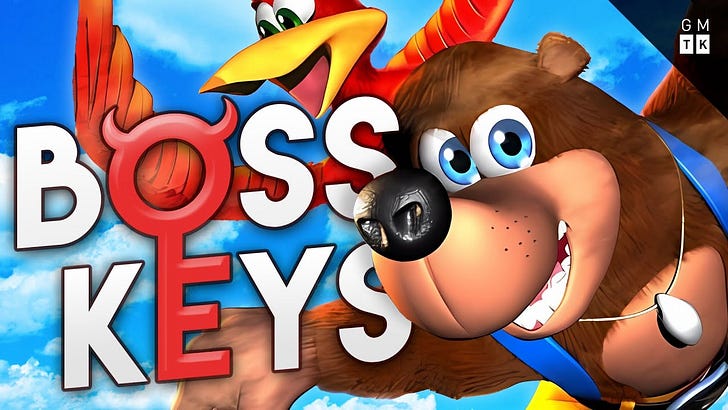
Superior model. The original Banjo-Kazooie model of compact, self-contained levels provides superior player accessibility and engagement compared to the sequel's sprawling design.
The implication
Excessive complexity can undermine the core appeal of platforming.
The franchise serves as a case study in design balance. Increased world scale does not automatically translate to a better user experience.
Design balance. Effective world design requires a balance between architectural ambition and intuitive guidance, as excessive complexity can undermine core platforming mechanics.
The lesson
World design must balance environmental ambition with intuitive guidance.
The increased scale and maze-like complexity of interconnected environments impede gameplay flow. The most effective design prioritizes intuitive navigation over sheer scope.
Core lesson. The franchise serves as a case study in how excessive complexity can inadvertently undermine the core appeal of a platforming experience.
1 / 5
Ask AI about this report