1 free read left. Create a free account for unlimited reading + AI research.
Create free accountArticle GameMakers
1 free read left. Create a free account for unlimited reading + AI research.
Create free accountArticleGameMakers
Joseph Kim's 2015 GameMakers essay argues that a successful game concept begins with a "strange attractor," an idea borrowed from screenwriter Terry Rossio and refined by the Writing Excuses authors. The term describes something unique yet compelling, a hook that can be stated in a sentence or two. Kim frames it as a formula of the familiar plus the strange, and applies it to free-to-play game design, where the absence of a clear hook hurts marketing click-through, retention, and ultimately customer lifetime value.
The essay draws several principles from fiction. Genres evolve, so yesterday's novelty becomes today's cliché. Audiences also expect different familiar-to-strange ratios: romance readers want nearly all familiar content, manga readers roughly 70/30, and science fiction readers roughly 30/70 in favor of the new. Designers must therefore understand their audience's expectations and anticipate how they shift.
Kim's central addition is competitive intensity. Mobile, with millions of apps, demands a stronger attractor than console, where few titles launch each year and competition rests on production value, brand, story, and developer reputation. Within mobile, crowded genres such as Clash of Clans-style strategy require sharper differentiation than sparse ones like MOBAs. The attractor must also be visible in both marketing and the early game experience.
Case studies anchor the argument. DomiNations succeeded by pairing Clash of Clans gameplay with Civilization-style age progression, visible immediately in its interface. In contrast, IGG's Clash of Lords 2 offered arguably better mechanics than Castle Clash but looked nearly identical to dozens of clones, and launched a year after Castle Clash, when Clash-style play and hero units had become cliché. Kim attributes its weak traction to the missing attractor. Console examples include Grand Theft Auto (playing the villain), Tomb Raider (a female lead in 1996), and Dead or Alive. He also cites the crowded PC open-world survival genre, including DayZ, Rust, and H1Z1.
Kim concludes that developers in competitive categories should ask what familiar-to-strange ratio suits the genre, what counts as original, and when novelty turns into cliché. His argument is based on qualitative case analysis rather than quantitative data.
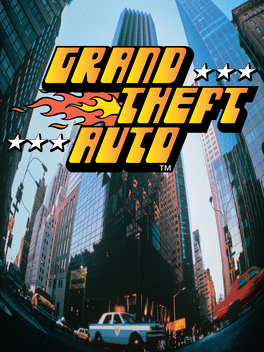 Grand Theft AutoGame · DMA Design · 1997 · 574 documents
 Clash of ClansGame · Supercell · 2012 · 283 documents
 Tomb RaiderGame · Crystal Dynamics · 2013 · 115 documents
 RustGame · Facepunch Studios · 2018 · 62 documents
 DayZGame · Bohemia Interactive · 2018 · 20 documents
Each row is a game or company this document names, each column a document, oldest first. A mark means that document names it. Select a row to see those documents.
GameMakers · 2026

Two & a Half Gamers · 2026

Naavik · 2026

Jason Schreier · 2026

Game Developers Conference · 2026

Thomas Brush · 2026

PocketGamer.biz · 2026

Jason Schreier · 2026

The Game Business · 2026



European Conference on Games Based Learning (ECGBL) · 2026



European Conference on Games Based Learning (ECGBL) · 2026



European Conference on Games Based Learning (ECGBL) · 2026
European Conference on Games Based Learning (ECGBL) · 2026