1 free read left. Create a free account for unlimited reading + AI research.
Create free accountArticle GameMakers
1 free read left. Create a free account for unlimited reading + AI research.
Create free accountArticleGameMakers
The rapid advancement of AI-driven static analysis has fundamentally altered the landscape of mobile game security and competitive intelligence. By utilizing automated agents to decompile public Android builds, it is now possible to extract complex game architectures, feature sets, and live-ops configurations in minutes rather than days. This capability significantly lowers the barrier for competitors to reverse-engineer successful titles, effectively turning a studio’s shipped code into a detailed blueprint for rivals.
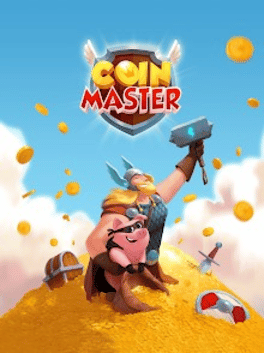
The analysis of top-grossing titles like Coin Master, Royal Match, and Monopoly GO reveals a critical divide in development philosophy: the choice between server-authoritative and client-authoritative design. Server-authoritative games, such as Coin Master, protect core economic data and game outcomes by processing them on the backend, leaving only presentation logic on the device. Conversely, client-authoritative games, like Royal Match, store significant amounts of data—including level designs and difficulty tables—directly on the user's device to facilitate offline play and reduce latency. While client-side storage offers performance benefits, it exposes the game’s internal mechanics and content curves to immediate inspection.
The findings demonstrate that traditional security measures, such as code obfuscation and anti-tamper software, serve only as minor speed bumps against automated analysis. Because these tools do not prevent the underlying logic from being read, they provide a false sense of security. Developers are advised to prioritize server-side authority for sensitive economic systems, audit builds to remove development residue, and assume that any data shipped within the client is effectively public. Ultimately, while AI-assisted decompilation allows rivals to replicate features and mechanics rapidly, it cannot replicate the intangible assets that sustain a market leader, such as brand equity, live-ops cadence, and data-driven user acquisition strategies.
The games and companies this document names on the inner ring, other documents about them on the outer one. Select a cover to see it up close and open it in a new tab; drag to move, pinch or Ctrl + scroll to zoom.
GameMakers · 2026
Deconstructor of Fun · 2026