1 free read left. Create a free account for unlimited reading + AI research.
Create free accountWhitepaper DiGRA
1 free read left. Create a free account for unlimited reading + AI research.
Create free accountWhitepaperDiGRA
The work argues that massively multiplayer online role-playing games support real public interaction despite their alternative-universe framing.
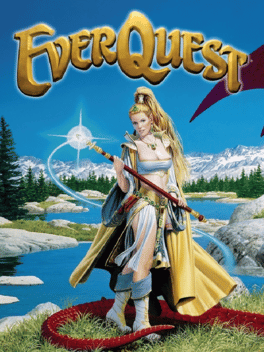
Across its argument, this work contends that massively multiplayer online role-playing games, despite their rhetoric of alternative universes, function as genuine public spaces. Its central thesis is that the structure of these games, with their reward systems, progression mechanics, and threat of death, draws players into cooperative communities and action-based roles that sustain public life. The author challenges theorists such as Richmond, Davidson, and Gibson, who deny that virtual environments can support authentic public interaction, and draws examples from titles including EverQuest, Ultima Online, Anarchy Online, and Star Wars Galaxies to support the claim.
A key mechanism identified is the oppositional design of the game world, in which the environment itself serves as antagonist. The division of space into safe cities, dangerous wilderness, and quest zones produces a functional dependence on others, which the work argues is the foundation of community. Drawing on de Certeau's distinction between strategies and tactics, along with the figures of the crowd and the flâneur, the analysis shows that public space emerges through player improvisation within designed frameworks. Text-based channels, guilds, and collective storytelling generate a politicized public with informal "interior" undergrounds, and in-game narrative sustains the world as a living cultural practice.
The work also gives a technical account of how these worlds are distributed: world data is stored locally on client machines while movement, position, and state are computed by remote servers, so no single unified place exists. Persistence, the author argues, depends on the interplay of networked data and players' shared perception, with lag and software patches becoming world-events that enter conversation. The afterlife of play in forums and clan culture, along with the spillover into real economies, supports the conclusion that these games blur the boundary between virtual and actual worlds. Economist Edward Castronova's estimate that Norrath's per-capita GNP of $2,266 would rank it among the wealthier nations is cited as evidence. The author therefore concludes that MMORPGs should be studied through their functional social practices rather than dismissed as mere escapism.
DiGRA · 2023
Deconstructor of Fun · 2024