1 free read left. Create a free account for unlimited reading + AI research.
Create free accountArticle Eludamos: Journal for Computer Game Culture
1 free read left. Create a free account for unlimited reading + AI research.
Create free accountArticleEludamos: Journal for Computer Game Culture
Murray and Maher attribute the games industry's creative stagnation partly to commercial control.
Murray and Maher's "The Role of Fantasy in Videogames: A Reappraisal" (2011) contends that the games industry's creative stagnation, which they partly attribute to commercial control, stems from a deeper undervaluation of fantasy. The authors reframe fantasy as an archetypal, Jungian, and play-based force capable of giving games greater emotional and psychological meaning. Drawing on psychology, mythology, and literary criticism, including the work of Jung, Hillman, Huizinga, and Tolkien, they argue that fantasy is too often dismissed as mere escapism when it actually performs simulatory and psychological functions. Their central proposal is a "poetics of Fantasy" for developers, and their argument is primarily theoretical and interpretive rather than empirical.
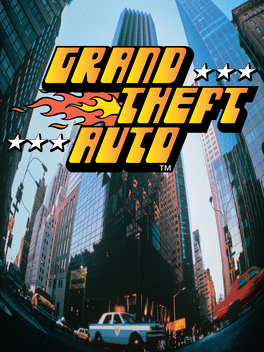
The argument develops through several claims about how fantasy operates in play. The authors argue that games such as Grand Theft Auto allow players to confront transgressive impulses within a safe frame, and that mechanics such as difficulty, unfinished quests, and levelling carry symbolic resonance that utilitarian design approaches overlook. They support this with analogies, including one to dark matter in cosmology, and with reference to Bettelheim's reading of folktales and postmodern theory. The evidence base is thin: apart from selected scholarly citations and interview quotations, the work offers little quantitative data.
In its concluding claims, the authors observe that videogames constitute the most dynamically convergent media form to date, but warn that unreflectively designed games risk deepening psychological alienation and cultural toxicity. They call for "meaning driven" games that draw on the deeper potential of fantasy and play, grounded in a Jungian appeal to forms of intelligence beyond the purely rational. These conclusions are normative and programmatic rather than empirically tested, and they are illustrated through reference to widely known titles including Final Fantasy, Grand Theft Auto, and World of Warcraft. The work's scope is conceptual, addressing mainstream commercial game design broadly, with the period of its claims anchored to the late 2000s when the text was written.
Eludamos: Journal for Computer Game Culture · 2026
DiGRA · 2026