1 free read left. Create a free account for unlimited reading + AI research.
Create free accountArticle Eludamos: Journal for Computer Game Culture
1 free read left. Create a free account for unlimited reading + AI research.
Create free accountArticleEludamos: Journal for Computer Game Culture
Daniel Illger argues that the trilogy's power comes from combining opposites through Alain Badiou's concept of dialectics in black.
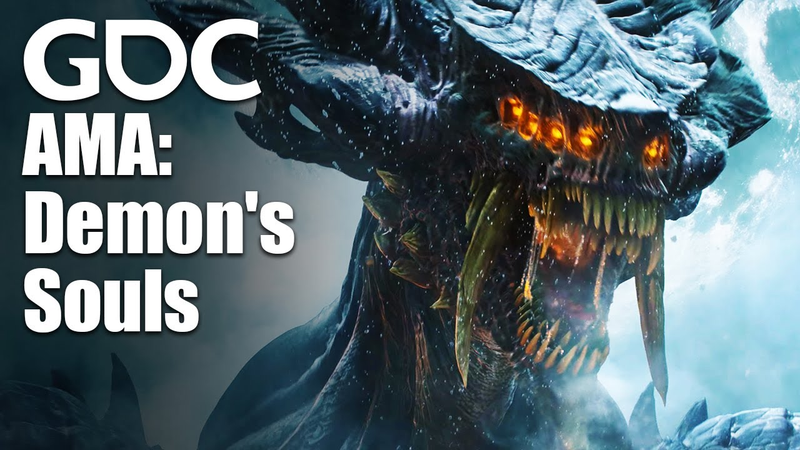
Daniel Illger's essay "The Lifelike Death: Dark Souls and the Dialectics in Black" argues that the Dark Souls trilogy produces its distinctive aesthetic power through a paradoxical fusion of opposites. Drawing on Alain Badiou's concept of "dialectics in black," in which darkness signifies lack and excess simultaneously, Illger contends that the games combine cyclical time, expressed through repeated deaths, respawns, and reanimated enemies, with linear, forward-moving time of progression and exploration. The result is a persistent sense of presentness in which suffering and pleasure are inseparably bound together. Death is framed not as a reset but as an interruption, and the world itself appears in a state of "ever-dying" life, a tension the author presents as the source of the games' lively aesthetic.
The analysis extends to the games' difficulty curve, which moves "from bloodbath to bubble bath," and to their cursed, looping temporality. Illger reads the game's heterogeneous creatures and cyclical structure through Anna Lowenhaupt Tsing's concept of assemblage, treating these elements as generative rather than merely bleak. The experience is connected to what Daniel Vella calls the "ludic sublime," and to a sense of community forged through shared hardship and asynchronous multiplayer features.
The essay's final argument identifies the player community as a distinct "temporality of the assemblage" alongside the games' vectoral and cyclical time. Mechanics such as messages and summoning enable anonymous, asynchronous contact that produces a solidarity both real and fictional, continually forming and dissolving. Illger situates this ephemeral community as a response to a longing characteristic of the present era, drawing on Lowenhaupt Tsing, Lötscher, and MacDonald and Killingsworth. The work is a critical study of a single game franchise, published in Eludamos in 2020, and it engages primarily with theoretical frameworks from philosophy and game studies rather than industry data.
Each row is a game or company this document names, each column a document, oldest first. A mark means that document names it. Select a row to see those documents.

Eludamos: Journal for Computer Game Culture · 2026

Eludamos: Journal for Computer Game Culture · 2026

Eludamos: Journal for Computer Game Culture · 2026

Eludamos: Journal for Computer Game Culture · 2026

Eludamos: Journal for Computer Game Culture · 2026

Eludamos: Journal for Computer Game Culture · 2026

Eludamos: Journal for Computer Game Culture · 2026

Eludamos: Journal for Computer Game Culture · 2025

Eludamos: Journal for Computer Game Culture · 2025

Eludamos: Journal for Computer Game Culture · 2025

Eludamos: Journal for Computer Game Culture · 2025

Eludamos: Journal for Computer Game Culture · 2025
DiGRA · 2025