1 free read left. Create a free account for unlimited reading + AI research.
Create free account
The journey of a mobile marketing agency to the Korean gamers
Key insights
7 takeaways- 01South Korea is a more accessible market for Western mobile content than Japan or China, offering lower competition and a higher receptivity to foreign gaming products.
- 02Performance-based CPI (Cost Per Install) campaigns are the most effective entry point for new entrants, though firms should eventually transition to a mix of performance and branding campaigns to compete with local market leaders.
- 03Time zone differences between Helsinki and Seoul (a six-hour gap) significantly limit daily communication windows, requiring efficient coordination during the overlapping half-day of business operations.
- 04Fraudulent traffic is a significant risk in the Korean market, with internal data suggesting that approximately 20% of traffic from local ad networks may be fraudulent.
- 05While local Korean ad networks often demand prepayments and high budgets, these terms are frequently negotiable if the advertiser remains persistent.
- 06Direct partnership with local Korean ad networks is more effective than using intermediary local marketing agencies, which often suffer from communication barriers and a lack of trust.
- 07Hiring a native Korean-speaking manager is essential for navigating the market, as it facilitates direct communication and allows for the necessary cultural localization of creative assets.
Ask AI about this video
Transcript
[Music] [Music] so I believe those who left interested in Korea my name is Tim but well yeah I mean it's it's better to have you know quantity quality over quantity so hopefully this so let me start with introducing myself my name is Tim I'm the co-founder and managing director of rebound mobile we're a Helsinki based marketing agency we help mobile app companies to penetrate Asian markets and today I'm going to tell you the story of how we actually started with what we
actually started with and what we have achieved so far we're a small agency based in Helsinki we're only six people two people are missing on this photo photo fires are based in Helsinki two based in st. Petersburg Russia and we are a late entrant to the mobile advertising ecosystem and markets we were we have been established in 2016 it's it's it's it's a year when when they they were already established companies I mean when we established big corporations have been around already and we had to differentiate ourselves somehow from from the rest from the bigger players and we decided to pursue this challenge of offering something what others don't don't offer which is a which is access to Asian traffic to
mobile app companies because both of us me and my partner we had an experience with our background was with advertising of mobile apps and mobile mobile games so we so yeah our unique selling proposition is is Asia and and we make the mission that we've set is to become the global gateway to the mobile app and mobile game companies so when we were thinking about what we like what country or what markets should we start with there was a choice of three markets which is China Japan and Korea South Korea apparently and we well I mean we had two things in mind that we that we considered the first one was that the market has to be big enough and
attractive enough for our potential customers and second it has to be moderately difficult to to penetrate because we because there has to be some sort of an issue which we were supposed to solve and that issue has to be this difficulty of penetration or entering that market and all three of those are the China I mean China Japan and South Korea are decently big and well as for China it's very difficult to penetrate it so we completely got rid of this that option right away although China is being the biggest market I mean very attractive but unfortunately due to cultural differences due to especially due to the government's or regulations I believe we got rid of that option right away and then Japan is well compared
Japan is very attractive market it's it's got a lot of gaming enthusiasts there in Japan and we really had a difficult choice between Japan and South Korea and with Japan it is a little bit well I mean in South Korea the Western content and our main customer base was supposed to be on the way on the west so Koreans are more welcoming to to the Western content so we we decided that we should pursue with we should go with Korea and also the competition with Korea being the smallest market out of this three the competition is apparently much less there which would allow us to which was supposed to allow us to get a better traction and much easier and then any as I mentioned the Western content is much welcoming much more much better accepted
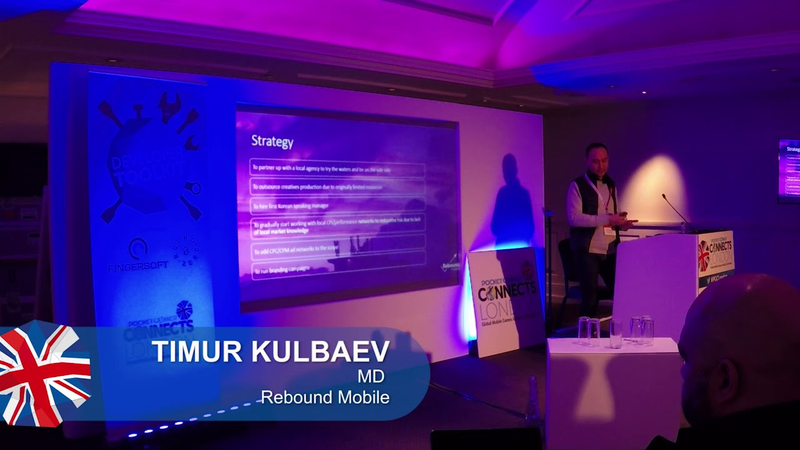
in in South Korea so well you can imagine this back in 2016 we the team of the team of three back back back at that back at the back of the day we although we did have this marketing background with we didn't know what is return investments and we didn't know how to manage marketing channels but it was a completely new story I mean South Korea was a completely new story to us so I mean it's a it's it's a tremendous learning process that we've we achieved a lot of we've got a lot of no achieved a lot of knowledge on the way and a few words about our strategy so because we were a small company we bootstrapping company we had no a lot of resources to to allocate to evaluate the market so we
decided to go lean so to speak and we decided to partner up with a local marketing agency and to actually try the waters and see what they actually tracked what the actual traction is there unfortunately that experiment didn't really go well for us I mean we've got from from the demand side there was there was apparently apparent demand from from o´clock from our clients they really wanted to penetrate the South Korean markets but from the supply side it was difficult to cooperate with Korean agency so we decided to and yeah what one more thing is that because the Koreans are very I mean the the culture is very different from from the Western the creative production has to be had to be outsourced to local creative agencies so we partner up with
an agency I think we've worked with them for about a couple of couple couple of months unfortunately that experience experiments proved unsuccessful and we decided to hire our own manager who's who speaks Korean and to go ahead with to go ahead ourselves basically and to start accumulating the network of potential ad networks we started with and yeah we had a choice of going going with CPM CPC based at networks or to go ahead with CPI at networks and apparently the CPI was the obvious choice for us because it you know it it would allow us to pay only for the installs that we buy which would make things much easier and less risky so we are we hired that manager the manager
started pitching to add networks and trying to trying to make them work for us but unfortunately not all the networks were really interested in our cooperation or they wanted to have they either asked for to hide and demanding risk demanding commitments for our stitches to down to make down payments words or for two to two big budgets for us so we wanted to keep it lean so I mean we had we had to find some sort of ad networks which we're willing to work upon our kind conditions we found a couple of such ad networks which are both CP CPI and performance based and which also were willing to work upon our conditions we've killed that interestingly is that
after you start working with such companies at some point the other companies to reach back to you saying those which actually have like a few months back they refuse working with you they start reaching out back to you asking to provide them with with your campaigns and so we gradually increased our scope of had networks in gradually moving over moving over to CPC and CPM based networks essentially so I mean was it it was a tedious process that took us about half a year to generate the network of local I mean to generate the scope of the at both performance-based and CPC CPM based networks and then the ultimate strategy is which we still haven't haven't achieved but we're on the way there is to run branding campaigns so what we noticed was that local gaming companies they spent
tremendous amount of money to run branding campaigns as opposed to Western gaming companies which are good which are well off running you know performance-based advertising and Facebook Google you name it and it's not the case for Asia not in particularly Korea as far as I know in Japan in Japan it's the same story so they're on branding campaigns and this is the point this is our next next target so this is for strategy and well basically what we've learned on the way was the main difficulties that we faced working with Korean ad networks was the language is apparently the difficulty the Korean agency which we started started working with although the managers did speak English quite well there still was some sort of a miscommunication I don't know how it worries but unfortunately even though we
both were speaking the same language unfortunately not always did we come come to you know mutual mutually beneficial conditions then there is also a layer of or let's say lack of trust between our companies probably partially because of the different mentality well I mean this lack of trust is a really big issue and unless unless you start working with them most likely they either either either you consider that they aren't going to that they will you know well I mean there is there is a lot of lack of trust so just just just bear the same pipe and then as for time zone differences this is also this is also important so we're based in Helsinki which is six hours behind Seoul so when
we reached our office at 9:00 a.m. it's already 3:00 p.m. in Seoul and apparently their days cut approximately in half so we have only half of their working day that we can communicate this is also important these are difficulties working with local agencies are the main difficulties working with local agencies is tricky partially because of the lack of trust and then agencies are I don't know but really difficult to to trust you know companies that you that you don't that you haven't seen at least right so you you'd rather if you have a chance pay a visit to to to Korea at least once just to meet people in person and then running with well it's for language of the users Koreans don't
really speak or not not too many Koreans speak English language or understand it so creatives have to be localized ideally they have to be culturalist as well so a try outsourcing creative production to or to some local agency or try hiring some somebody who who can create creatives this is really important as for the traffic distribution it's if you split it between the local ad networks and the global ad networks the majority of traffic is coming from the global ad networks and I mean you you you you can be quite well off if you don't really know the local local ad networks you'll still generate the majority will still be able to get the majority of traffic from from Korea from the global ad networks including Facebook Google the local traffic is good in case if you if
you want to go all out and are kind of setting a target of achieving some sort of top grossing grossing position you would also want to include some local traffic there as well or run some branding campaigns and running running branding campaigns is fairly easy in Korea unlike unlike on the West most of the local CPI networks are of discing quality with some of them that we've noticed some of them actually do wrong or do have some fraudulent traffic and you have to bear in mind that that no matter how good they're going to they will be trying to persuade you they that they deliver high quality traffic you have to bear in mind that there is a possibility of fraud about 20 percent from our experience the local ad
networks and local partners would want to issue their own conditions in terms such as prepayment and high budgets but don't take it as a rule of thumb they always can negotiate that they'll can negotiate and are willing to follow your terms if you if you keep keep persist in insisting and yes I've already mentioned local gaming companies they run a lot of brand advertising so if you wanted to focus on South Korea you have to consider that and from that standpoint you know try to try to run a mix of performance and brand advertising all right so well this is the summary real real quickly try to stick to try to work directly with local ad networks it's really tricky to work with local
agencies you can give it a try but our experience wasn't wasn't very successful the higher korean-speaking manager because it's impossible to cooperate with what Koreans or with Korean partners unless you have somebody who speaks Korean in your team localizing and cultural izing all the stuff that you have all the stuff that you exposed to public or - to your gaming audience there keep working with global ad networks try to try to increase the scope of the networks that you have that you're wrong with currently when it comes to Korean traffic as well keep an eye on local thrusters the raw local thruster so keep an eye on them and if you want to go all-out consider brand advertising thank you very much if you have any questions we can ask them after the talk or we have temple okay all right anyways thank
you very much I'll be available Thanks [Music] you [Music]
Summary
Rebound Mobile, a Helsinki-based marketing agency established in 2016, provides a strategic framework for Western mobile app and game companies seeking to penetrate the South Korean market. The agency’s primary objective is to serve as a gateway to Asian markets, specifically focusing on South Korea due to its high receptivity to Western content and lower competitive barriers compared to China or Japan. The agency’s approach emphasizes a lean, performance-driven strategy that prioritizes direct relationships with local ad networks over reliance on intermediary agencies.
Key findings indicate that while global platforms like Google and Facebook provide the majority of traffic, achieving top-grossing status in South Korea requires integrating local ad networks and implementing branding campaigns, which are standard practice for domestic gaming firms. The agency highlights significant operational challenges, including language barriers, time zone differences, and a pervasive lack of trust between foreign entities and local partners. To mitigate these, the agency recommends hiring native Korean-speaking staff to manage relationships and ensure that creative assets are not merely translated, but fully localized and culturally adapted to the Korean audience.
The agency’s methodology involved an iterative, bootstrapping process that moved from unsuccessful partnerships with local agencies to building an internal network of performance-based and cost-per-install (CPI) ad networks. A critical warning for market entrants is the prevalence of fraudulent traffic within local networks, which the agency estimates at approximately 20 percent. Consequently, the agency advises maintaining persistence in negotiations to avoid unfavorable prepayment terms and high budget commitments, while simultaneously monitoring traffic quality to ensure return on investment. The ultimate strategic recommendation is a balanced marketing mix that combines performance-based advertising with brand-focused initiatives to achieve sustainable growth in the Korean mobile ecosystem.














Comments