1 free read left. Create a free account for unlimited reading + AI research.
Create free accountWhitepaper DiGRA
1 free read left. Create a free account for unlimited reading + AI research.
Create free accountWhitepaperDiGRA
The authors place their analysis against change in the games industry, where women's participation rose from roughly 8 percent in 1989 to about 30 percent in 2021.
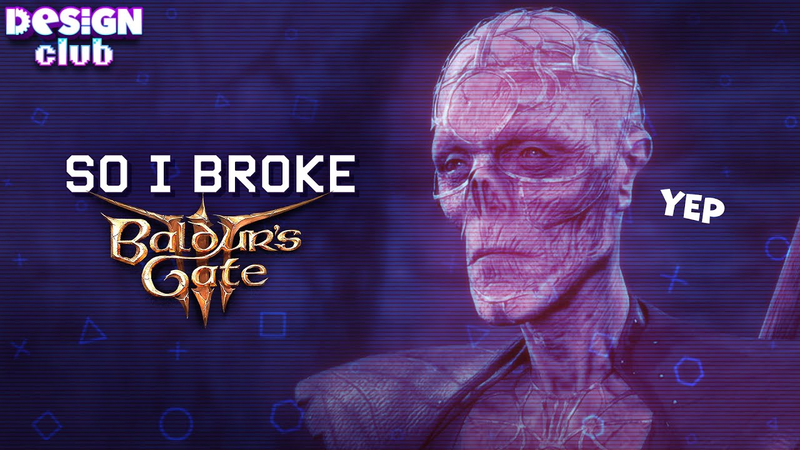
This paper examines gender and LGBTQ+ representation across the Baldur's Gate series, comparing the 1998 original, Baldur's Gate II, and Baldur's Gate III, with the aim of tracing how the franchise reflects shifting cultural attitudes toward gender, sexuality, and inclusivity in computerized role-playing games. Its central thesis is that the earlier entries relied on binary gender norms, stereotypical portrayals, and hypersexualized female characters, while Baldur's Gate III represents a substantial advance through customizable appearance and gender expression, non-binary pronoun support, pronoun-responsive dialogue, diverse romance options, and an openly gay companion. The analysis is framed against broader industry change, including the rise of women's participation in the games workforce from roughly 8 percent in 1989 to about 30 percent in 2021.
The evaluation rests on three criteria: women's representation, LGBTQI+ inclusion, and character creation and appearance options. Findings are presented largely through qualitative comparison, drawing on the authors' own gameplay and secondary literature rather than original player data or quantitative measurement. Limitations of the earlier games are partly attributed to the technical constraints of their era, a contextual point the authors use to temper their critique of the 1990s titles.
The paper concludes that Baldur's Gate III establishes a new benchmark for inclusivity in the RPG genre, and it argues that inclusive features such as dynamic pronouns and customizable identities may enhance player immersion and emotional well-being, particularly for LGBTQ+ players. These conclusions are acknowledged to be tempered by continued criticism of the over-sexualization of certain female characters, and the authors note that LGBTQ+ representation across the industry remains limited. The analysis is thus best understood as a qualitative, theme-driven assessment of a single franchise's trajectory rather than a generalizable quantitative study of industry-wide representation.
Each row is a game or company this document names, each column a document, oldest first. A mark means that document names it. Select a row to see those documents.

DiGRA · 2026

DiGRA · 2026



DiGRA · 2026



DiGRA · 2026



DiGRA · 2026



DiGRA · 2026



DiGRA · 2026



DiGRA · 2026

DiGRA · 2026



DiGRA · 2026



DiGRA · 2026

DiGRA · 2026
DiGRA · 2026