1 free read left. Create a free account for unlimited reading + AI research.
Create free accountArticle Eludamos: Journal for Computer Game Culture
1 free read left. Create a free account for unlimited reading + AI research.
Create free accountArticleEludamos: Journal for Computer Game Culture
Winnerling argues these series evoke a feeling of the past through aesthetic, imaginative, and procedural means rather than verifiable causal reasoning.
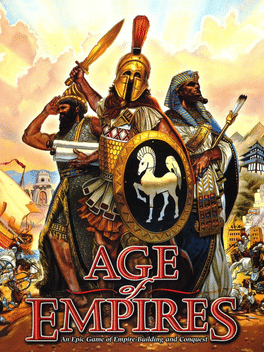
Tobias Winnerling's 2014 article argues that historicized video game series, including Civilization, Age of Empires, Assassin's Creed, and the Anno titles, transform factual history into what he calls "affective historicity." Rather than conveying the past through verifiable causal reasoning, these games evoke a feeling of history through aesthetic, imaginative, and procedural means. The central claim is that such series are linked by gameplay progression and recurring mechanics rather than chronology, so an earlier-set entry such as Anno 1404 can seem more advanced than a later one such as Anno 1701. Drawing on Deleuze, Guattari, and Nietzsche, the author frames this serial, self-referential structure as a form of eternal recurrence in which games endlessly re-enact and reinterpret historical signs.
The argument develops through a three-step process of introduction, reduction, and interpretation, modeled on Rolf Nohr's inter-discursive connection model. Using the production-economy chain in the Anno series (tobacco, sugarcane, spice, hemp, oil), the author contends that serial recurrence reduces historical elements to empty signs that players fill with meaning. This produces a hermeneutic spiral rather than a closed circle. The analysis concludes that game series offer the most promising route for understanding how games deploy factual history as authenticated, immersive historicity, a form that differs from historians' constructions of the past because games advance no explicit arguments for their representations.
Winnerling holds that these series persuade through procedural rhetoric rather than demonstration. Recurring mechanics, such as the assassin's cloak in Assassin's Creed, detach game elements from their historical chronology, replacing factual history with a detemporalized, affective understanding of the past. The author notes that this blurring is not unique to games: historical media generally, including scholarly works, participate in it to some degree, though games make the process more visible. The article's scope is primarily the design and reception of commercial strategy and historical-simulation games, with supporting scholarship drawn from digital historical consciousness, ludology, and game history.
DiGRA · 2026