1 free read left. Create a free account for unlimited reading + AI research.
Create free accountWhitepaper European Conference on Games Based Learning (ECGBL)
1 free read left. Create a free account for unlimited reading + AI research.
Create free accountWhitepaperEuropean Conference on Games Based Learning (ECGBL)
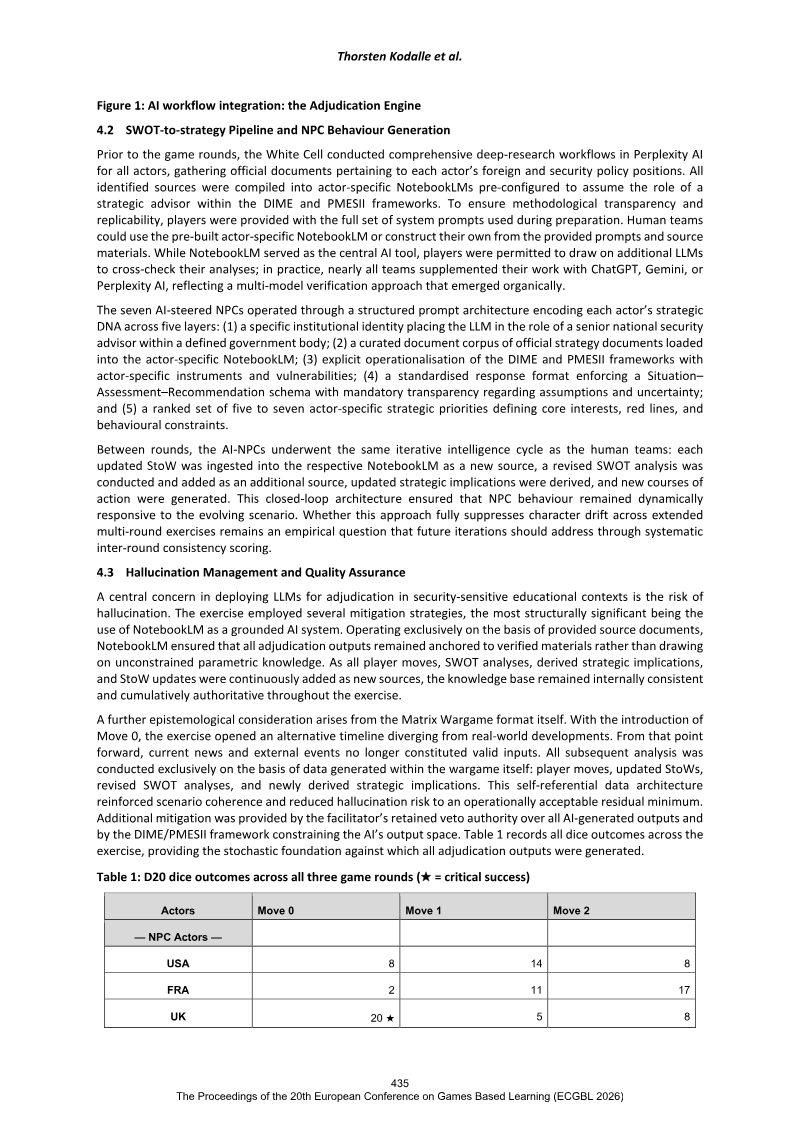
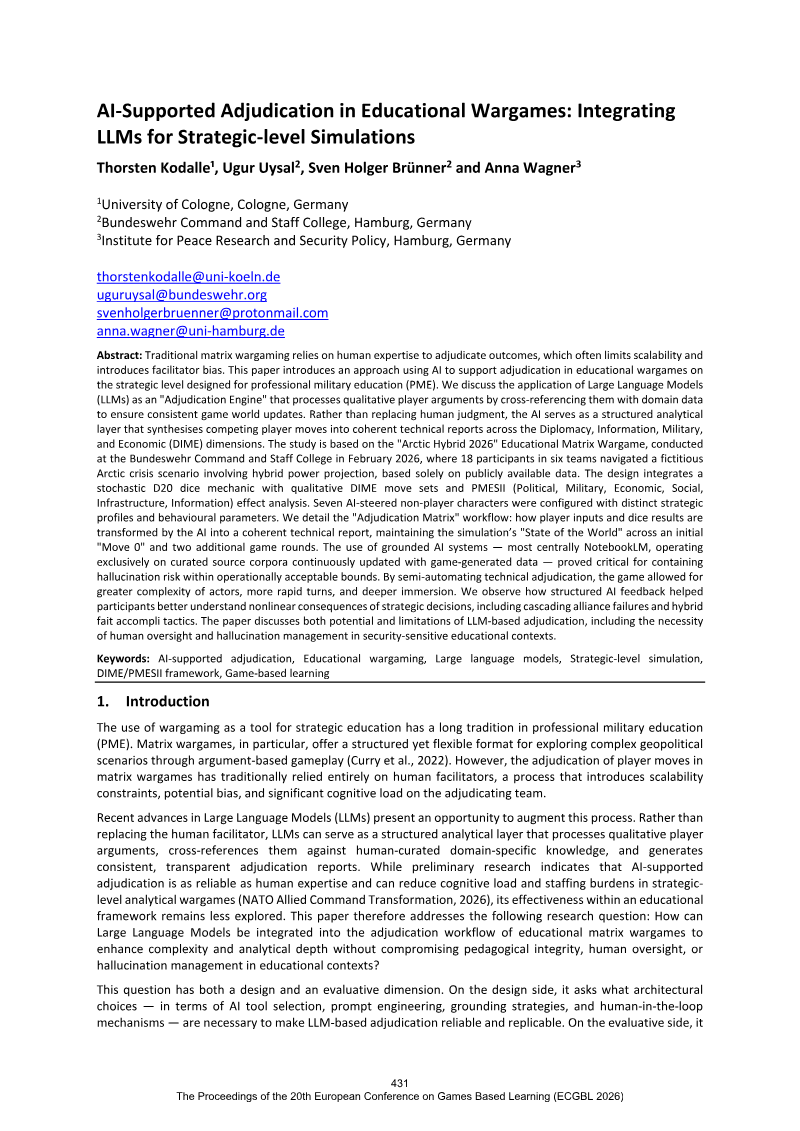
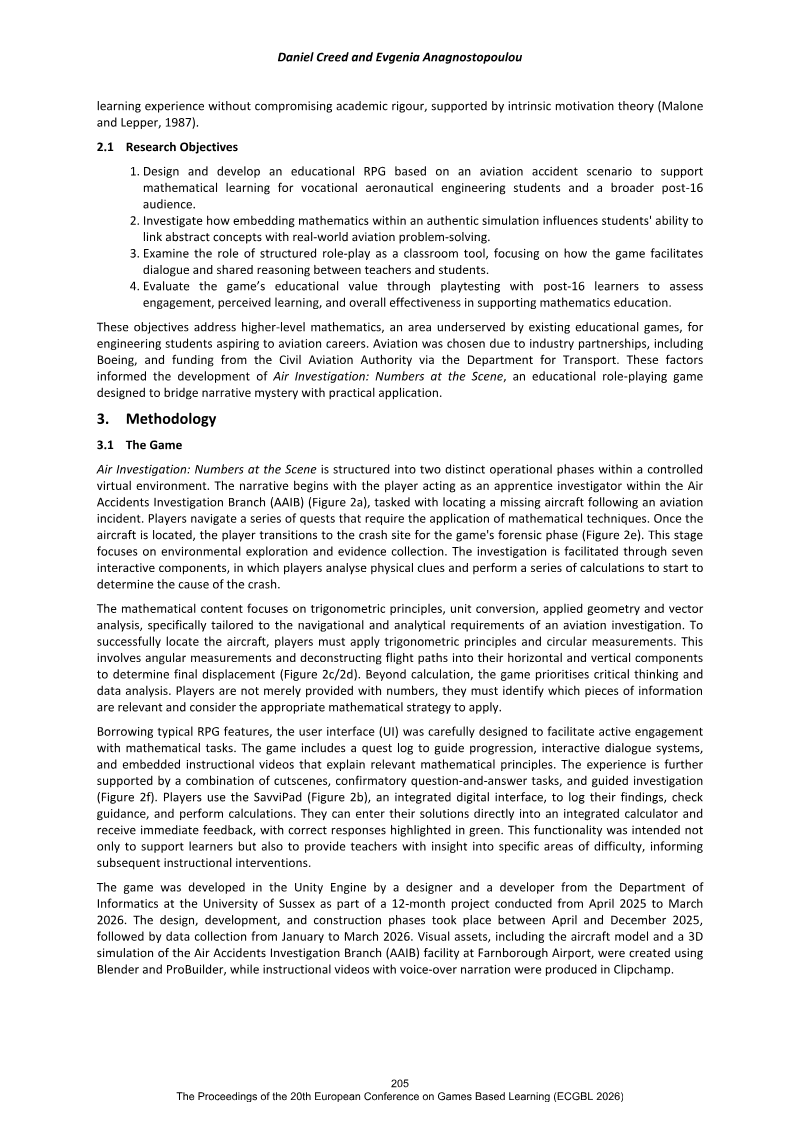
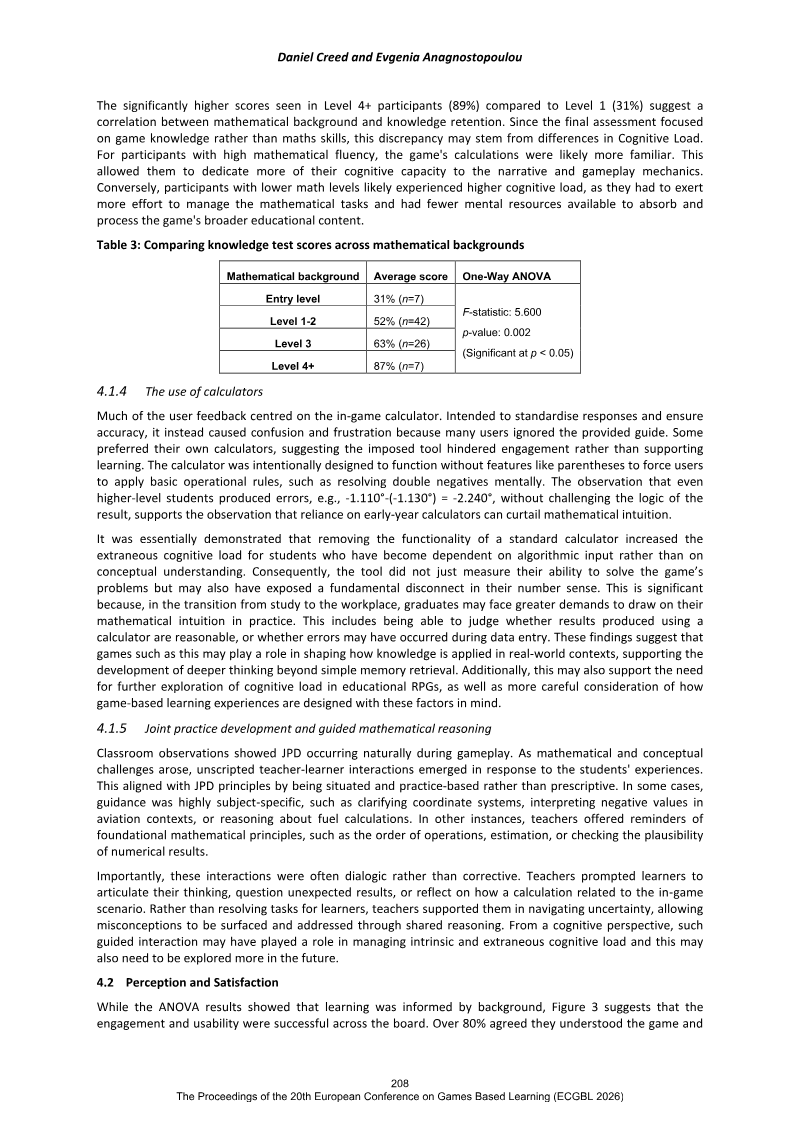
Interactive narrative games are proposed as a way to support this.
This paper argues that ethics is best cultivated as a practical skill rather than transmitted as fixed doctrine, and that interactive narrative games can foster genuine moral reflection precisely because they grant players agency and responsibility that passive scenarios cannot. Drawing on analysis of commercial games, the author contends that meaningful moral involvement depends on implicit rather than explicit morality systems, unlabelled choices, decisions that feel consequential, and well-developed characters to whom players form attachments. Designers, the paper suggests, must carefully calibrate how much feedback is revealed and how much remains hidden, since the balance shapes whether players reflect or simply optimize.
These principles are applied in a prototype narrative built in Twine for information technology students. Its choices are designed without clearly right or wrong answers, drawing on Sicart's concept of "wicked problems," and it tracks ethical principles, character approvals, and resources implicitly. Resources are capped at a modest gain and can never be increased beyond that ceiling, creating a constrained economy in which tradeoffs are unavoidable. Four characters, reflection spaces between play sessions, and inner monologue events invite subjective engagement. End states include forced reassignment or dismissal if resources decline too far, and the ethical principles implicated in each outcome are mapped to the ACM Code of Ethics for connection to professional standards.
The paper's central conclusion is that effective moral gameplay requires balancing explicit guidance against the player's immersion in the fiction, since over-explicit feedback diminishes the need for reflection. Evaluation, the author proposes, should assess whether students develop a stronger default predisposition toward ethical thinking, using qualitative and subjective methods adapted from values-based learning research. At present the work offers no empirical results. Planned next steps include preliminary qualitative testing with educators and game developers, followed by refinement and larger-scale student trials.



European Conference on Games Based Learning (ECGBL) · 2026



European Conference on Games Based Learning (ECGBL) · 2026



European Conference on Games Based Learning (ECGBL) · 2026



European Conference on Games Based Learning (ECGBL) · 2026



European Conference on Games Based Learning (ECGBL) · 2026



European Conference on Games Based Learning (ECGBL) · 2026



European Conference on Games Based Learning (ECGBL) · 2026



European Conference on Games Based Learning (ECGBL) · 2026



European Conference on Games Based Learning (ECGBL) · 2026



European Conference on Games Based Learning (ECGBL) · 2026



European Conference on Games Based Learning (ECGBL) · 2026



European Conference on Games Based Learning (ECGBL) · 2026



European Conference on Games Based Learning (ECGBL) · 2026
European Conference on Games Based Learning (ECGBL) · 2026
European Conference on Games Based Learning (ECGBL) · 2026












Comments