Key insights
6 slides
Key number
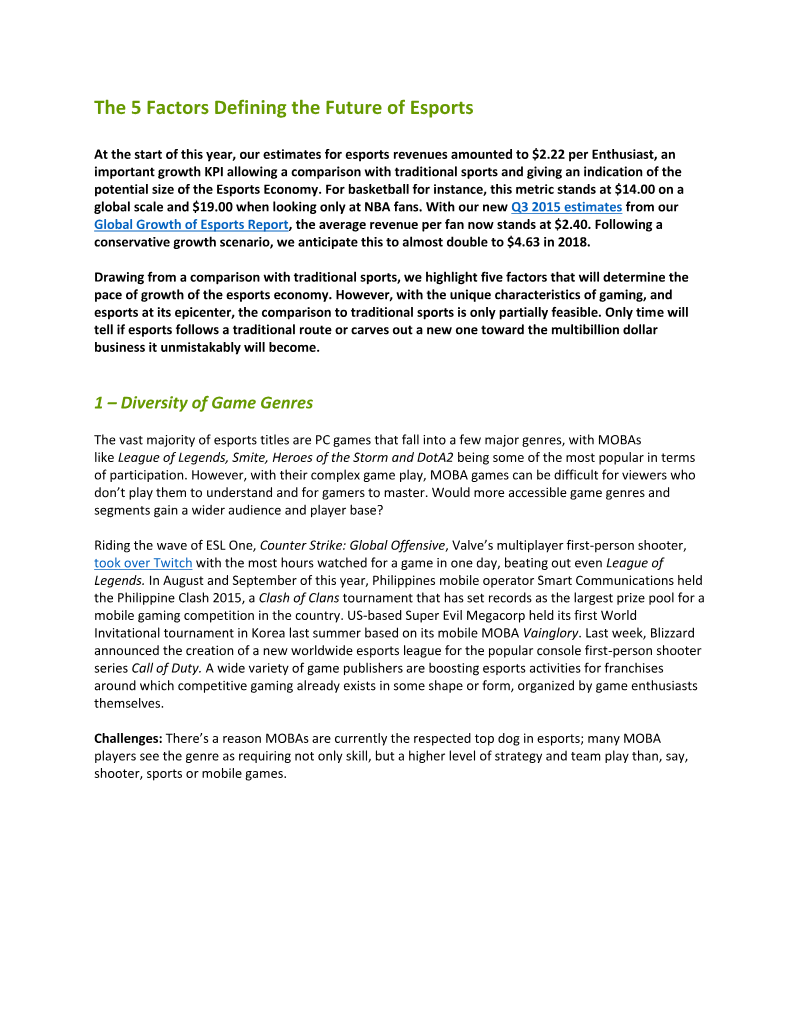
Revenue per esports enthusiast is projected to nearly double by 2018.
The esports industry is experiencing rapid evolution.
Growth Metric. Revenue per esports enthusiast is projected to nearly double, growing from $2.40 in 2015 to $4.63 by 2018.
Page 1 of the report$4.63
Projected revenue per esports enthusiast by 2018.
- in 2015
- $2.40
Industry foundation
Esports operates under a unique ownership model.
Game publishers hold the intellectual property of the games themselves. This necessitates a growth strategy distinct from traditional sports.

Current hurdles
Ambiguous media rights hinder the industry's transition to a multibillion-dollar business.
A lack of standardized, globalized league hierarchies also limits the industry.
Audience expansion
The esports audience base is expanding beyond MOBAs.
First-person shooters and mobile gaming titles are contributing to this growth. MOBAs currently dominate the competitive landscape.
Risk mitigation
Formal regulatory frameworks are required due to capital and betting interest.
These frameworks aim to mitigate risks like match-fixing. They also ensure player welfare in the rapidly growing industry.
Mainstream acceptance
Mainstream legitimacy is increasing through partnerships with major networks.
Networks like TBS and ESPN are contributing to this. However, brands remain cautious due to technology gaps and demographic prejudices.
1 / 6
Ask AI about this report