1 free read left. Create a free account for unlimited reading + AI research.
Create free accountWhitepaper European Conference on Games Based Learning (ECGBL)
1 free read left. Create a free account for unlimited reading + AI research.
Create free accountWhitepaperEuropean Conference on Games Based Learning (ECGBL)
Game designers and social work experts worked together on a serious game for the primary prevention of intimate partner violence, with a particular focus on rural communities.
This paper examines how systems mapping can support interdisciplinary collaboration in designing serious games for the primary prevention of intimate partner violence (IPV), with a particular focus on rural communities. Drawing on the experience of a German research team that brought together game designers and social work experts, the authors argue that systems mapping, implemented with the Miro whiteboard tool, offers a structured means of organizing complex social knowledge and aligning disciplines that otherwise work from very different vocabularies and assumptions.
The core findings concern the method's practical value. Mapping proved useful across research, design, and collaboration: it helped structure a diffuse body of IPV knowledge, revealed reinforcing dynamics such as the taboo-isolation-silence cycle and the social control operating in rural communities, and gave the team a shared reference point before moving toward game mechanics. The team used an Iceberg model to distinguish surface-level patterns, such as gaslighting and victim-blaming, from deeper gender stereotypes. They deliberately targeted the former, judging that deeper norms are unlikely to shift through a game intervention, and identified social control as a leverage point for bystander-focused prevention.
The authors are candid about the method's limits. Systems mapping does not generate new domain knowledge or prescribe design solutions on its own, and translating abstract, unmeasurable social dynamics into precise game mechanics proved difficult. The maps are also necessarily incomplete and only approximately accurate. The accompanying reference list situates the work within serious game scholarship, systems thinking, and IPV research, and it highlights a randomized controlled trial of a prosocial IPV-prevention game as the closest empirical precedent.
European Conference on Games Based Learning (ECGBL) · 2025
European Conference on Games Based Learning (ECGBL) · 2025
European Conference on Games Based Learning (ECGBL) · 2025
European Conference on Games Based Learning (ECGBL) · 2025
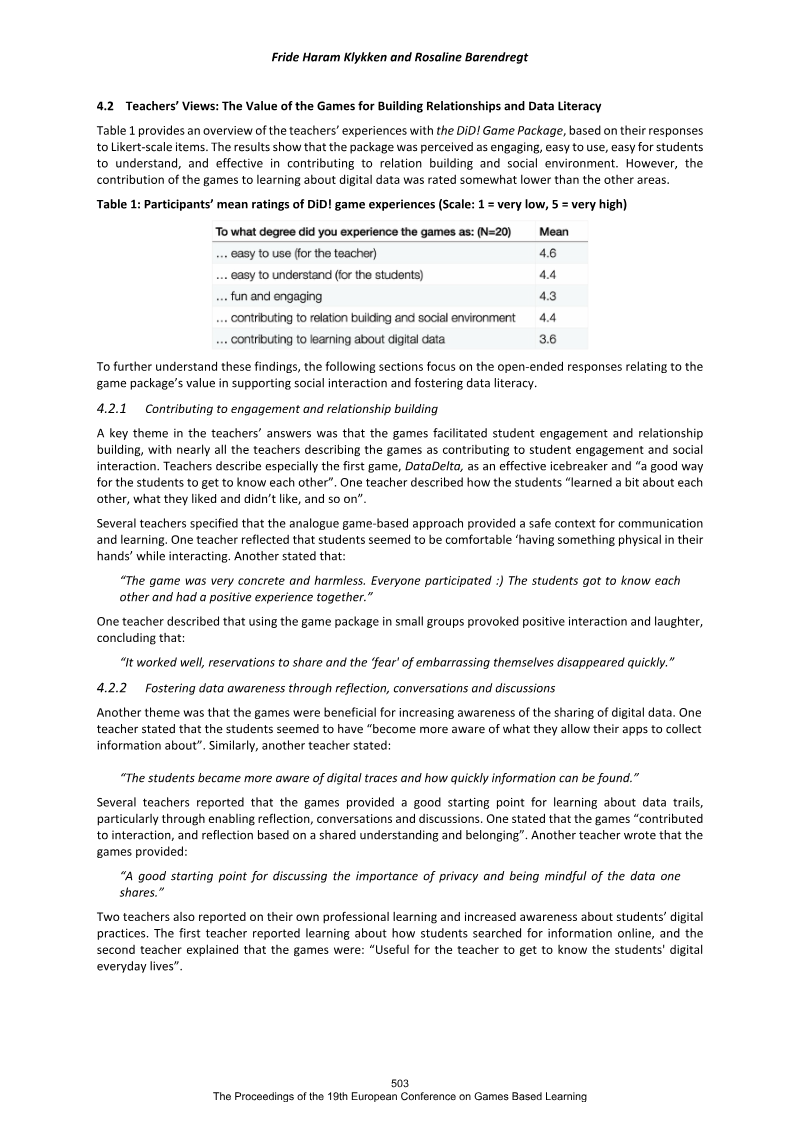
European Conference on Games Based Learning (ECGBL) · 2025
European Conference on Games Based Learning (ECGBL) · 2025
European Conference on Games Based Learning (ECGBL) · 2025
European Conference on Games Based Learning (ECGBL) · 2025
European Conference on Games Based Learning (ECGBL) · 2025
European Conference on Games Based Learning (ECGBL) · 2025
European Conference on Games Based Learning (ECGBL) · 2025
European Conference on Games Based Learning (ECGBL) · 2025
European Conference on Games Based Learning (ECGBL) · 2025
European Conference on Games Based Learning (ECGBL) · 2025
European Conference on Games Based Learning (ECGBL) · 2024