1 free read left. Create a free account for unlimited reading + AI research.
Create free accountArticle Eludamos: Journal for Computer Game Culture
1 free read left. Create a free account for unlimited reading + AI research.
Create free accountArticleEludamos: Journal for Computer Game Culture
The article examines how games such as Dune II, Age of Empires and Civilization IV encode geopolitical assumptions. It argues these games present politics as territorial conquest and control.
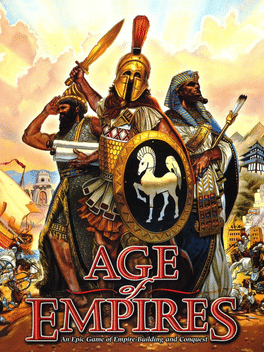
Nohr's article examines how strategy computer games such as Dune II, Age of Empires, Command & Conquer: Generals, Age of Empires III, Civilization IV, and 1701 A.D. encode geopolitical knowledge into their design. Its central thesis is that these games present politics as the conquest and control of territory, and that this spatial logic is ideologically loaded rather than neutral. The analysis draws on the lineage of classical German geopolitics, including Ratzel's concepts of Lebensraum and "big space," the "lore of blood and soil," and Christaller's central place theory, as well as on Hellwig's 1780 war game and Freudian and Marxist notions of fetishism to explain how these assumptions come to seem natural.
The article's key findings concern the way these games naturalize political hierarchies. Game spaces appear as sealed, symbolic constructions, yet they reproduce assumptions that politics is physical, territorial, and resource-driven rather than social or economic. Several games further reinforce a reductive "clash of civilizations" worldview, paralleling Huntington's 1996 thesis, by presenting artificial cultural and spatial hierarchies as self-evident. The author argues that the immediacy and playful framing of these games make such discursive constructs feel like common sense, so players internalize them without recognizing them as constructed.
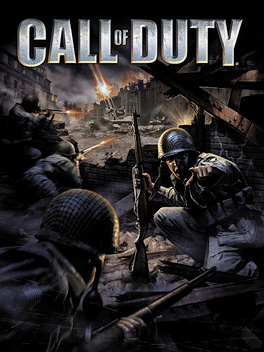
The scope is historically broad, tracing a lineage from eighteenth-century Kriegsspiel and Roberts's Tactics (1954) through classical geopolitical thinkers such as Ratzel, Kjellén, and Haushofer, whose core ideas persisted after their discrediting in 1945. The article contrasts the cartographic, rational conception of space in strategy games with the subjective, non-cartographic conflict models of tactical shooters such as Call of Duty. Its contribution lies in situating a popular entertainment genre within the longer history of geopolitical discourse and in questioning how that discourse is reproduced through play.
Eludamos: Journal for Computer Game Culture · 2026
DiGRA · 2026