1 free read left. Create a free account for unlimited reading + AI research.
Create free accountWhitepaper DiGRA
1 free read left. Create a free account for unlimited reading + AI research.
Create free accountWhitepaperDiGRA
The analysis traces the game's design lineage from Gygax's Chainmail (1971) through Crusader Kings II and its reported inspirations, including Game of Thrones.
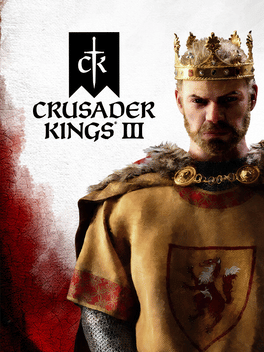
Lundblade's analysis of Crusader Kings III argues that the game's historical character arises from a "dual diegesis": players simultaneously occupy a godlike, systems-level historian position that surveys thousands of simulated characters and sets instrumental goals, and an embodied dynastic avatar whose mortality, relationships, and constraints generate much of the drama. The central thesis is that the interplay between these two positions, including the tension between what the player knows and what the character knows, is essential to understanding how the game produces historically inflected narratives. Rather than treating simulative hybridity as the game's distinguishing feature, the author locates its uniqueness in two cohesive, embodied perspectives operating within one interlinked system.
The analysis situates this structure within an "assemblage of historical play" that extends beyond the software to include community-generated stories, achievements, and other metagame elements. Because CK3 lacks explicit win or loss conditions, these surrounding practices supply much of the implicit goal-setting that shapes play. Drawing on Trouillot's distinction between what happened and what is said to have happened, the author shows how expert players develop their own historiographic stances, choosing to embrace, reject, or critique historical accuracy, as illustrated through community stories originating in Crusader Kings II.
The study's scope extends across the game's design lineage, tracing influences from Gygax's Chainmail (1971) through Crusader Kings II and its reported inspirations, including Game of Thrones. It also considers the game's Software-as-a-Service development cycle and Paradox's practice of allowing employees unstructured time to contribute content, factors the author argues produce the game's polyphonic character and call for exegetical and archival interpretive methods. Succession-system scholarship and Heideggerian framing of tools as ready-to-hand inform the mapping of the game's three actor classes, offering a multilayered account of how historical play is constituted.
Each row is a game or company this document names, each column a document, oldest first. A mark means that document names it. Select a row to see those documents.

DiGRA · 2026

DiGRA · 2026



DiGRA · 2026



DiGRA · 2026



DiGRA · 2026



DiGRA · 2026



DiGRA · 2026



DiGRA · 2026

DiGRA · 2026



DiGRA · 2026



DiGRA · 2026

DiGRA · 2026
DiGRA · 2024