1 free read left. Create a free account for unlimited reading + AI research.
Create free accountArticle Eludamos: Journal for Computer Game Culture
1 free read left. Create a free account for unlimited reading + AI research.
Create free accountArticleEludamos: Journal for Computer Game Culture
Holmes argues the uncanny is not an incidental malfunction but a structurally central feature and a form of gameplay in its own right. It arises from the medium's drive toward realistic virtual worlds.
Eben Holmes's 2010 essay "Strange Reality: Glitches and Uncanny Play," published in Eludamos, argues that the uncanny is a recurring and structurally central feature of videogames, arising from the medium's drive toward realistic virtual worlds. Drawing on Freud's concept of the uncanny and Derrida's notion of specters, the author contends that the industry's pursuit of photorealism and sublime "graphics violence," exemplified by the 1992 Mortal Kombat "So Real It Hurts" advertisement and the rise of 3D titles such as Wolfenstein 3D and Alone in the Dark, produces an effect in which the familiar becomes strange. The central thesis holds that the uncanny is not an incidental malfunction but a form of gameplay in its own right.
The analysis proceeds through two principal categories of uncanny experience. The first concerns atmosphere: horror titles such as Silent Hill: Homecoming use dim lighting and mundane objects as "reality-effects" that turn ordinary surroundings unsettling. The second concerns glitches, which the author classifies as either "presence," inconsistent apparitions such as the MissingNo. glitch in Pokémon, or "vertigo," disruptions that destabilize the scene. Framing these phenomena through Barthes, Lacan, and Jervis, the essay treats glitches as moments in which the symbolic construction of gameworld reality breaks down and unconscious desire becomes visible.
The later argument deepens these claims by linking uncanny play to Freud's death instinct and the compulsion to repeat, using examples such as the "minus world" in Super Mario Bros., ragdoll spasms, and the G-man in Half-Life. Caillois's category of ilinx and Mori's uncanny valley support the view that games' pursuit of realistic simulation carries the seeds of its own undoing, a fragility that players find pleasurable. The essay's final claim extends this reasoning to lethal, reality-piercing play such as first-person shooter headshots, arguing that the boundary between in-game and beyond-game dissolves. The conclusions are theoretical rather than empirical, positioning the study of videogame failure as a means of understanding modernity, technology, and the death drive.
 Super Mario Bros.Game · Nintendo R&D4 · 1985 · 79 documents
 Silent HillGame · Team Silent · 1999 · 62 documents
 Half-LifeGame · Valve · 1998 · 51 documents
 WolfensteinGame · Raven Software · 2009 · 21 documents
 Wolfenstein 3DGame · id Software · 1992 · 9 documents
Each row is a game or company this document names, each column a document, oldest first. A mark means that document names it. Select a row to see those documents.
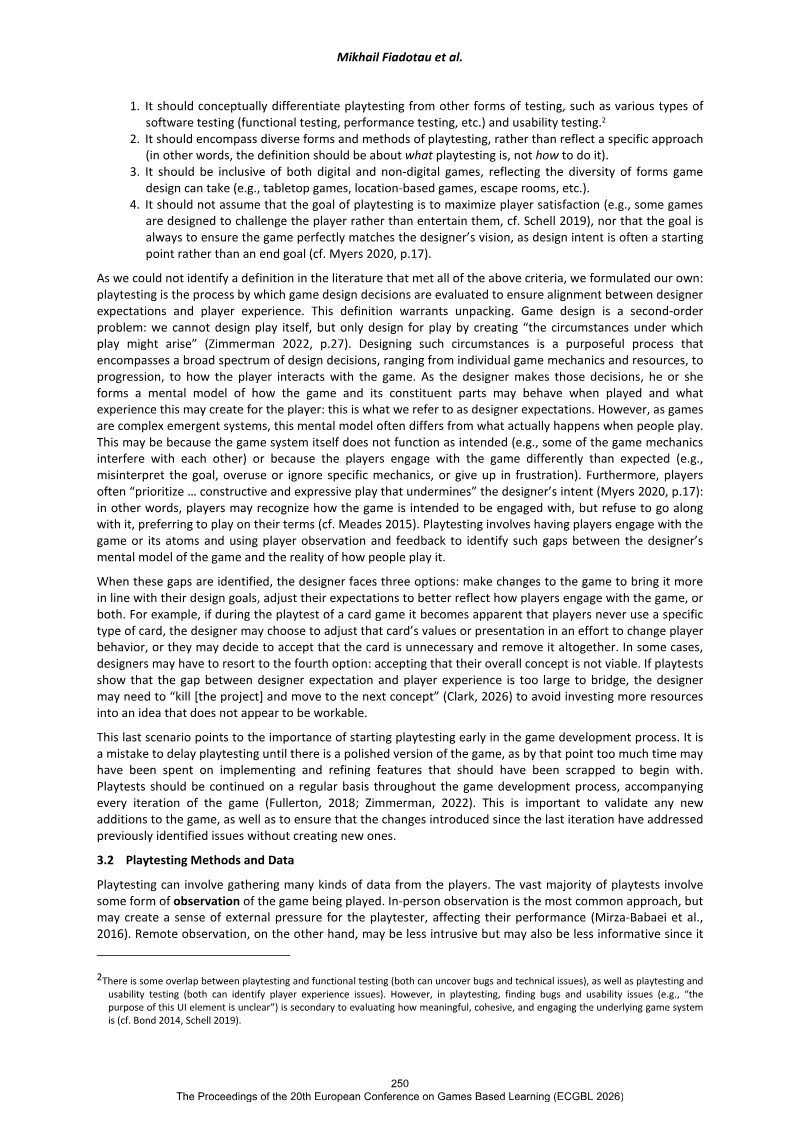

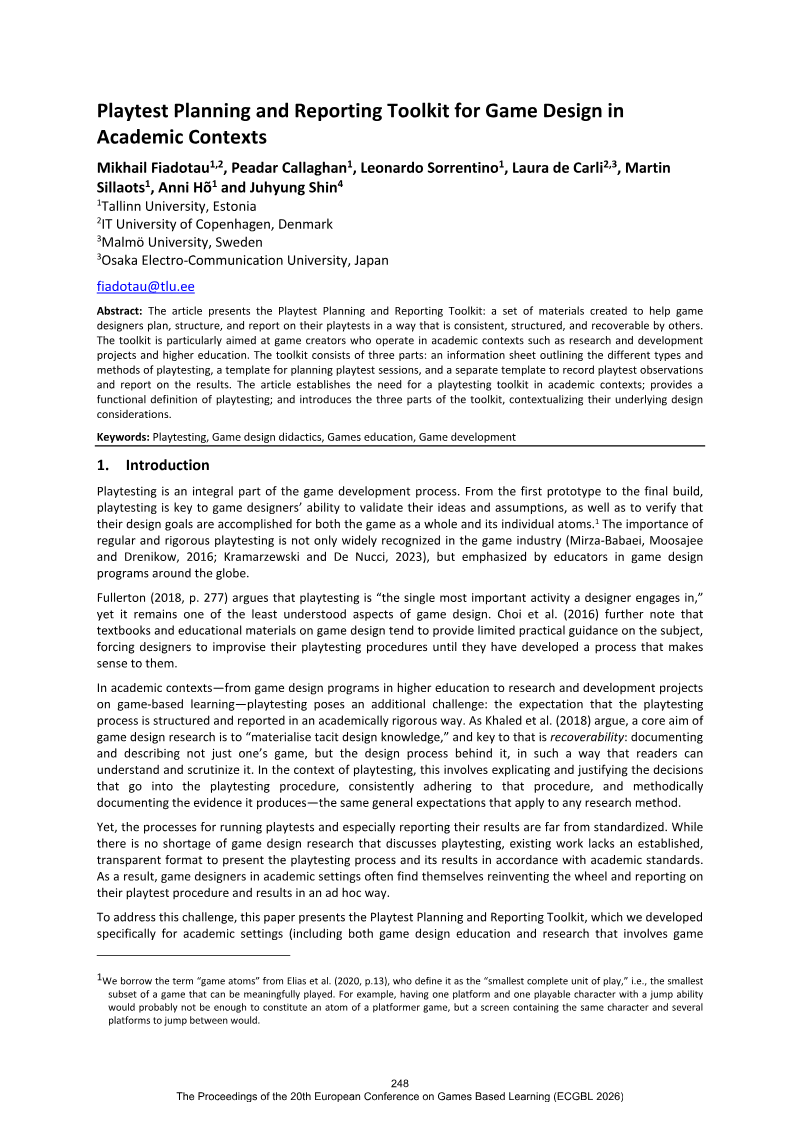
European Conference on Games Based Learning (ECGBL) · 2026


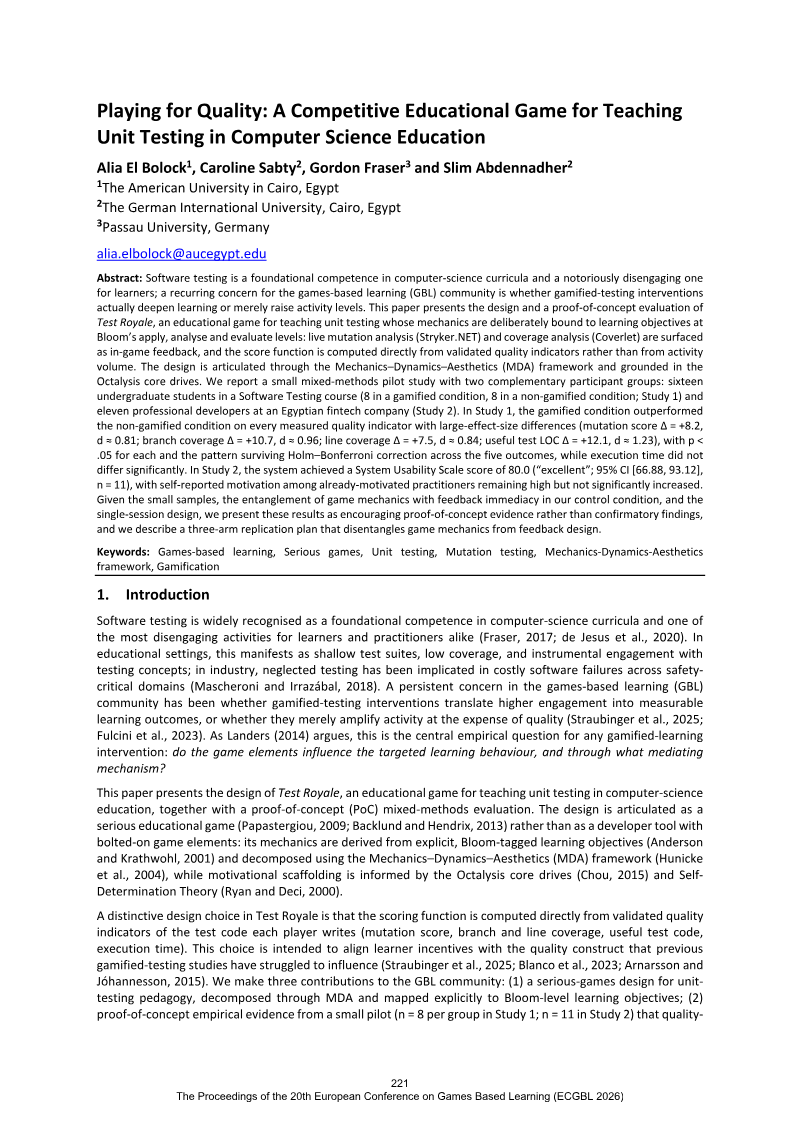
European Conference on Games Based Learning (ECGBL) · 2026

Eludamos: Journal for Computer Game Culture · 2026
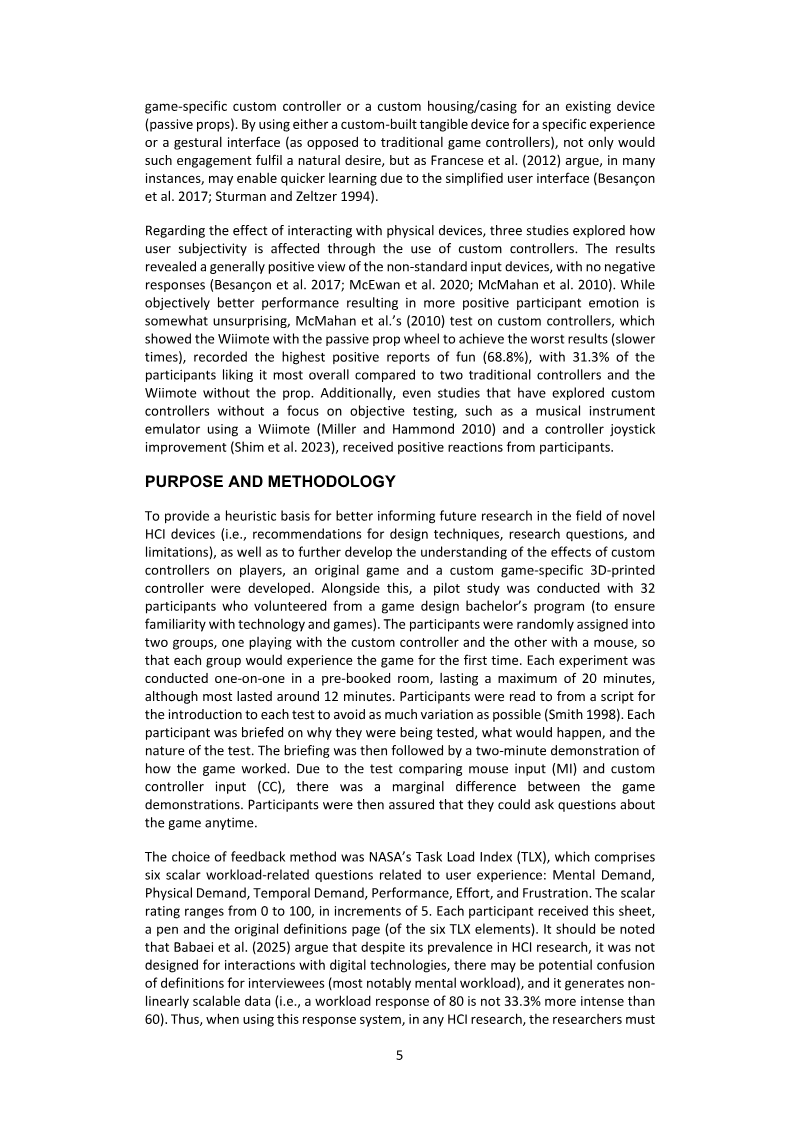
DiGRA · 2026