1 free read left. Create a free account for unlimited reading + AI research.
Create free accountWhitepaper DiGRA
1 free read left. Create a free account for unlimited reading + AI research.
Create free accountWhitepaperDiGRA
The paper treats game environments as architectural and performative spaces that reproduce and formalize recurring real-world patterns.
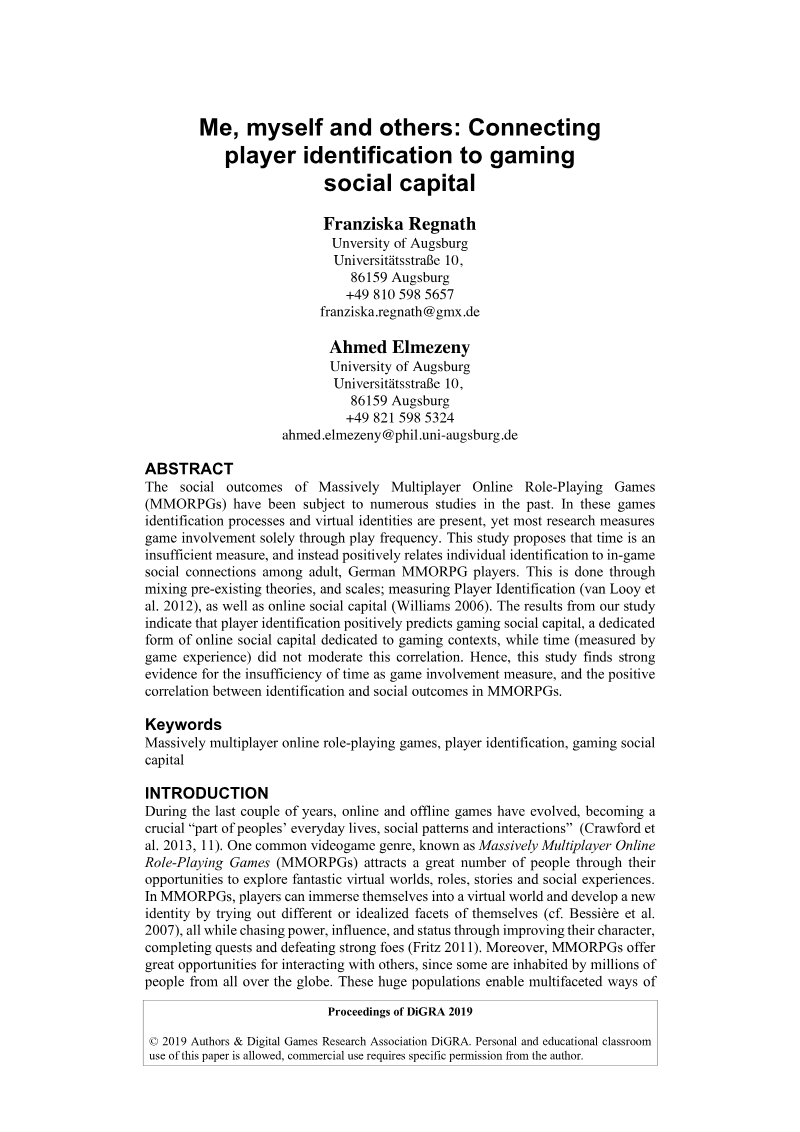
"Situations of Play: Patterns of Spatial Use in Videogames" argues that game environments are not merely backdrops but architectural and performative spaces that reproduce and formalize recurring patterns drawn from the real world. The paper identifies six such patterns, namely challenge, contested, nodal, codified, creation, and backdrop spaces, and contends that each is defined by the degree to which the environment structures what players can do. Its central claim is that game space acquires meaning through the situations of play that occur within it, and that these patterns differ from Caillois' typology of play by attending to the spaces where play happens rather than the nature of play itself.
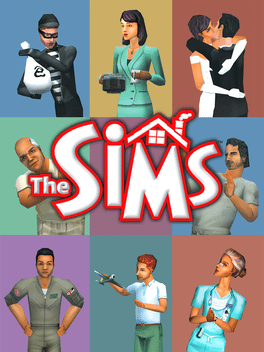
The analysis is grounded in illustrative examples from titles such as Tomb Raider, Starcraft, Civilization IV, World of Warcraft, and The Sims, supported largely by conceptual reasoning and anecdotal observation rather than quantitative evidence. Drawing on Gee's situated learning and Johnson's pattern recognition, the author proposes that players internalize these spatial patterns through repeated gameplay, and that such learning can transfer to how they perceive and interpret real-world environments. The scope is primarily theoretical, focusing on the relationship between game design and spatial form across screen-based and physical play contexts.
A key distinction the work draws is among three types of situated play: screen-mediated games, embedded games, and pervasive games. The paper observes that modern titles increasingly combine several spatial patterns into intricate configurations. In its treatment of pervasive games, which reintroduce gamic logic into physical surroundings to create what it terms "played space," the author identifies health, safety, and social-convention concerns that tend to steer such designs toward social interaction and passive forms of contest. Screen-mediated and embedded games are presented as comparatively safer settings for experiencing these patterns.
The paper ultimately concludes that game space is grounded in real space and that the exchange between the two is reciprocal. Videogames draw recurrent spatial-use patterns from reality, formalize and alter them for gameplay, and in doing so can reshape how players think about the environments around them.