1 free read left. Create a free account for unlimited reading + AI research.
Create free accountWhitepaper DiGRA
1 free read left. Create a free account for unlimited reading + AI research.
Create free accountWhitepaperDiGRA
Of the franchise's 28 installments, seven feature playable women, either exclusively or as an option.
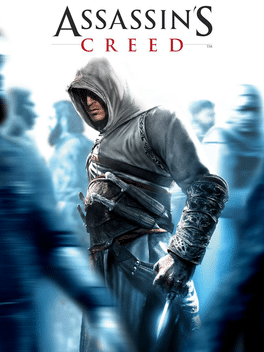
This paper examines the representation of female protagonists across the Assassin's Creed franchise, which by its account comprises 28 installments released since 2007 across multiple platforms and genres. The authors argue that prior scholarship has analyzed individual titles, such as Liberation, Origins, and Odyssey, but no study has tracked franchise-wide advancement and stagnation in gender representation. Their central claim is that the franchise has offered an exceptionally limited number of female protagonists, that representation has shifted rapidly and unevenly since a 2014 controversy over the animation of female avatars, and that internal resistance at the company has produced incongruities between narrative and ludic elements in post-2017 titles.
The methodology combines close-play analysis, netnography, and examination of paratextual promotional material, following the DiGAP protocol and emphasizing methodological transparency. The study focuses on the seven titles that feature playable female protagonists, either exclusively or as an option, and draws on in-depth playthroughs, ethnographic notes, screenshots, video recordings, storefront catalogs, trailers, trade show presentations, documentaries, and developer interviews. Each protagonist is assessed for narrative connotations, mechanical composition, and the nature of their interactions with other female characters.
The findings are organized into a timeline of protagonists, installments, and platforms that highlights a general marginalization of women, exacerbated by the placement of the few solo-lead female titles within spin-off releases. The authors also propose a grid visualizing the complexity of female representation and divide the franchise's representational history into four eras: Only Male Protagonists (2007-2011), First Female Protagonists (2012-2015), Female Protagonists Defined by Male Protagonists (2015-2017), and Player Choice (2018-2023). The paper closes by considering a recent return to the series' earlier formula as a possible nostalgic reaction to broader inclusion initiatives.
Each row is a game or company this document names, each column a document, oldest first. A mark means that document names it. Select a row to see those documents.

DiGRA · 2026

DiGRA · 2026



DiGRA · 2026



DiGRA · 2026



DiGRA · 2026



DiGRA · 2026



DiGRA · 2026



DiGRA · 2026

DiGRA · 2026



DiGRA · 2026



DiGRA · 2026

DiGRA · 2026
DiGRA · 2022