1 free read left. Create a free account for unlimited reading + AI research.
Create free accountArticle G|A|M|E – The Italian Journal of Game Studies
1 free read left. Create a free account for unlimited reading + AI research.
Create free accountArticleG|A|M|E – The Italian Journal of Game Studies
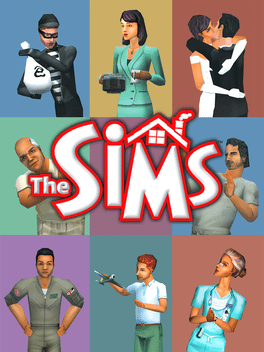
The Sims Social was launched by Electronic Arts on Facebook in August 2011. The essay examines why it achieved rapid success and then lost a substantial share of its audience.
Agata Meneghelli's essay, published in the 2012 inaugural issue of the Italian journal Critical Notes, examines why The Sims Social, launched by Electronic Arts on Facebook in August 2011, achieved rapid success and then lost a substantial share of its audience within months. The author argues that the explanation lies in the game's adaptation of the core qualities of the Sims franchise, namely interactivity, personalization, and creativity, to the logic of Facebook's social and real-time environment. The piece is a qualitative, theory-informed reading rather than a statistical study, drawing on the author's personal experience as a longtime fan and on the franchise's history, including the failed 2002 MMO The Sims Online.
The essay reports that within about a month of launch the game had more than sixty million monthly active users and over ten million daily active users, and that by January 2012 these figures had fallen to roughly twenty-four million monthly and four million daily. It contrasts the original single-player Sims with the social version, noting that the latter offers fewer and more explicit objectives, restricted control over a single avatar, and limited home customization, while adding mission structures, scoring systems, and dependence on in-game resources that can be purchased with real money.
The central analysis concerns how Facebook integration links each avatar to a real profile, producing an intertwining of in-game and off-game relationships, and how notifications, feeds, and resource-sharing make the game viral. The author also identifies a quasi-real-time temporal structure in which energy regenerates with actual time and seasonal events mirror the calendar. Ultimately the essay concludes that these social and temporal demands can turn play into obligation, causing frustrated or unable-to-commit players to disengage and explaining much of the subsequent decline.
Each row is a game or company this document names, each column a document, oldest first. A mark means that document names it. Select a row to see those documents.
G|A|M|E – The Italian Journal of Game Studies · 2026

Deconstructor of Fun · 2025