1 free read left. Create a free account for unlimited reading + AI research.
Create free account
Scientific Revenue's Ted Verani on increasing your IAP revenue via dynamic pricing
Key insights
6 takeaways- 01Developers should replace static pricing with dynamic models that use real-time data—such as device type, location, and engagement patterns—to align offers with individual player price sensitivities.
- 02Initial acquisition timing is a critical predictor of spending propensity, making immediate monetization efforts upon a user's first entry into the game essential for long-term revenue.
- 03Studios can utilize 'feeder apps'—high-traffic games with low monetization—to drive users toward titles with robust in-app purchase (IAP) frameworks, balancing organic growth with revenue generation.
- 04Internationalizing pricing tiers for emerging markets can increase lifetime value (LTV) by more than 10 percent by capturing revenue from non-affluent but highly active player segments.
- 05The industry is shifting away from aggressive 'whale hunting' toward a sustainable, mass-market approach that prioritizes higher conversion rates and repeat purchases from a broader player base.
- 06Incentivized trials and video ads serve as effective tools to 'train' players, lowering the psychological barrier to entry for first-time spenders.
Ask AI about this video
Transcript
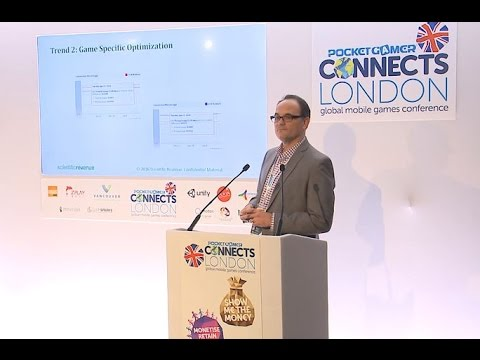
[Music] Hello there. Um, good to be here. So, my name is Ted Veronnie. I'm head of business development for um, for scientific revenue. I'm actually for sure might say Bill Graco. I'm actually he suddenly had couldn't be here. So, I'm glad to be here. Um, we are located in Sanonteo, California, just south of San Francisco. So, it came away to be here. And we do one thing. We increase inapp. So we do dynamic pricing for net purchases. We focus on increasing inapp purchase revenue. So what we have is a dynamic price management framework platform that allows us in real time to segment your players and deliver the right price at the right time, the right location to increase conversion to increase basket size purchase amounts if you already are a pair in the game. But mostly focusing on extending lifetime revenue for your game um for the long term and increase profitability for games publishers and studios. We're not going to talk too much about that. And we're not getting into game design. So,
we actually don't touch game UI. We don't touch um anything. We don't get involved at all with in-game economy or virtual currencies. We watch it. It's important thing to watch the velocity of that. But we we manage is just the real money currencies and the offer amount, you know, for the game. So, but we along the way we actually have quite a bit of exposure and involvement with the game experience. Um and we invite you to come to our site. After that, I'm going to share some trends and observations um that you yourself can do and tips and also come to our website. We have a pretty good resource section, a pretty good blog to where we share insights that we've uncovered along the way as well as observations learned from other people. So before trends, let's talk about what's not a trend. The inapp purchase revolution is over. So we think that I mean you just look at the rankings right now. So top 100 games in the app store, 91 99 of those are free. and one is premium Minecraft. So unless you're going to build the next Minecraft and you're saying you're trying to
figure out what I'm going to go premium, you know, versus freeto play, you know, frankly, if you're in the business of wanting to try to make some money, you for your game, you really need the question is not if you go inapp purchase, but it's really how you do it and how you leverage inapp purchases to create a really compelling user experience, you know, for your players in your game, but how you can also best monetize them for the long run. also not a trend the big data revolution is also over. So this is an article from Target. So from the US so Target is a kind of a mid-level material u retailer in the US and this article is from four years ago and Target's not a technologically prowess company out there. You know they're not the cutting edge of stuff in general. But the point here is that um online you know retailers for a long time now have been taking data about their customers um using that to inform um how they make an offer and also even how they price. Amazon changes the price three you know five times a day you know for their customers. We're in actually pretty good opportunity you know from a mobile phone we have actually a lot more data and information about you know players in
our game. location being a huge predictor, device being a huge predictor and of course the engagement in the game itself helps inform us and we can probably change prices quite a bit um faster and we know we can within the company for our customers. Terms of trends, one continuous optimization. So this is a slide um this just taken directly from our pricing framework. So again we've kind we've hidden the numbers for obvious reasons. can't talk about who the the game is, but these are two unique um segments um that we're tracking within our predictive analytics framework. Um what you'll see there, the Santa hat is Christmas. So Santa hat shows that you all of a sudden you know the game went haywire in one, you know, different um one specific segment. So the point is if you're setting your prices once or you're doing kind of one-sizefits-all pricing strategy, that's not going to work. You know, because your game is dynamic. you know, people coming in and out of your game all the time. You're doing different ad, you know, campaigns, acquiring different types of users. Um, your game is global, different cultures,
people coming into your game all the time. Different devices, new devices coming out with advanced, you know, capabilities. All this information helps inform us in terms of pricing decisions. But the main point is your game is dynamic. We think your pricing should also be dynamic. More on the continuous trend. So, what this shows and this also it's a it's a heat map. Um left hand side I'll read it for you. Number of new users by date and hour. On the right hand side we have the number of purchasers by uh date and hour. In both cases the color the lighter the color blue indicates more. So we're looking at the more users more purchasers on there. The point here is one other low trend or important thing to look at is indicator for propensity to spin is one join date. So this the day that people join your game and the time that they join your game are hugely important, huge predictors in terms of willingness to spend on your game. In this specific game, and it varies by
game, but this specific game, we have people who join at noon are four times more likely to spend than people who join at 5:00 a.m. So lesson is don't acquire users at 5 a.m. Actually, in this case, also don't acquire users on Wednesday. Um, and also in this game, you might want to try to monetize them right away because they're probably more likely not going to make a repeat purchase. Trend tune game specific optimization. So similarly like different players are coming down to your game. No two games are the same. So why you know why treat pricing similar approach to one game. So you know what works in one game may not necessarily work in another game. What you know you know if you're trying to attract whales a whale one game you know may not like you know another game you're having. So why treat it the same? And this is from the dashboard in there. So you know you want to have analytics and obviously there's you but offtheshelf analytics and user for the most part aren't going to be sufficient for helping you to make informed pricing decisions. So you want to track retention absolutely usually important.
But a couple other things you want to make sure you're looking at is the um payer attrition. So the players in your game who actually are leaving and trying to understand you know what cycle they're leaving within your game and you know how to you know get them back potentially as well as repeat purchase rate. This for us is not only we look at conversion but we're also look at players who then repeat purchase and we overlay that on top of each other um to make a determination of lifetime revenue and value for that to illustrate in this game. So two different games in this game over here actually the control group is um 10% higher. So the conversion we the conversion was 10% lower in that game um while in this one we're actually get um conversion to 30% higher. So what was the impact on the games the two again two different games actually the net result of it was the same in both cases we were able to get lifetime value lift of increase of 10%. um across the games. So message is that you actually can have a decrease in
conversion, you can decrease retention but also increase revenue. The big difference is just keep in mind every game is unique. Trend three feeder apps and this is this is pretty cool. So also just a call out is um this is an article from so observation we saw with a partner in working with them but um is Lloyd Melnik uh wrote a pretty nice article on this subject too. Um, I think my slides are up. It's a long URL out there or look them up. It's a good article on the same subject point. But what we saw was we were working with a partner and they made lovely games. They actually and even Apple, they put a game out and Apple always featured them. So they were quite fortunate with that is they would have games that actually got great organic growth, light, high traffic, great retention, didn't monetize at all. Um, and they came to us. They want to help in terms of price optimization. Actually, the reality it wasn't a pricing problem, right? they just didn't have the monization hooks in there for the games but they had beautiful love other games. So in that case I recommend because it's also a smaller company. So going back you know continuous optimization and doing game specific
pricing all great ideas honestly also hard to do if you're a smaller you know company because if you have a portfolio of games to keep your eye on every single game in your portfolio on that but this is also another strategy that might work well with you kind of a networking strategy. So what we did then we told them okay create a game that can you you know have powerups you know it can monetize well um it might appeal to a smaller group of players but you're going to get a good lifetime value from you know those um people in your game continue doing on the other side you know still make those great games that had high traffic organic growth verality and retention but instead of just putting an ad in those games and sending them to someone else's game we encourage them to is put a native ad in there and just really kind of make blend nicely within the UI, but instead send it directly to your game does monetize well. So you can also have a portfolio approach to your game strategy. So some games that are high traffic that become your feeder apps and drive them into the games that you know you can u monetize well with inapp purchases.
Trend four, go global. So here we have a you know eastern hemisphere map um real data from a game. um left hand side is um usage. So here's the people who are playing your game or this game in Connecticut. So a lot of people all over Europe, even going into Eastern Europe, Russia, see Turkey, India, Southeast Asia, you know, South Africa, a good smattering across there. Over here on the right hand side, these are the payers. So these are the people converted from here over into paying. So pretty familiar story, I'm sure. You know, people in Western Europe, you know, paying the game. If we had US, you know, they're also, you know, paying within the game itself, too. And then little pockets around maybe some high urban areas, you know, Korea, you know, is looking pretty good um for this game. But you have a big opportunity now, right? You know, it's like in slowly, you know, you may be aware of this, may not be or you know, I guess bigger question if you are aware of it, are you doing anything about it? Is that you know, both Google and Apple are now
lowering out slowly introducing lower price tiers, right? So Apple right now has seven soon to have 10 um price tiers. Great opportunity for you to recognize that some countries like India have a lot of you know players but not as affluent. You can now lower the price to 10 rupees you know on Google Play for them and convert some of those players. So you're going to still make the majority of your money into the larger countries in which you you know do well but you have people playing your game. It's really an incremental revenue opportunity and it becomes you know why not just do a little bit of extra work and and tune your prices for those countries and it works and we see this we could probably get you know just by internationalizations usually one of the first things we do with a partner we've been getting seeing lift to just 10% um from tuning just internationally for um companies trend five fairness it's actually a picture of people in Greece lining up in case you're curious um the fair so you know step back you know, 2012 years, you know, what you know, a viable strategy was to, you
know, hunt whales, nurture them, take them in your game, and just really whale hunting strategy and try to hold them and just not really worry about, you know, the other players in your game. Just focus on the whales in your game and just take them. Fast forward today, honestly, we think that's just not that's not good enough. You know, mobile games are now mass market. You have a billion players, you know, people playing all over the world. You know, we also think it's much healthier now to have, you know, a broader base of. So, we're trying to get in conversion up to 5% um within a game and trying to get the repeat purchase up there as well in lifetime. So, focus more on getting a broader base of people purchasing and purchasing again within your game instead of just hunting whales within your game and we'll think it'd be better. Now, to get there, how you do that is begin to tune and optimize your prices. So, um back to these folks here. So, kind of related to globaleness, you know, no one would fault you for maybe lowering the price in Greece for these players. you know they're on a euro so why charge them the same price say someone in Finland or Greece thinks it makes sense to give them a break um to play your game um similarly within
market you know within say Germany or you know US is we think it's also a good opportunity to segment your users and price point you know some players within your game are just not going to spend you know so if you can identify those segment them out and provide a very targeted uh promotion for them get them over the hump make that first purchase you know we've see also pretty good data that says that they're then more likely to go to regular pricing. They just need to get over the hump to make that first purchase and they're more likely to become a repeat purchasers and you know characteristics and signals you know go on and on for that. But the main message main point is you know begin to start pricing on the demand curve and taking account price sensitivities of players within your games. Trend six training users or maybe you know more accurately said letting users train themselves. Um it's a simple um truth I guess so you know well observed and periodically gets rediscovered you know along the way is the idea that if someone tries um your game and uses you know it once um actually more likely to
continue to come back and purchase again. So you know right now when you you know you you want to get people to purchase currency you can put them energy gate and they have to buy in order to keep you know going to the next level you know continue playing their game or another way is to give them a taste. You know let them try the game make your store easy to use and find the main point is let you have a lot of cool stuff that they can buy can have a more engaged experience. You know give them a try. So you can do that by a grant right off the bat particular if it's a more complicated game that has a tutorial that's a really good idea. But in this case, you know, what we've seen, I think, and we heard earlier is incentivized video. Great way, and we don't do that, but you know, what we've seen in the studies out there, and I think it was a game speed gentleman from uh Supersonic, you know, mentioned this too, that they've saw that incentivized video instead of going away from inapp purchase has actually helped increase in purchase revenue, you know, for their their clients. And the data proves itself and it can be true. So, people are going to buy, you're going to watch a video, get the the coins, going to make a purchase. Maybe they're just going to watch another video, get more coins, keep playing. Great. you're still
going to pay that way, but a lot of people are going to just not bother with the video and just get right in there and start paying it again and using for so people like outfit seven with talking Tom series doing a great job in this respect. Um trend seven. So earlier you know like everything every rule has to have an exception. So the exception for um premium doesn't work is um in the case of premium apps for strong children's IP. So, if you are Winnie the Pooh, you know, or you're Disney and you have a really, you know, strong IP brand, um, you can get away at doing premium purchases, but you really do need to have a strong IP. You need to have, you probably need to really be making a game that is sensitive material, you know, geared towards children. No one wants to be that person in the press who gets, you know, beat up for gouging children. Um, in terms of pricing, it's going to work in that, you know, level. And then you need cross media, cross channel promotional opportunities. So if you're going to you can make a great game for children, but if you're just going to be allow it to be discovered in the app store, you know, it's going to be a challenging road for you. Trend eight, last one deal taking a page
from the console players out there is DLC for premium apps. So this is Monument Valley. I think it won the best game Apple in 2014. So very nice game. It's a premium game. I think it's like 3.99 in the app store. But you know here it's like you know for the some games like Monument Valley and others and children's games we just talked about also they don't lend themselves very logically and nicely for incremental monetization opportunities but you still have an opportunity to sell additional content take another level to them for people who really really like the game a lot and that's a good opportunity for you to because you the fact is you have to support maintain that game over long term so it's a good way for you to make additional revenue. That's it. So, I'm here the rest of the show. That's my email address at scientific revenue. If you guys are interested in diamond pricing and want to see how we might potentially be able to help you, we're happy to talk. [Music]
Summary
The mobile gaming industry has shifted decisively toward free-to-play models, rendering traditional premium pricing strategies largely obsolete for most developers. To maximize lifetime value (LTV) and profitability, developers must move beyond static, one-size-fits-all pricing and adopt dynamic price management. By leveraging real-time data—such as player location, device type, and engagement patterns—studios can implement predictive analytics to deliver personalized offers that align with individual player demand curves and price sensitivities.
Key trends in modern monetization emphasize continuous optimization and game-specific strategies. Data indicates that factors like the date and time of a user’s initial entry into a game are strong predictors of spending propensity, suggesting that acquisition timing and immediate monetization efforts are critical. Furthermore, global expansion presents a significant revenue opportunity; by utilizing localized pricing tiers—particularly in emerging markets—developers can capture incremental revenue from non-affluent but highly active player bases. Internationalization alone can yield significant LTV lifts, often exceeding 10 percent.
The industry is also moving away from aggressive "whale hunting" toward a more sustainable, mass-market approach that prioritizes broader conversion rates and repeat purchases. Strategies such as "feeder apps"—using high-traffic, non-monetizing games to drive users toward titles with robust in-app purchase (IAP) frameworks—allow studios to balance organic growth with revenue generation. Additionally, allowing players to "train" themselves through incentivized trials or video ads can lower the barrier to entry for first-time spenders. While premium models remain viable for strong children’s intellectual property or through the use of downloadable content (DLC) to extend the lifecycle of high-quality titles, the primary path to long-term profitability lies in sophisticated, data-driven pricing that treats every game and player segment as a unique, dynamic entity.




















Comments