Key insights
4 slides
What happened
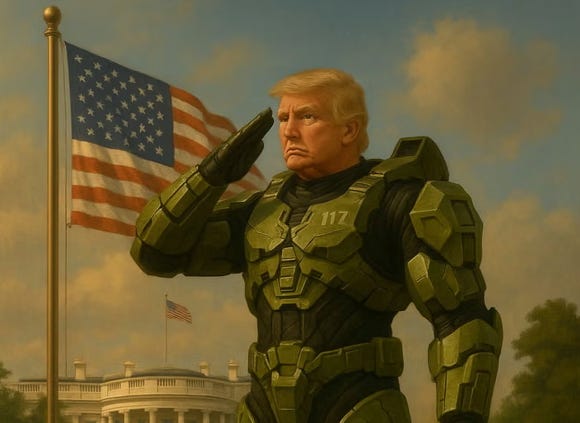
White House and DHS used Halo imagery for political agendas.
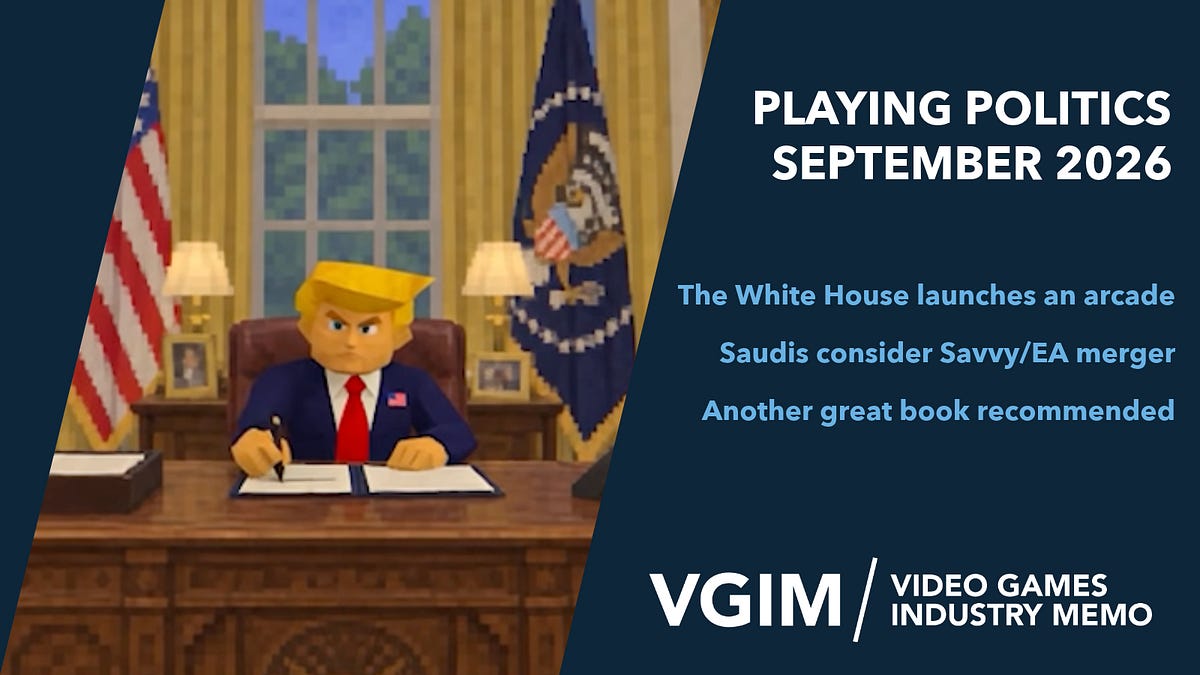
In late October 2025, both the White House and the Department of Homeland Security utilized imagery from the Halo franchise to promote political agendas. These actions included AI-generated depictions of political figures as game characters.
The response
Major stakeholders, including Microsoft, remained silent on the appropriation.
The use of Halo imagery without authorization has largely been met with silence or inaction from major industry stakeholders. Microsoft, which owns the Halo franchise, failed to take legal or institutional action.
The pattern
Gaming culture is being integrated directly into populist politics.
This marks a shift from merely courting the gaming demographic to integrating gaming aesthetics directly into the language of populist politics. The industry has historically served as a testing ground for tactics used to mainstream extreme ideas.
The shift. The integration of gaming aesthetics into populist political messaging marks a shift from traditional demographic outreach.
The risk
Inaction risks making the industry a passive participant in erosion of norms.
The industry’s failure to challenge this appropriation highlights a broader issue of self-censorship and a lack of institutional resolve. By failing to protect their creative works, gaming companies risk becoming passive participants in the erosion of democratic norms.
1 / 4
Ask AI about this report