1 free read left. Create a free account for unlimited reading + AI research.
Create free accountWhitepaper DiGRA
1 free read left. Create a free account for unlimited reading + AI research.
Create free accountWhitepaperDiGRA
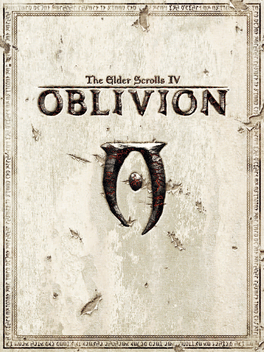
Erik Champion's paper contends that computer role-playing games such as The Elder Scrolls IV: Oblivion and Skyrim simulate cultural worlds but fall short of supporting genuine cultural learning, because their roles are largely cosmetic or interchangeable and their rituals lack depth. Champion distinguishes environmental, social, and cultural presence, arguing that cultural presence can persist in weakened form without social interaction, since culture is carried through artefacts that reflect the agency of past creators. To measure a space's potential for cultural learning, he proposes "hermeneutic richness," the interpretive depth with which an environment conveys cultural perspectives and creators' intentions.
The work is largely theoretical and draws on religious studies, anthropology, and archaeology to frame roles, worlds, and rituals as curatorial mechanisms that preserve and transmit cultural values. Rituals are characterised by formality, symbolism, and mythic causality. The paper offers no empirical data, instead calling for more grounded theories of how these elements interrelate in virtual heritage projects.
On the practical side, the author examines how rituals might be simulated in virtual heritage environments, suggesting biofeedback, gaze tracking, and architectural design heuristics to foster presence and to mark sacred space as distinct from everyday space. Oblivion and Skyrim are credited with offering social affordances but are judged inadequate as cultural worlds, since their roles function as game-balance templates rather than socially meaningful profiles. Proposed improvements include embodied awareness in non-player characters, biofeedback-driven avatar behaviour, and book-based participatory storytelling mechanics.
The reference base spans role-playing game studies, ritual theory, presence research in virtual environments, and archaeological approaches to ritual, indicating an interdisciplinary framing that positions roleplaying as a potential vehicle for representing cultural heritage practices.
Each row is a game or company this document names, each column a document, oldest first. A mark means that document names it. Select a row to see those documents.
DiGRA · 2018
DiGRA · 2018
DiGRA · 2018
DiGRA · 2018
DiGRA · 2018
DiGRA · 2018
DiGRA · 2018
DiGRA · 2018
DiGRA · 2018
DiGRA · 2018
DiGRA · 2018
DiGRA · 2018
Game Developers Conference · 2023