1 free read left. Create a free account for unlimited reading + AI research.
Create free accountArticle G|A|M|E – The Italian Journal of Game Studies
1 free read left. Create a free account for unlimited reading + AI research.
Create free accountArticleG|A|M|E – The Italian Journal of Game Studies
It concludes games can help when embedded in well-designed interventions such as professional development.
Central thesis. Outcomes depend on design, context, and player characteristics rather than on the mere presence of a game.
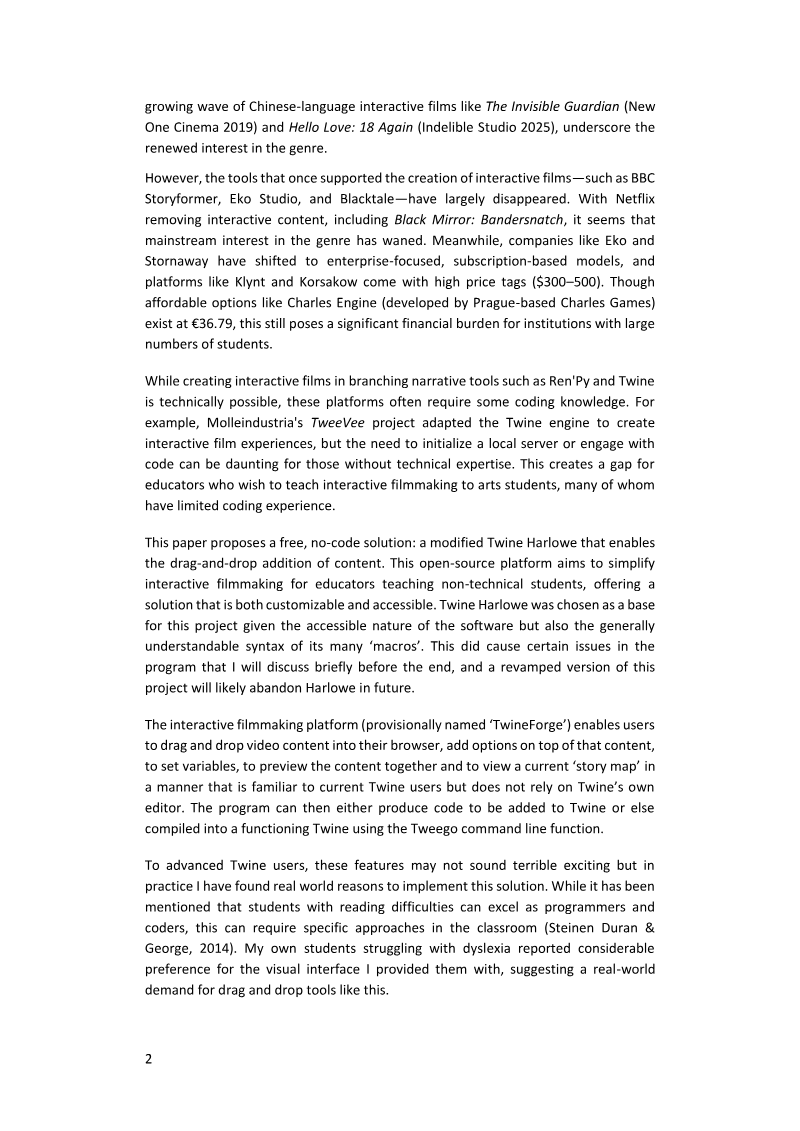
Karen Schrier's 2018 paper, "Reducing Bias Through Gaming," examines whether games can reduce biases, particularly the biases educators hold toward people with special needs, and concludes that games can support bias reduction when embedded in well-designed interventions such as professional development. The central thesis is that outcomes depend on design, context, and player characteristics rather than on the mere presence of a game. The author acknowledges that the research base on games specifically for bias reduction remains limited and sometimes contradictory, which shapes the cautious tone of the argument.
The evidence reviewed points to several mechanisms. Games that foster empathy, perspective-taking, and compassion can reduce intergroup bias; a perspective-taking game, for example, reduced prejudice toward Roma and refugees in Hungary for at least a month. Cooperative play tends to improve attitudes toward out-groups more than competitive or solo play, and playing as avatars of different races can shift implicit bias, though context matters greatly, as violent games featuring Black avatars increased negative attitudes in one study. Self-efficacy-building STEM programs and well-scaffolded, reflective, feedback-rich designs also show promise for learning and prosocial outcomes.
The paper stresses significant limitations alongside these strengths. Simulations for disability awareness have shown limited effectiveness, and competitive or violent games may reinforce intergroup bias. Players' preexisting beliefs shape results: in one study, players who held meritocratic views showed less empathy toward people in poverty after playing the game SPENT. Designers must also weigh ethical risks, including "tourist" perspective-taking that can reinforce stereotypes and empathy-building that backfires through overwhelming distress.
Overall, the author concludes that games' effects on bias are conditional on context, player, and design, and that perspective-taking and empathy are most effective when paired with relationship-building, meaningful choices, and reflection. The closing reference material supports these claims with research on stereotype activation, stigma, and the social effects of video games, but offers no independent findings of its own.
G|A|M|E – The Italian Journal of Game Studies · 2026
G|A|M|E – The Italian Journal of Game Studies · 2026
G|A|M|E – The Italian Journal of Game Studies · 2026
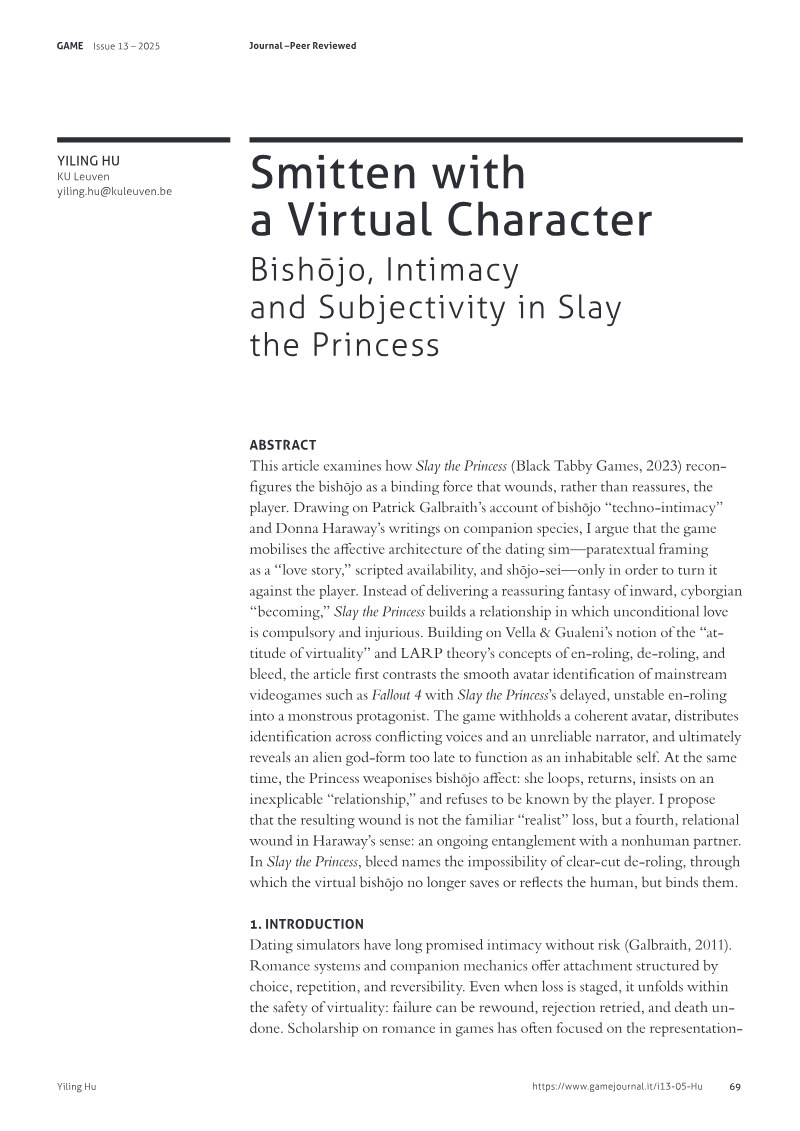
G|A|M|E – The Italian Journal of Game Studies · 2026
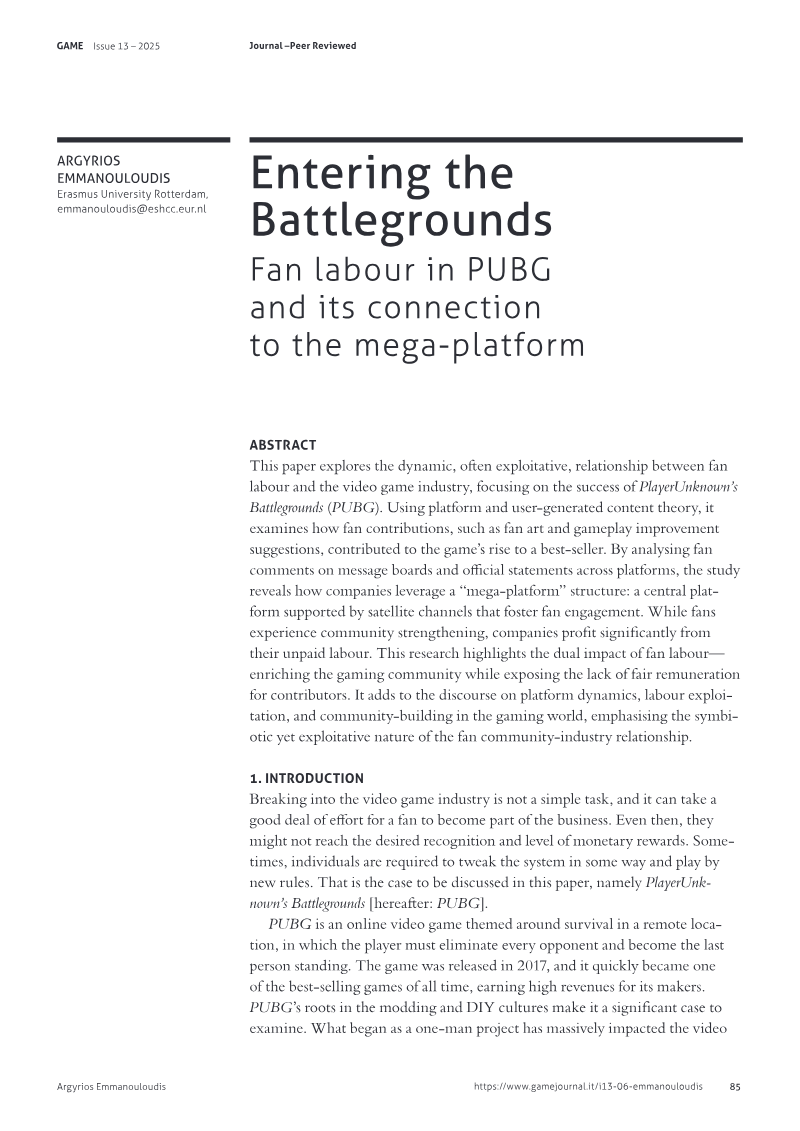
G|A|M|E – The Italian Journal of Game Studies · 2026
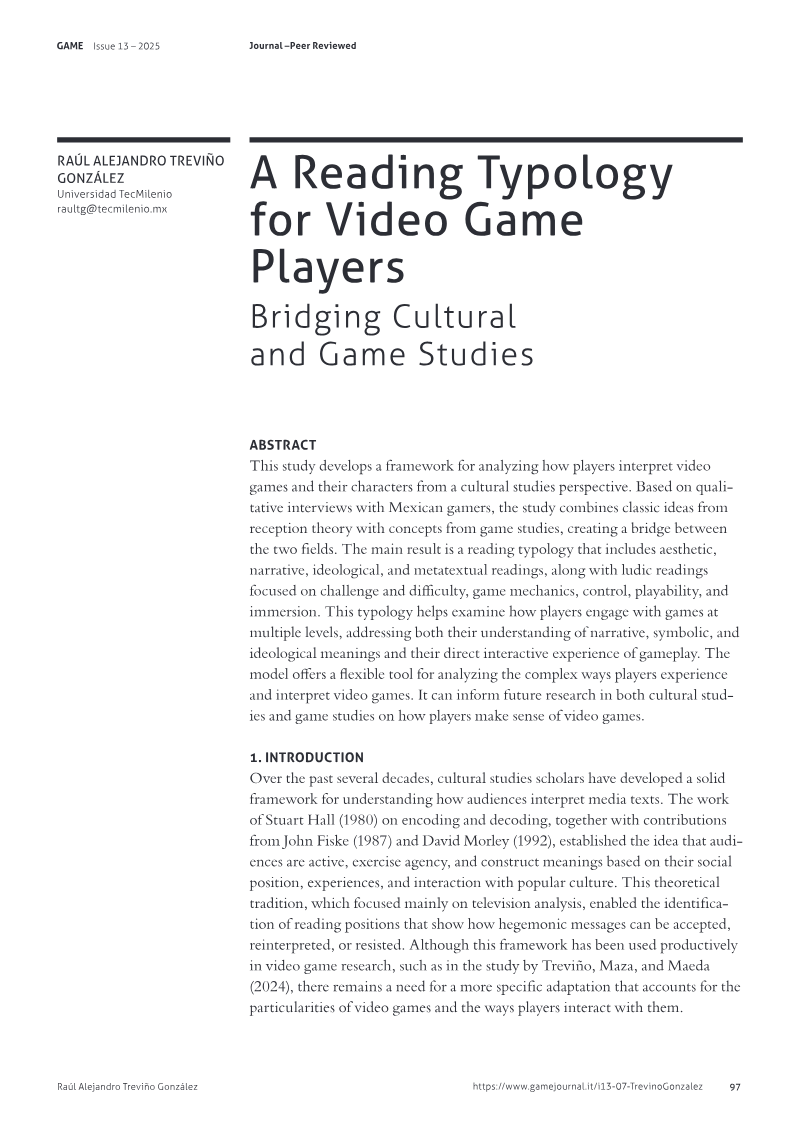
G|A|M|E – The Italian Journal of Game Studies · 2026
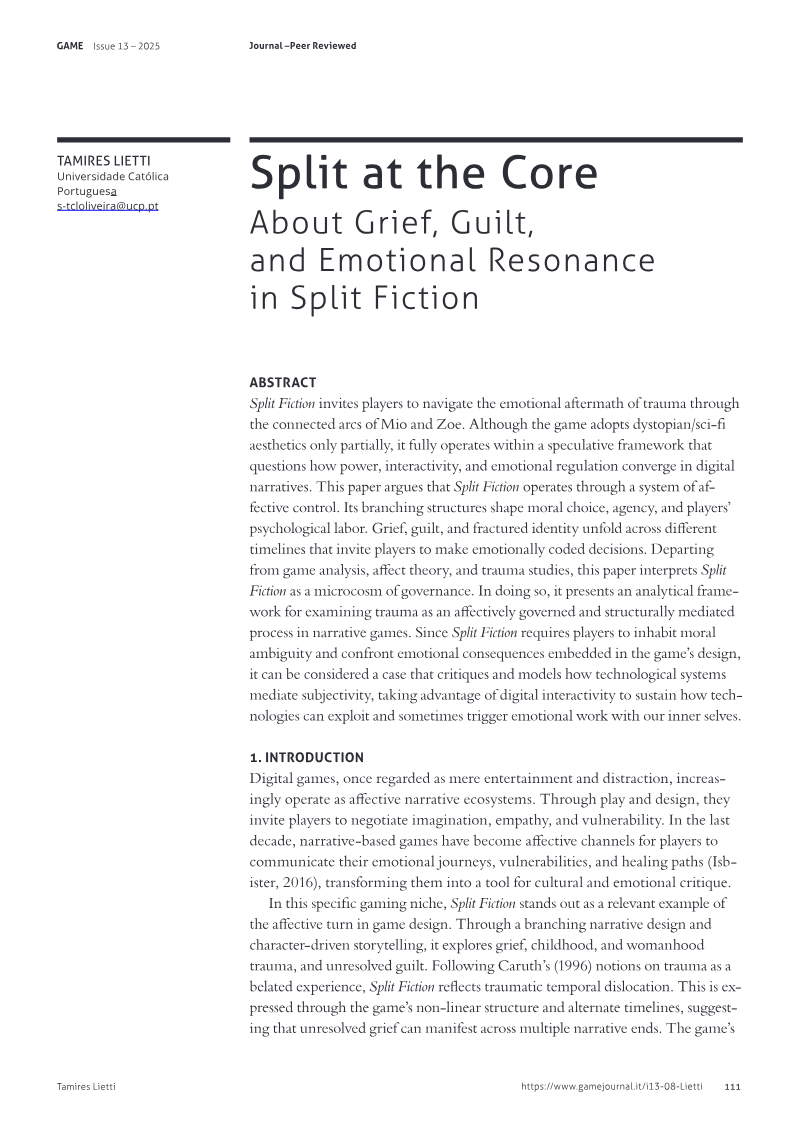
G|A|M|E – The Italian Journal of Game Studies · 2026
G|A|M|E – The Italian Journal of Game Studies · 2026
G|A|M|E – The Italian Journal of Game Studies · 2026
G|A|M|E – The Italian Journal of Game Studies · 2026
G|A|M|E – The Italian Journal of Game Studies · 2026
G|A|M|E – The Italian Journal of Game Studies · 2026
European Conference on Games Based Learning (ECGBL) · 2026
European Conference on Games Based Learning (ECGBL) · 2026
European Conference on Games Based Learning (ECGBL) · 2026